

The Mediterranean Pantry: 14 Ingredients That Change Everything
A handful of Mediterranean staples is the most efficient backbone in home cooking. Stock these 14 and turn 'nothing to eat' into a bright dinner again and again.
A well-stocked Mediterranean pantry is the single most efficient backbone a home cook can build, because a small set of shelf-stable ingredients — olive oil, canned tomatoes, beans, good olives, lemon, garlic — recombine into hundreds of bright, satisfying, healthy meals across Italian, Greek, Levantine, Spanish, and North African cooking. The genius of Mediterranean cooking isn't complexity; it's that a handful of versatile, high-flavor staples, combined with care, become dinner with almost no overlap wasted.
Stock these 14 ingredients and you can pull together a real meal on a night you didn't shop, the way home cooks all around the Mediterranean have done for centuries. Here's what they are, why each matters, and how they combine.
What are the 14 essential Mediterranean pantry ingredients?
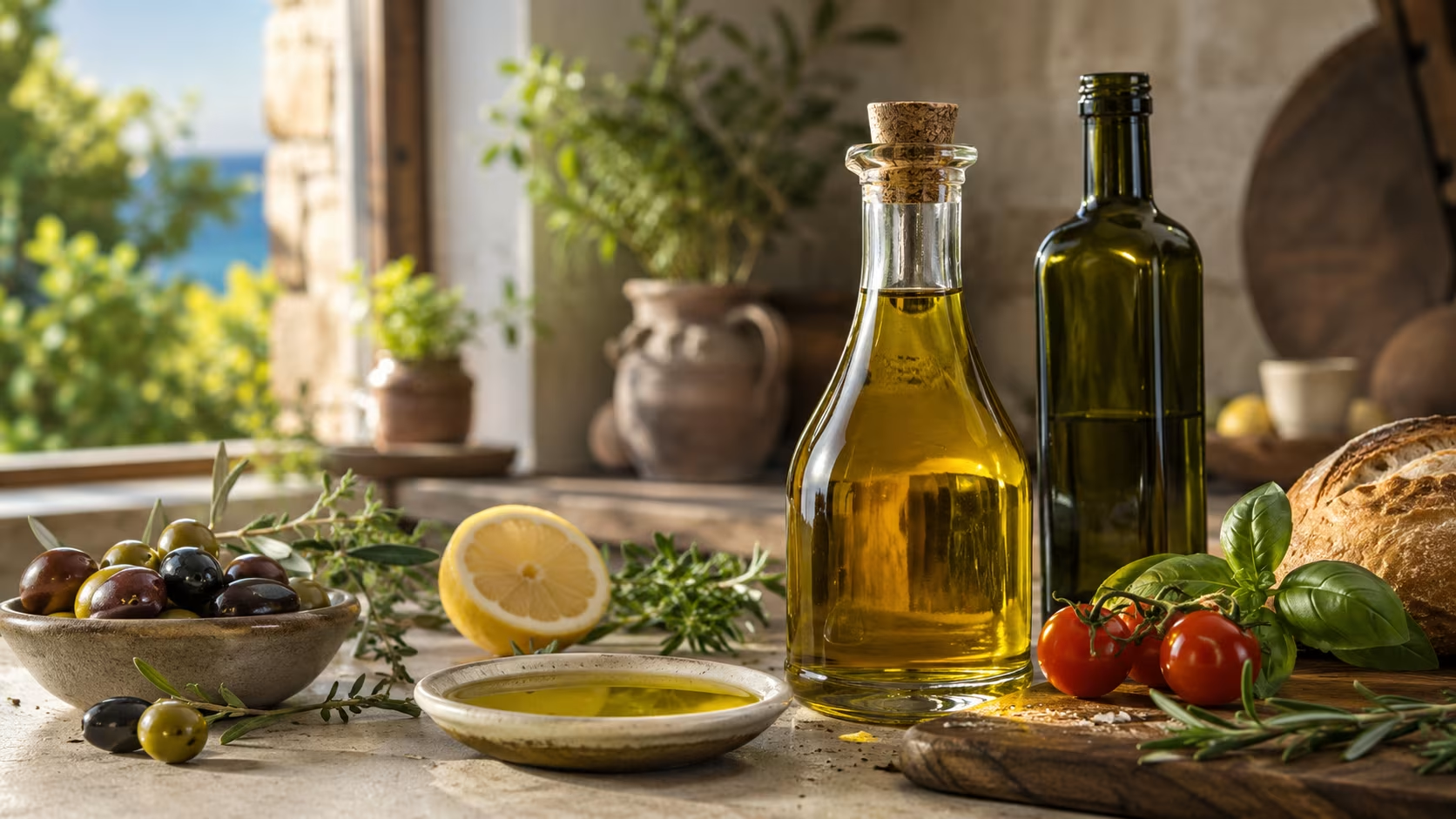
Think in functional groups — fats and acids, canned proteins and bases, briny accents, and aromatics — so they combine rather than clutter. Here are the 14 that do the most work:
Fats and acids (1) Extra-virgin olive oil — the foundation, used for cooking and finishing; (2) lemons — the bright acid that finishes nearly everything; (3) red wine or sherry vinegar — for dressings and brightening.
Canned and dried bases (4) Canned whole tomatoes — the base of countless sauces and stews; (5) dried pasta; (6) canned beans (cannellini, chickpeas) — instant protein and body; (7) a grain like rice, farro, or couscous.
Briny, salty accents: (8) Olives (Kalamata, Castelvetrano); (9) capers; (10) anchovies (the secret umami bomb that melts invisibly into sauces); (11) canned tuna (good oil-packed) — a complete protein straight from the shelf.
Aromatics and seasonings: (12) Garlic; (13) good salt (and black pepper); (14) dried herbs and spices — oregano, red pepper flakes, cumin, and a few others.
Honorable mentions worth adding as you go: tahini, harissa, preserved lemons, sun-dried tomatoes, and feta (fridge, but pantry in spirit). But these 14 are the core, and notice the logic — each is versatile across many dishes and many cuisines, so the set multiplies into far more meals than its size suggests. This is the build-a-real-pantry philosophy applied to one of the world's most flexible cuisines.
Why is olive oil the foundation of it all?
Because in Mediterranean cooking, good olive oil isn't just a cooking fat — it's a flavor ingredient in its own right, used both to cook in and to finish dishes raw. It's the single most-used and most important item in the pantry, so it's the one most worth buying well.
You'll reach for it constantly: to sauté garlic and aromatics, to roast vegetables, to dress salads, to drizzle raw over finished soups, grilled vegetables, beans, and bread. That raw, finishing use is distinctly Mediterranean — a final pour of fruity, peppery extra-virgin oil over a dish off the heat adds a fresh, grassy flavor that cooking would destroy. Because the oil is so central and often tasted raw, its quality genuinely matters here in a way it doesn't when it's just a frying medium.
A practical approach many cooks use is to keep two oils: a reasonably priced everyday extra-virgin for cooking and roasting, and a better, fresher bottle reserved for finishing where its flavor shines. Knowing how to choose a real, fresh bottle — checking the harvest date, the dark glass, the origin — is its own skill, covered in how to buy olive oil. Get the oil right and half of Mediterranean cooking falls into place.
How do these ingredients combine into actual meals?
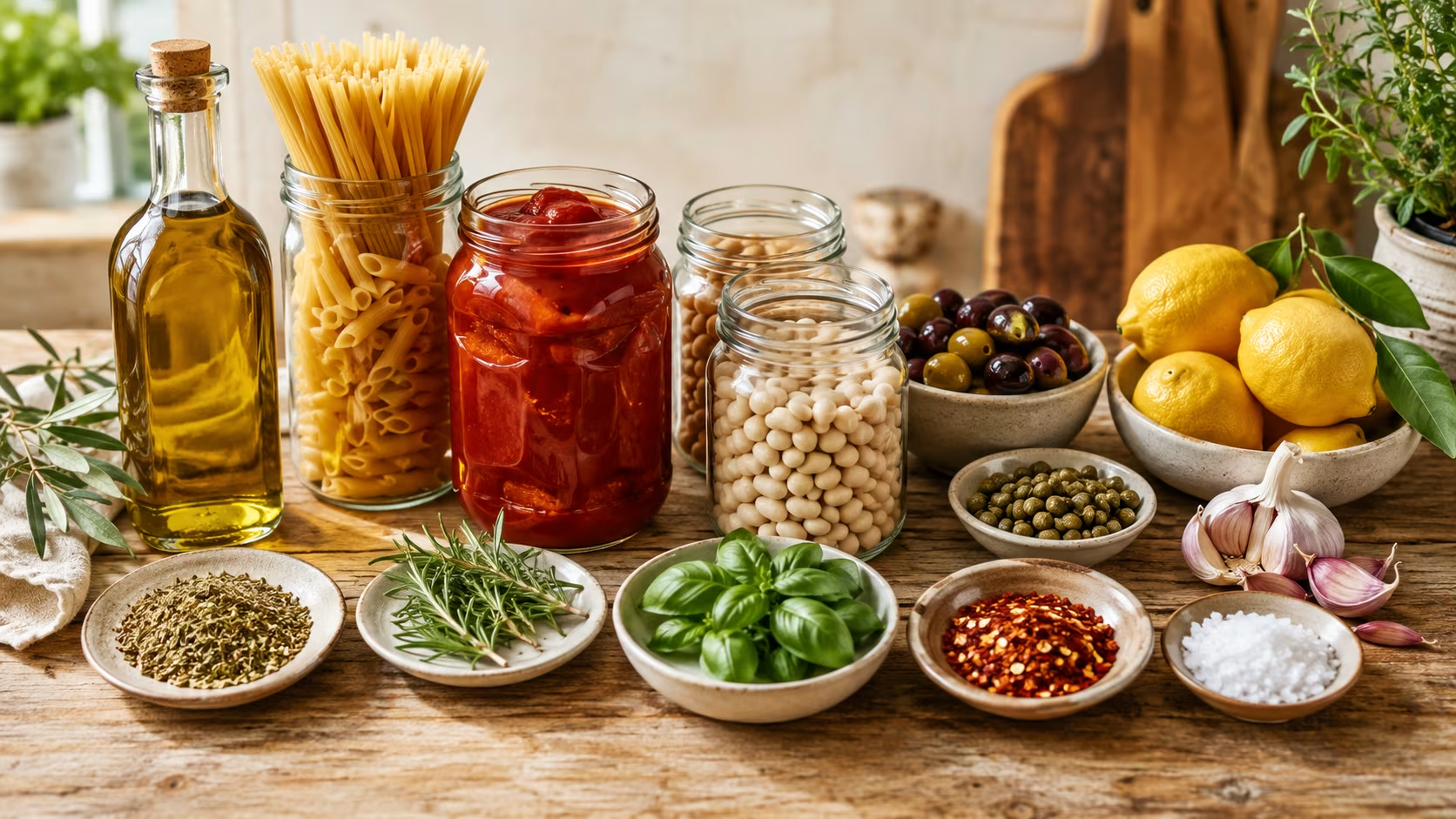
This is the real magic: the same 14 ingredients recombine into wildly different dishes depending on which you emphasize. The pantry isn't a list of separate recipes — it's a kit of building blocks.
Consider what a can of chickpeas becomes depending on its companions. With garlic, lemon, olive oil, and tahini, it's hummus or a warm spiced side.
With canned tomatoes, garlic, and smoked paprika, it's a Spanish-style stew. With olives, capers, red onion, and vinegar, it's a salad that holds for days.
The chickpeas didn't change — the supporting cast did. The same is true of canned tomatoes: garlic, oregano, and pasta make a quick marinara; add anchovies, olives, and capers and it's puttanesca; add beans and greens and it's a white bean and tomato skillet.
A few standby meals from nothing but these staples: pasta aglio e olio (oil, garlic, chili, pasta); a tuna-and-white-bean salad with lemon and olive oil; chickpeas simmered with tomatoes and spices; a sheet pan of roasted vegetables finished with olives, feta, and lemon, like sheet-pan gnocchi; or a simple fish baked with tomatoes, capers, and olives, the Mediterranean salmon approach. None require special shopping — just the core pantry. That's the efficiency: you're not buying separate ingredients for separate cuisines, you're buying versatile blocks that cross-reference into dozens of meals.
Why is anchovy the secret weapon?
Because anchovies dissolve completely into a savory, umami-rich background flavor that most people can't identify but everyone notices — and they're the ingredient that makes Mediterranean dishes taste deep rather than flat. They are not "fishy" when used this way, which is the misconception that keeps people from stocking them.
Here's the mechanism: anchovy fillets are packed with glutamates, the compounds responsible for umami — the same savory depth in parmesan, soy sauce, and mushrooms. When you melt one or two fillets into hot olive oil at the start of a dish (they break down completely in under a minute), they don't add a fish flavor; they add a deep, savory, rounding backbone that makes the whole dish taste richer and more complete. A pasta sauce, a pan of greens, a vinaigrette, a braise — a melted anchovy or two makes it taste like it simmered for hours.
This is why anchovies appear, invisibly, in so much Mediterranean cooking, from Caesar dressing to puttanesca to braised greens. They're cheap, shelf-stable, and last a long time.
If you've avoided them, this is the pantry item most likely to surprise you — keep a jar or tin and add one or two fillets whenever a savory dish needs more depth. It's the closest thing to a flavor cheat code in the whole pantry.
How do you store a Mediterranean pantry, and where do you splurge?
Most of it is genuinely shelf-stable and low-maintenance, which is the point — but a few items reward care, and a couple are worth spending more on. The same three enemies (heat, light, moisture) apply: keep everything in a cool, dark cupboard, and store opened olive oil away from the stove so it doesn't go rancid.
Where to splurge: olive oil (especially your finishing bottle) and, to a lesser extent, canned tuna (good oil-packed tuna is dramatically better than cheap water-packed) and the canned tomatoes (quality whole San Marzano-style tomatoes make better sauce). These are the ingredients whose quality you taste directly. Where to save: beans, pasta, dried herbs, garlic — the workhorses where the difference between budget and premium is minimal once they're cooked into a dish.
Rotate with first-in-first-out like any pantry, and keep an eye on the perishable-ish items: garlic and lemons should be used while fresh, olive oil within a few months of opening, and dried herbs replaced when they lose their aroma. Everything else — cans, dried goods, vinegar — lasts for ages. This low-maintenance durability is exactly why the Mediterranean pantry is such a reliable backbone: stock it once, top it up as you use things, and you're rarely more than a few minutes from a real, bright, satisfying meal.
Common Mediterranean pantry questions
Is Mediterranean eating actually healthy, or is that hype? The Mediterranean style of eating — heavy on olive oil, vegetables, legumes, whole grains, fish, and herbs, light on processed food and red meat — is consistently among the most evidence-supported approaches to eating well. Building your pantry this way naturally nudges your everyday cooking toward that pattern, which is a real side benefit of the flavor.
Where do I buy these ingredients affordably? Most are supermarket staples; for olives, oil, tahini, and spices, a Middle Eastern or Mediterranean grocer or bulk store is often cheaper and higher quality than the mainstream supermarket. Canned goods and dried staples are cheapest bought in moderate bulk.
What if I don't like olives or anchovies? Both are optional, though anchovies (melted in, undetectable) are worth a second try for the umami they add. The pantry still works without them — lean on tomatoes, beans, garlic, lemon, and good oil, which carry most of the dishes on their own.
Do I need fresh herbs too? Dried oregano is a true pantry staple and essential, but fresh parsley, basil, mint, and dill add a brightness dried can't, so keep fresh herbs around when you can. A finishing handful of fresh herbs is a hallmark of the cuisine.
Stock these 14, learn how they recombine, and you'll understand why the Mediterranean pantry is the most efficient investment in everyday cooking there is — a small, durable, affordable kit that turns "there's nothing to eat" into a bright, satisfying dinner again and again.
What does a week of Mediterranean pantry meals look like?
To see the efficiency in action, here's a week built almost entirely from the 14 staples plus a little fresh produce. Monday: pasta with garlic, olive oil, chili, and a melted anchovy (aglio e olio), with a green salad. Tuesday: chickpeas simmered with canned tomatoes, garlic, and smoked paprika, over rice. Wednesday: a tuna-and-white-bean salad with lemon, olive oil, red onion, and olives — no cooking at all. Thursday: a sheet pan of roasted vegetables finished with olives, lemon, and feta. Friday: a quick puttanesca (tomatoes, olives, capers, anchovies, garlic) over pasta.
Five distinct dinners, almost no special shopping, and the same core jars and cans doing the work each night in different combinations. Add a fish fillet or some eggs and you stretch it further. This is the whole promise of the pantry: not a list of recipes to follow, but a kit that improvises into dinner whenever you need it.
Bottom line: stock the 14 staples — anchored by good olive oil, with anchovies as the secret umami weapon — store them cool and dark, splurge on the few items you taste directly, and learn how they recombine. You'll turn "there's nothing to eat" into a bright, satisfying, genuinely healthy meal again and again, which is exactly why the Mediterranean pantry is the most efficient backbone in home cooking.
What about fresh produce and proteins?
The pantry is the durable backbone, but a few fresh additions complete the picture and keep Mediterranean cooking from feeling like cans alone. Keep onions, garlic, and lemons as near-permanent fixtures (garlic and lemon especially are non-negotiable for brightness), and rotate in whatever seasonal vegetables are good — eggplant, zucchini, peppers, tomatoes, leafy greens. For protein beyond the pantry's tuna and beans, eggs, a piece of fish, or some chicken slot easily into the same flavor base.
The point isn't that you cook exclusively from cans — it's that the shelf-stable core means a quick stop for one fresh ingredient turns into a complete, vivid meal, instead of needing a full shopping list every time. A fillet of fish plus the pantry becomes Mediterranean salmon; a bag of greens plus the pantry becomes a bean-and-greens skillet. The pantry does the heavy lifting; the fresh item finishes the dish.
Do I really need anchovies if I have everything else? You can cook beautifully without them, but they're the single most surprising upgrade — melted in, they add deep umami undetectable as "fish." If you've avoided them, this is the one pantry item most worth a second try.
Is it expensive to stock? Surprisingly affordable — most of the 14 are cheap, shelf-stable staples (beans, pasta, canned tomatoes, dried herbs, garlic). The only items worth spending more on are the ones you taste directly: good olive oil, decent canned tuna, and quality tomatoes. Stocked once and topped up as you go, it's one of the most cost-effective ways to eat well.
 Save
Save


0 Comments
No comments yet — start the conversation below.