

How to Build a Real Pantry: A 2026 Field Guide for Cooking Without Daily Shopping
A deep pantry means opening a cupboard and seeing three dinners, not a grocery emergency. Here is the category logic, honest shelf lives, and the staples to buy in order.
The point of a pantry is not to hoard. It's to build a real pantry deep enough that on any given evening you can open a cupboard, see three or four plausible dinners, and cook one without a trip to the store.
That capability comes from a specific set of shelf-stable ingredients chosen for how they combine, not from buying more of everything. A well-built pantry is a system: a small number of fats, acids, starches, aromatics, and proteins that multiply into hundreds of meals.
Most pantry advice fails because it hands you a 60-item shopping list with no logic behind it. This guide does the opposite. It explains what each category does, how long things actually last, and the order in which to buy so you're never staring at a full cupboard and an empty plate.
What actually belongs in a pantry?
Think in functional categories rather than recipes. Every dinner is some combination of a fat to cook in, an acid to brighten, a starch or base to build on, aromatics for depth, and a protein. Stock each category and the combinations take care of themselves.
Fats
A neutral oil for high-heat cooking (canola, grapeseed, or refined avocado), a good extra-virgin olive oil for finishing, and butter. That's it to start.
Acids
At least two vinegars (a sharp white wine or sherry vinegar and a mellow balsamic or rice vinegar) plus lemons. Acid is the most underused lever in home cooking: it's what makes a finished dish taste "done."
Starches and bases
Dried pasta, rice, a bag of dried or canned beans, and a few cans of whole peeled tomatoes. These four turn into pasta dinners, grain bowls, soups, and stews.
Aromatics
Onions, garlic, and a small but real spice collection. Onions and garlic keep for weeks outside the fridge and form the base of almost everything savory.
Pantry proteins
Canned tuna or sardines, eggs (fridge, but a pantry staple in spirit), and dried lentils, which cook in 25 minutes with no soaking.
If you keep those categories alive, you can cook. A can of tomatoes, garlic, olive oil, and pasta is dinner.
Add a can of beans and it's a different dinner. The depth lives in the combinations.
How long do pantry staples actually last?
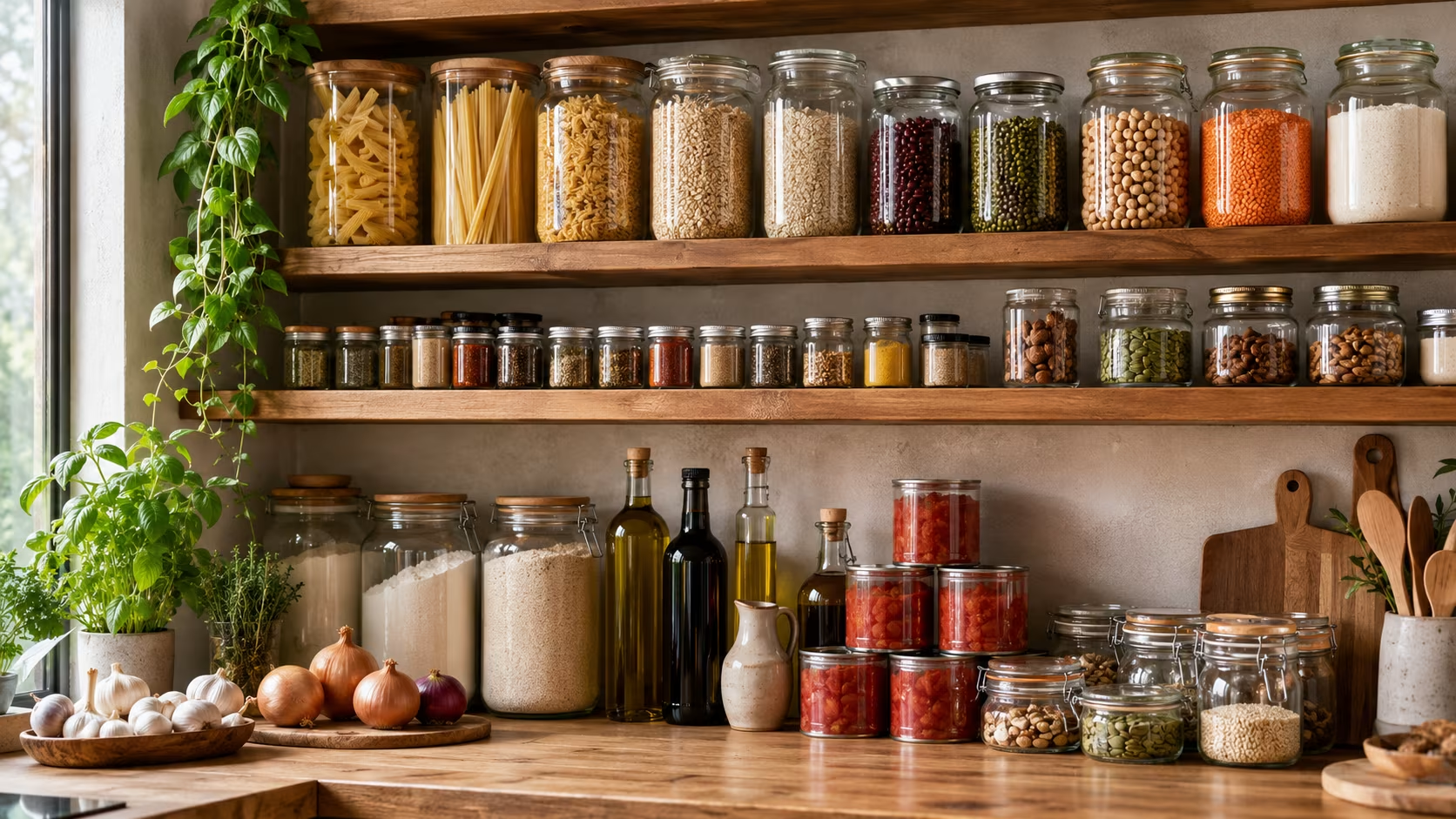
Shelf life is where most people either waste food or eat stale product, so it's worth knowing the real numbers rather than guessing from the "best by" date, which is a quality estimate, not a safety cliff. The USDA's FoodKeeper guidance is the reference worth bookmarking.
| Staple | Pantry life | Notes |
|---|---|---|
| White rice | Up to ~2 years | Nearly indefinite if airtight and dry |
| Brown rice | ~6 months | The oil in the germ goes rancid; freeze to extend |
| White flour | 3–6 months | Freeze in an airtight bag for up to ~2 years |
| Dried beans/lentils | Years | Cook longer as they age; still safe |
| Canned tomatoes/beans | 1–2+ years | Discard if the can bulges or leaks |
| Olive oil | 12–18 months from harvest | Light and heat are the enemies |
| Whole spices | 2–4 years | Far longer than ground; buy whole when you can |
| Ground spices | ~1 year of real potency | Smell them; if there's no aroma, replace |
The mechanism behind most spoilage is oxidation of fats. That's why brown rice, whole-grain flours, and nuts go off faster than white rice and refined flour, because the fat in the bran and germ reacts with oxygen and turns rancid. Anything fatty does better in the freezer.
How should you store everything so it lasts?
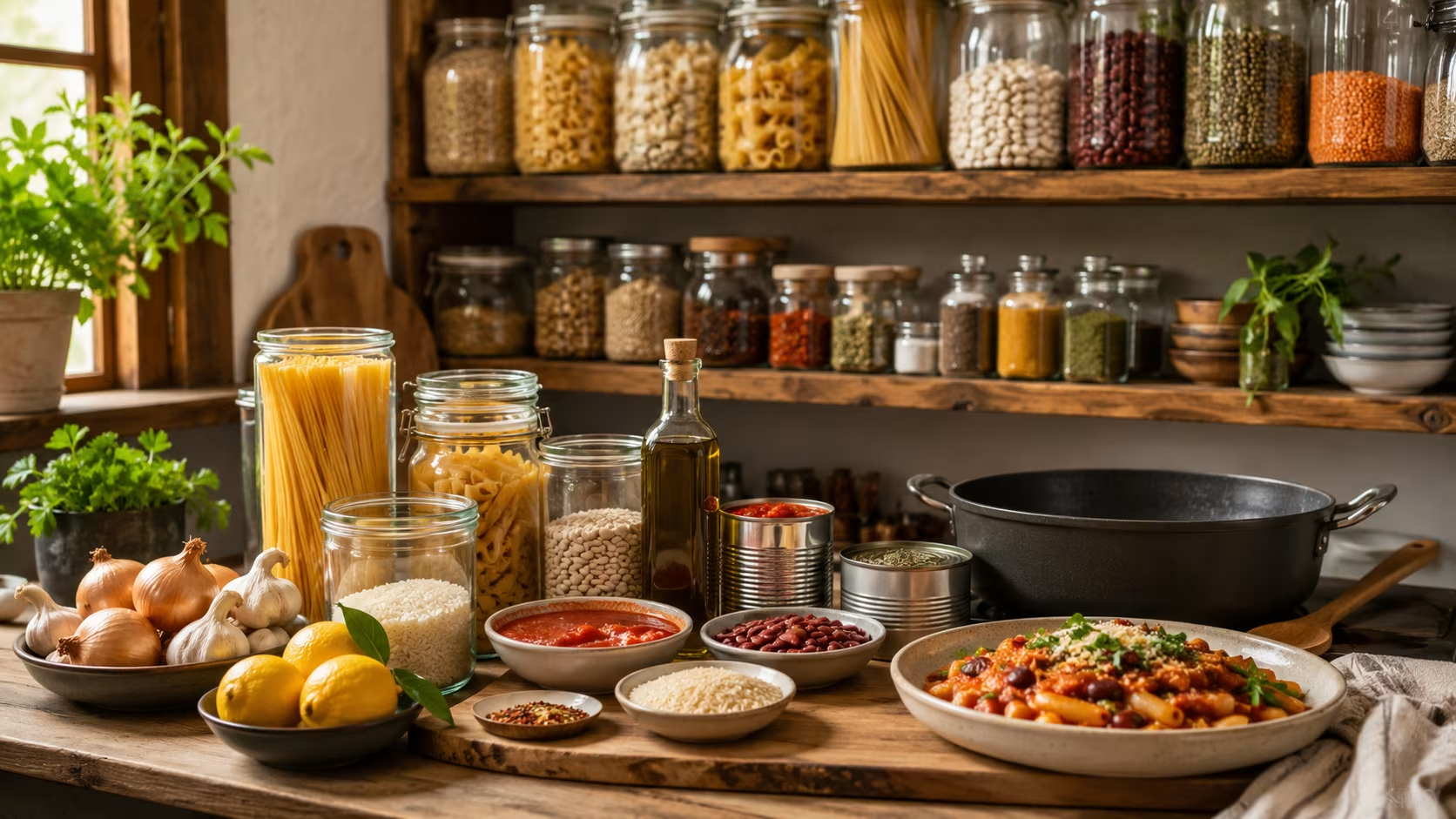
Three enemies degrade pantry food: moisture, light, and heat. Counter them and you double or triple shelf life.
Decant opened bags of flour, rice, sugar, and beans into airtight containers. The original packaging is fine sealed, but once it's open, exposure to humid kitchen air invites both staleness and pantry moths, whose larvae arrive in grain products and spread to everything nearby. An airtight seal stops an infestation cold.
Keep the cupboard cool and dark. A pantry above the oven or beside a sunny window runs warm, and every ten-degree rise roughly doubles the rate of fat oxidation. Olive oil especially should live in a dark cabinet, never on the counter next to the stove where the heat and light it's exposed to will turn it stale months before its date.
Run a first-in, first-out rotation. When you buy a new can or bag, move the old one to the front and the new one to the back, and write the purchase month on the lid with a marker.
This single habit eliminates the archaeological-dig phenomenon of finding a forgotten bag of flour two years past its prime. The same FIFO logic keeps your spice rack honest: spices don't spoil dangerously, they just fade into sawdust.
What's the difference between a stocked pantry and a useful one?
A stocked pantry has lots of ingredients. A useful pantry has ingredients that combine. The test is whether your staples cross-reference into multiple cuisines from a small footprint.
Consider what a single can of chickpeas can become depending on what else is on the shelf. With cumin, garlic, and lemon, it's a quick hummus or a warm spiced side.
With canned tomatoes and smoked paprika, it's a stew. With olive oil, a vinegar, and a red onion, it's a salad that holds for days.
The chickpeas didn't change; the supporting cast did.
This is why a Mediterranean pantry is such an efficient backbone: olive oil, lemon, garlic, canned tomatoes, beans, good salt, and a handful of herbs and spices recombine into dozens of dishes across Italian, Greek, Levantine, and North African cooking with almost no overlap wasted. You're not buying separate ingredients for separate cuisines; you're buying versatile building blocks.
The opposite failure mode is the single-use buy: the bottle of fish sauce for one Thai recipe, the jar of pomegranate molasses for one Persian dish, both gathering dust. Those purchases aren't wrong, but they belong to a "phase two" pantry you build deliberately, not the foundation.
Which 15 items should you buy first?
If you're starting from an empty cupboard, buy in this order. Each tier is useful on its own, so you can stop at any point and still cook well.
Foundation (buy first) kosher salt, black peppercorns, a neutral high-heat oil, extra-virgin olive oil, dried pasta, white rice, canned whole tomatoes, dried or canned beans, onions, and garlic. With these ten you can already make pasta dinners, beans and rice, and simple soups.
Round two a sharp vinegar, soy sauce, canned tuna or sardines, lentils, and a starter spice set (cumin, smoked paprika, chili flakes, dried oregano, and a curry or garam masala blend). Now the same base ingredients reach across Italian, Mexican, and South Asian flavors.
Notice what's not on the list anything trendy, anything single-use, anything you can't name three uses for. A real pantry grows from a versatile core outward, and the discipline of buying in this order is what keeps the cupboard full of food you'll actually cook rather than food you bought once with good intentions.
What are the most common pantry-stocking mistakes?
The cupboard fails in predictable ways, and each has a fix rooted in how the failure happens.
The first is buying for recipes instead of for combinations. You see a recipe, buy its specialty ingredient, make the dish once, and the bottle sits for two years. Multiply that over a year of cooking and half your shelf is single-use dead weight. The fix is the categories logic above: buy versatile building blocks first, and let single-use items be rare, deliberate additions you have a plan for.
The second is overstocking perishables disguised as staples. Flours, nuts, and whole grains feel shelf-stable but carry fats that go rancid in months. Buying a giant sack of whole-wheat flour or almond flour you use occasionally means most of it oxidizes before you reach the bottom. Buy fat-containing staples in sizes you'll actually finish, and freeze the surplus.
The third is no rotation system, which turns a pantry into a graveyard. Without first-in-first-out and dated lids, old product migrates to the back and new product gets opened in front, so nothing old ever gets used. The marker-on-the-lid habit costs five seconds and prevents the whole problem.
The fourth is stocking without ever taking inventory. People buy a third jar of cumin because they can't see the two behind the cereal. A quick monthly scan of what you have, plus a running list of what's genuinely run low, stops both the duplicate buying and the surprise empty jar mid-recipe.
How do you build a pantry in a small kitchen?
Limited space changes the strategy from "stock deep" to "stock smart," and the constraint is actually clarifying. With one cabinet instead of a walk-in, every item has to earn its spot by versatility, which is exactly the discipline a good pantry needs anyway.
Prioritize the highest-leverage items and accept that you'll shop a little more often. The ten foundation staples take up remarkably little room: a few jars, a couple of bottles, some bags decanted into stackable containers. Vertical space is the hidden capacity here: shelf risers, stacking bins, and over-the-door racks roughly double a small cabinet's usable volume by reclaiming the dead air above short items.
Decanting into uniform, square airtight containers does double duty in a small kitchen: it keeps food fresh and packs far more efficiently than a jumble of original bags and boxes that waste space and topple over. Clear containers also let you see what you have at a glance, which is the inventory problem solved by storage design.
Skip the bulk-buying instinct entirely; in a small space, a smaller, fresher, well-organized pantry beats a crammed one you can't see into. Buy the ten foundation items, store them where you can see them, and replenish weekly.
How does a pantry connect to actually cooking dinner?
A deep pantry is the precondition for cooking without daily shopping, and it pairs naturally with two habits: a loose weekly plan and a willingness to improvise. You don't need to know Monday's dinner on Sunday; you need enough on hand that Monday's dinner is a 15-minute decision, not a grocery emergency. If you want a light structure for that, a simple weekly system like the Sunday reset layers cleanly on top of a stocked pantry, and a deep pantry is exactly what makes eating well on a tight budget possible, because dried beans, rice, and canned tomatoes are some of the cheapest calories and most nutrition per dollar in the store.
Start with the ten foundation items this week. Cook from them for a few nights and notice which gaps you actually hit: maybe you reach for an acid you don't have, or wish you'd bought lentils.
Let the real gaps, not a generic checklist, dictate your next shop. A pantry built that way fits how you actually cook, and within a month you'll open the cupboard, see dinner, and stop reaching for your phone to order out.
Common pantry questions, answered
Do I need to refrigerate flour and rice? Not normally: white rice and white flour keep fine in a cool, dark cupboard in airtight containers. The exception is whole-grain flours and brown rice, whose natural oils go rancid faster; those last far longer in the fridge or freezer.
How do I keep pantry moths out? Store grains, flours, and dried fruit in airtight containers rather than their original bags. Moth larvae chew through paper and thin plastic, so a tight seal both keeps them out and contains any infestation that arrives in a new bag before it can spread to everything else.
Is buying in bulk actually cheaper? Only if you finish it before it goes stale. Bulk shelf-stable staples like rice, dried beans, and salt are genuine savings. Bulk flour, nuts, or spices often spoil before you use them, so the per-unit discount quietly turns into waste.
What single upgrade improves a pantry most? A set of matching airtight containers and a marker. Decanting and dating everything solves freshness, visibility, and rotation in one cheap habit.
 Save
Save


0 Comments
No comments yet — start the conversation below.