

How to Buy the Right Soy Sauce: Japanese vs. Chinese vs. Korean, Light vs. Dark
'Soy sauce' is a whole family of different sauces. Here's how Japanese, Chinese, and Korean styles differ, what light and dark really mean, and which bottles to buy.
"Soy sauce" isn't one thing — it's a whole family of distinct sauces from different cuisines, and grabbing the wrong bottle can quietly undercut a dish. To buy the right soy sauce, you need to know the difference between Japanese, Chinese, and Korean styles, between "light" and "dark" (which mean opposite things in different traditions), and between naturally brewed and cheap chemically produced versions.
The good news: a couple of well-chosen bottles cover most home cooking, and understanding what each does means you'll never again wonder why your stir-fry tastes flat or your dish came out too dark. Here's how to navigate the soy sauce aisle and pick what actually suits what you're cooking.
Why isn't soy sauce just one thing?
Because different cuisines developed distinct soy sauces for different purposes, varying in saltiness, color, thickness, sweetness, and flavor. They're not interchangeable, and using the wrong one changes the dish — sometimes subtly, sometimes dramatically. The confusion is compounded because the same words ("light," "dark") mean different things across traditions.
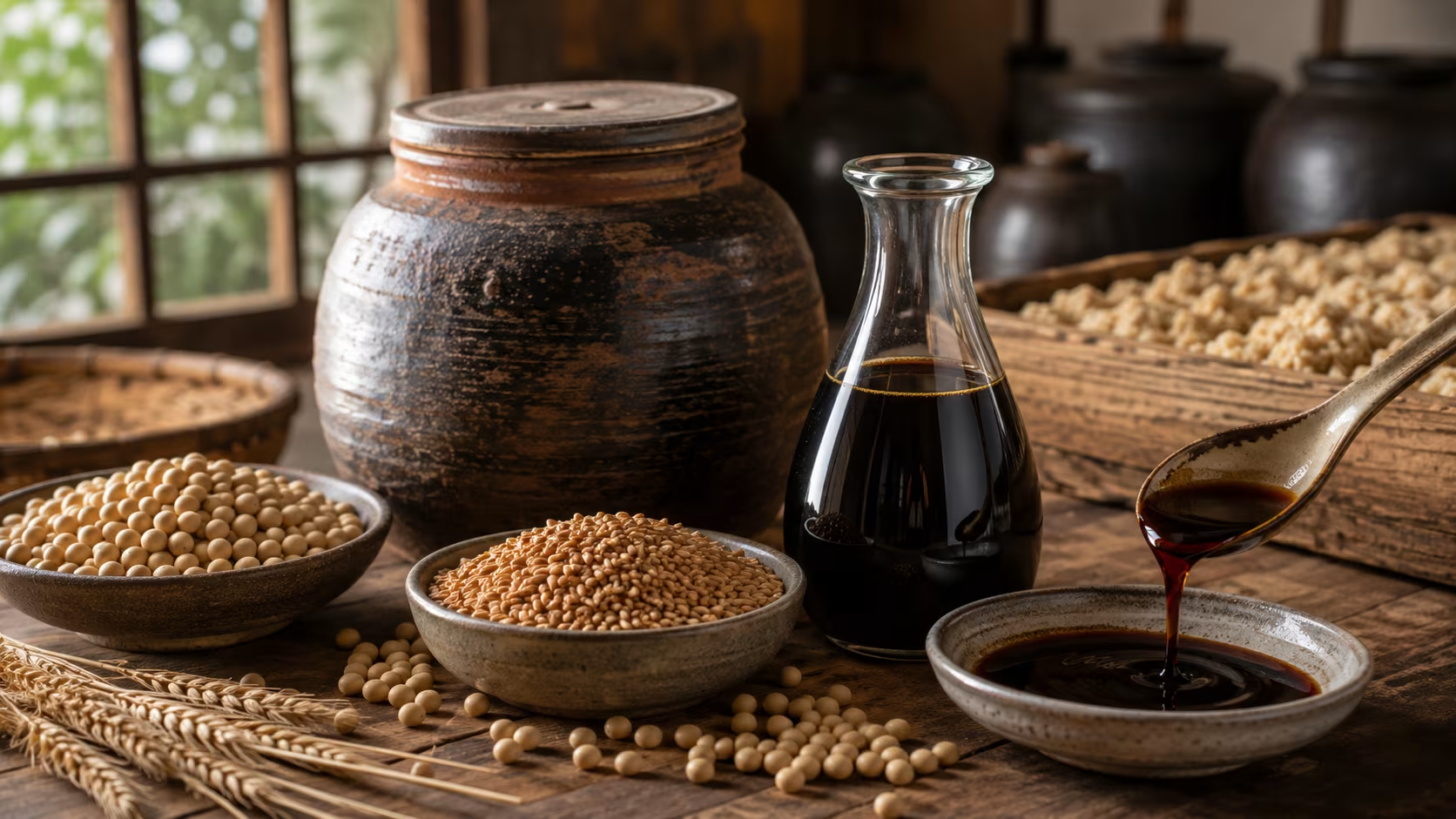
At the most basic level, soy sauce is made by fermenting soybeans (usually with wheat) with salt and a culture, producing a salty, deeply savory, umami-rich liquid. But from that common starting point, Japanese, Chinese, and Korean producers branched into different styles optimized for their own cooking — some for all-purpose seasoning, some for adding color, some specifically for soups. So the right bottle depends on what you're cooking: a Japanese dish wants a Japanese soy, a Chinese stir-fry often wants two different Chinese soys, and a Korean soup wants a Korean soup soy.
The single most useful thing to understand is that "light" and "dark" don't mean the same thing everywhere — and they refer to color and use, not (mainly) to salt content the way "light" might suggest in English. Sort out that vocabulary, plus the brewed-versus-chemical distinction, and the aisle stops being mysterious. For everyday cooking like beef and broccoli, knowing which soy does what is the difference between a flat sauce and a deeply savory one.
What are the Japanese soy sauces?
Japanese soy sauce (shoyu) is typically brewed with a high proportion of wheat, giving it a balanced, slightly sweet, aromatic flavor. The main types:
Koikuchi is the standard, all-purpose Japanese soy sauce — when a recipe just says "soy sauce" and means Japanese, this is it. It's dark reddish-brown, balanced between salty and savory with a gentle sweetness and aroma, and it works for almost everything: dipping, marinades, simmering, finishing.
If you buy one Japanese soy sauce, make it a good koikuchi. The widely available major brands are koikuchi.
Usukuchi ("light-color") is lighter in color but actually saltier than koikuchi — a crucial point. It's used when you want to season a dish without darkening it, common in lighter dishes, clear soups, and Kansai-region cooking where the appearance matters. "Light" here means light in color, not light in salt or flavor — don't substitute it one-for-one expecting a milder result; it's more saline.
Tamari is a Japanese soy sauce made with little or no wheat, originally a byproduct of miso production. It's richer, smoother, less salty-sharp, and deeply savory — and because it's typically wheat-free, tamari is the go-to soy sauce for gluten-free cooking (always check the label confirms gluten-free, since some tamari still contains a little wheat). It's excellent for dipping and finishing and a key swap in any gluten-free kitchen.
What are the Chinese soy sauces?
Chinese cooking famously uses two different soy sauces for two different jobs, and this is where most home cooks go wrong by owning only one. The light/dark distinction here is about seasoning versus coloring.
Light soy sauce (sheng chou) is the everyday seasoning soy — thinner, lighter in color, and saltier, used to season and add savory flavor to stir-fries, marinades, dipping sauces, and soups. This is the workhorse for adding salt and umami; when a Chinese recipe says "soy sauce" without specifying, it usually means light. Despite "light," it's the saltier, more flavor-forward of the two.
Dark soy sauce (lao chou) is aged longer, thicker, darker, less salty, and slightly sweet (often with added molasses or caramel). Its job is primarily color, not salt — a small amount gives braises, stir-fries, and noodles that deep, appetizing mahogany color and a touch of sweetness and body.
You use it sparingly alongside light soy, not instead of it. Use dark soy as your main seasoning and the dish will be oddly sweet, syrupy, and under-salted; use only light soy and braises and noodles will look pale and anemic.
So for Chinese home cooking, the ideal is to own both: light soy for seasoning and flavor, dark soy for color and a hint of sweetness, used together in the right proportions. This two-bottle approach is the secret behind that glossy, deeply colored, savory-sweet restaurant look. There are also thicker, sweeter regional variants (like sweet soy sauces), but light and dark are the essential pair.
What about Korean soy sauces, and brewed vs. chemical?
Korean soy sauce (ganjang) has its own important distinction, and across all cuisines there's a quality divide between naturally brewed and cheaply manufactured soy that matters more than the style.
Korean soy sauces split mainly into two roles. Guk-ganjang (soup soy sauce, sometimes called Joseon ganjang) is lighter in color but quite salty and strongly flavored, used specifically to season soups and stews and side dishes without darkening them — adding one to a clear soup keeps it light-colored but well-seasoned. Jin-ganjang (or yangjo ganjang for the brewed kind) is the all-purpose, darker Korean soy for marinades, braises, and general cooking, comparable in role to Japanese koikuchi. If you cook Korean food, a soup soy and an all-purpose soy cover the bases.
The brewed-versus-chemical distinction cuts across every style and is the most important quality marker. Naturally brewed soy sauce is fermented over months, developing a complex, rounded, deeply savory flavor — look for "naturally brewed" on the label. Chemically produced ("hydrolyzed vegetable protein") soy sauce is made fast by acid-hydrolyzing soy protein, producing a harsh, flat, one-dimensionally salty liquid with off-notes and often added caramel color and corn syrup. It's cheaper, but the flavor gap is large. Whatever style you buy, choosing a naturally brewed version is the single biggest quality upgrade — a good brewed light soy beats a cheap chemical one in any dish.
Which soy sauces should you actually buy?
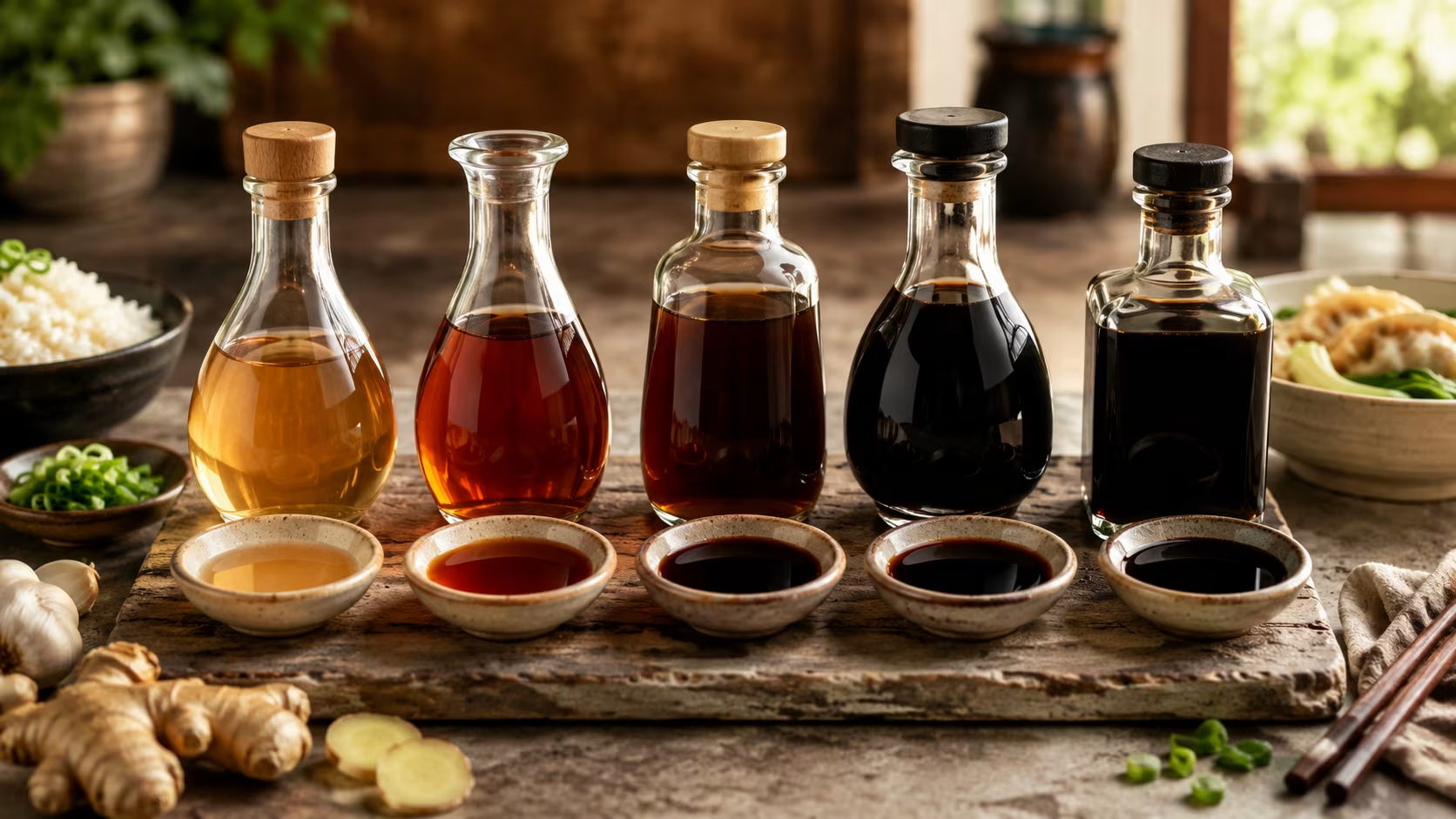
For most home cooks, a small, strategic set covers nearly everything without cluttering the cupboard. Match your bottles to what you cook:
- If you cook broadly: one good naturally brewed all-purpose soy (a Japanese koikuchi or an all-purpose Chinese/Korean soy) handles the majority of seasoning needs.
- If you cook Chinese food regularly: own both light and dark Chinese soy — light for seasoning, dark for color — because that pairing is essential to the cuisine's look and balance.
- If you eat gluten-free: make your everyday soy a gluten-free tamari (label-checked), which substitutes for soy sauce in most recipes.
- If you cook Korean food: add a guk-ganjang (soup soy) alongside an all-purpose soy.
The universal rule: choose naturally brewed over chemically produced in every case. Beyond that, build to your cooking — there's no need to own six bottles if you cook one cuisine, and no single bottle that perfectly does every job across all cuisines.
A good all-purpose brewed soy plus, for stir-fry lovers, a dark soy for color, covers most kitchens. Store soy sauce in a cool, dark place (the fridge after opening preserves the aromatic, naturally brewed kinds best), as it's a keeper that belongs in any well-built pantry.
Common soy sauce questions
Can I substitute one soy sauce for another? Within limits. An all-purpose soy can stand in for many uses, but watch the differences: usukuchi and light Chinese soy are saltier (use less), dark Chinese soy is for color not seasoning (don't swap it for light), and tamari is the gluten-free stand-in. Substituting changes salt, color, or sweetness, so adjust accordingly.
Is tamari the same as soy sauce? Tamari is a type of Japanese soy sauce made with little or no wheat, so it's richer and smoother and usually gluten-free. It works as a soy sauce substitute in most dishes and is the standard choice for gluten-free cooking — just confirm the label says gluten-free.
What's the difference between light soy sauce and "low-sodium" soy sauce? Completely different things. "Light soy sauce" (Chinese sheng chou) is a regular-salt seasoning soy; "light-color" (Japanese usukuchi) is actually saltier.
"Low-sodium" / "reduced-sodium" is a Western label meaning less salt — a separate concept entirely. Don't confuse culinary "light" with dietary "light."
Does naturally brewed really taste better than chemical soy? Yes, noticeably — naturally brewed soy has a complex, rounded, deeply savory flavor from months of fermentation, while chemically hydrolyzed soy is harshly, flatly salty with off-notes. It's the single biggest quality factor; look for "naturally brewed" on any bottle you buy.
Once you know that Japanese, Chinese, and Korean soys do different jobs, that "light" and "dark" mean color and use rather than salt level, and that naturally brewed beats chemical every time, the soy sauce aisle becomes simple — and your stir-fries, braises, and marinades get noticeably better for picking the right bottle.
How do you store and cook with soy sauce?
Soy sauce is shelf-stable and long-lasting, but a few storage and cooking habits get the most from it. Store an unopened bottle in a cool, dark cupboard, where it keeps for a long time. After opening, naturally brewed soy sauce keeps best refrigerated — it stays shelf-stable for a while at room temperature, but the cold preserves the delicate aroma and flavor of good brewed soy and slows oxidation. It won't spoil dangerously at room temperature, but the flavor of a fine brewed soy fades faster on a warm shelf.
When cooking, the timing of when you add soy sauce matters. Added early and simmered, it loses some of its sharp, aromatic top notes but melds its savory depth into the dish — good for braises, marinades, and sauces.
Added at the end or used as a finishing/dipping sauce, it keeps its full fragrant, bright character — better for drizzling, dipping, and finishing stir-fries. In high-heat cooking, soy sauce hitting a hot wok caramelizes slightly and adds aroma, which is part of stir-fry flavor.
Because soy sauce is salty, season with it as your salt source in many dishes and taste before adding additional salt — it's easy to over-salt a dish that already has soy in it.
Does soy sauce need refrigeration? It doesn't spoil at room temperature thanks to its salt and fermentation, so it's safe in the cupboard. But refrigerating opened naturally brewed soy sauce best preserves its aroma and flavor over time, so the fridge is recommended for the good stuff if you want it at its best for longer.
How long does soy sauce last? Unopened, a very long time (years). Opened and refrigerated, it stays good for many months; it may slowly lose aroma and darken over time but remains safe. Naturally brewed kinds are most worth refrigerating to preserve their complex flavor.
Can I use Japanese soy sauce in a Chinese recipe (or vice versa)? In a pinch, yes — an all-purpose soy will season the dish. But the results differ: Japanese koikuchi is a touch sweeter and more aromatic, Chinese light soy is saltier and sharper, and Chinese dark soy adds color the others won't. For authentic results, use the style the cuisine calls for; for everyday cooking, a good all-purpose brewed soy covers most needs.
Bottom line: soy sauce is a family, not a single product. Learn that Japanese, Chinese, and Korean soys do different jobs, that "light" and "dark" describe color and use rather than salt, and that naturally brewed beats chemical every time — and a couple of well-chosen bottles will make your stir-fries, braises, and marinades noticeably better.
 Save
Save


0 Comments
No comments yet — start the conversation below.