

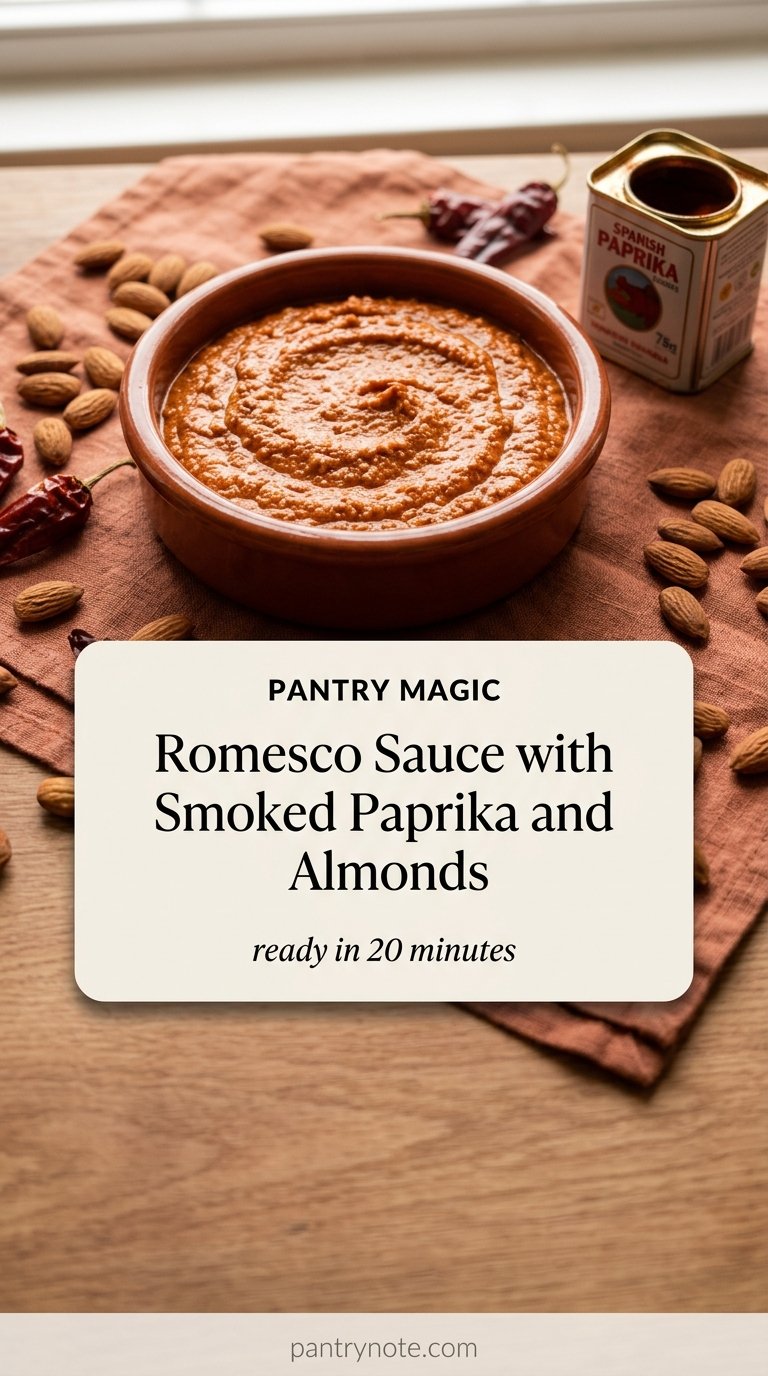
Romesco Sauce with Smoked Paprika and Almonds
Romesco is one of those sauces that makes you feel like you've found a secret. It goes on fish, meat, roasted vegetables, eggs, bread, pasta — essentially anything that benefits from a deep, smoky, slightly sweet pepper-almond paste. Make it once and you'll keep jars of roasted peppers in the pantry specifically to make it again.
Romesco Sauce with Smoked Paprika and Almonds
Romesco comes from Tarragona, in Catalonia, where fishermen allegedly invented it as a sauce for fish: a punchy, textured condiment to cut through the richness of whatever came off the boat that morning. The name comes from the romesco pepper, a small dried red pepper specific to the region that is nearly impossible to find outside Catalonia.
This version, like most versions made outside Spain, uses a combination of roasted red peppers and dried ñora peppers (which are more available) or simply good smoked paprika to approximate that flavor. It is not exactly traditional, but it is very good.
What romesco is, fundamentally, is a nut-and-pepper sauce thickened with bread and finished with vinegar. Almonds and hazelnuts both appear in classic versions; this recipe uses almonds exclusively because they're more consistent in quality and availability.
The bread is not optional; it's the structural binder that keeps the sauce from being a smoothie. Smoked paprika is both flavor and color.
Sherry vinegar, if you can find it, is the traditional acid and has a depth that red wine vinegar doesn't quite match.
This recipe makes about two cups, which keeps for a week in the refrigerator and is endlessly useful. I've given serving suggestions at the end, but honestly the best thing you can do is make it on a Sunday and let the rest of the week surprise you.
Why this works
Romesco belongs to a class of thick emulsified sauces (alongside pesto, skordalia, and tarator) where a nut or bread paste forms the body and fat is dispersed throughout rather than sitting on top. Understanding this helps you control the texture.
The almonds need to be toasted, not raw. Raw almonds have a slightly bitter, astringent quality from their skin and undeveloped oils.
Toasting drives out moisture and triggers Maillard reactions in the nut oils, producing hundreds of aromatic compounds that raw nuts simply don't have. The smell of toasted almonds in a dry pan is actually the signal that the fats are browning, the same chemistry as butter going brown, expressed through nut oils.
The bread provides starch, which acts as a thickener and binder. Without it, the sauce is too thin and the oil separates quickly. The bread should be slightly stale or toasted: fresh bread contains too much moisture and produces a gummy sauce. Sourdough or a rustic country bread adds subtle sour complexity; sandwich bread works in a pinch but the flavor is more neutral.
Roasting the peppers is non-negotiable. Raw red peppers have a sharpness and a green note that disappears completely under heat: roasting converts the peppers' cell walls, concentrates their sugars (caramelization), and eliminates the raw vegetal taste that would make the sauce harsh. Jarred roasted peppers are acceptable here; look for ones packed in water or light brine rather than vinegar, which can overwhelm.
The order of blending matters. Nuts go in first and are processed until fine.
Then the other solids. Then the liquids are drizzled in at the end, allowing the sauce to emulsify gradually rather than liquefying all at once.
Over-blending produces a sauce that's too smooth; romesco should have a slightly coarse, rustic texture.
Ingredient notes
Roasted red peppers
Jarred piquillo peppers from Spain are the ideal if you can find them: they're slightly smaller, sweeter, and more intensely flavored than standard red bells. Whole Foods and specialty grocery stores carry them.
Standard jarred roasted red peppers (Divina or Cento are both fine) work well. If you want to roast your own, char two large red bell peppers directly on a gas burner until blackened all over, then steam in a covered bowl for 10 minutes and peel.
Almonds
Buy whole raw almonds and toast them yourself: about eight minutes in a 350°F oven or five minutes in a dry skillet. Pre-toasted almonds are often stale.
Blanched almonds (skins removed) produce a smoother, paler sauce; skin-on produce a slightly more bitter, rustic one. Both are fine.
Smoked paprika
Spanish pimentón de la Vera is the specific product you want. It comes in sweet (dulce), bittersweet (agridulce), and hot (picante).
Sweet smoked paprika is the standard choice; use agridulce if you want more depth. Do not use generic smoked paprika from supermarket spice racks; the quality difference is significant.
La Chinata and El Rey brands are both excellent.
Sherry vinegar
Aged sherry vinegar has a nutty, complex acidity that's distinctly different from red wine vinegar. Columela and Napa Valley Naturals make good ones. If unavailable, a 3:1 mix of red wine vinegar and a drop of aged balsamic approximates the depth.
Bread
A slice of day-old sourdough or country bread, about an inch thick, toasted. The bread absorbs liquid during blending and holds the sauce together.
How to make it
Start with the almonds. Into a dry skillet over medium heat, shaking every minute or so, until they're golden and smell like actual almonds rather than raw nuts, five to seven minutes. Let them cool slightly before blending; hot almonds in a food processor can turn the sauce greasy.
Toast the bread slice in the same skillet, or just put it in the toaster. You want it firm and lightly colored, not pale.
In a food processor, pulse the almonds alone first, until they're coarsely ground: think very rough almond flour, not a smooth paste. Add the toasted bread, broken into pieces, and pulse until combined.
Add the drained roasted peppers, the garlic (raw, one clove, go easy, it's potent), the smoked paprika, a pinch of cayenne, and salt. Process until the mixture comes together into a rough paste.
Now, with the processor running, drizzle in the olive oil slowly. The sauce will tighten and emulsify.
Add the vinegar. Taste: it should be smoky, slightly sweet from the peppers, with a clear acidic brightness at the end.
Adjust salt, vinegar, or paprika. If too thick, thin with a tablespoon of water.
Transfer to a jar. It keeps in the refrigerator for a week; the flavor deepens on day two.
Tips and variations
Serving ideas
Spooned over grilled fish, grilled chicken, roasted cauliflower, or charred broccolini. As a dip for crusty bread.
Tossed through pasta (add pasta water to loosen). Spread on toast with a fried egg on top.
As a condiment with grilled lamb chops. Stirred into a grain bowl as a dressing.
Add hazelnuts
Classic Catalan romesco uses a 50/50 almond-hazelnut blend. Toast hazelnuts and rub off the papery skins in a clean kitchen towel before using.
Make it spicier
Increase the cayenne or add a small dried chile (like a dried arbol) along with the peppers.
Vegan and gluten-free
The sauce is naturally vegan. For GF, use a slice of GF bread or substitute one tablespoon of GF breadcrumbs.
Freeze it
Romesco freezes very well. Portion into an ice cube tray, freeze, then store in a bag. Pull out cubes as needed.
Frequently Asked
Can I make this without a food processor?
How long does it keep?
Can I use sun-dried tomatoes instead of peppers?
Is this the same as a red pepper dip?
 Save
Save


0 Comments
No comments yet — start the conversation below.