

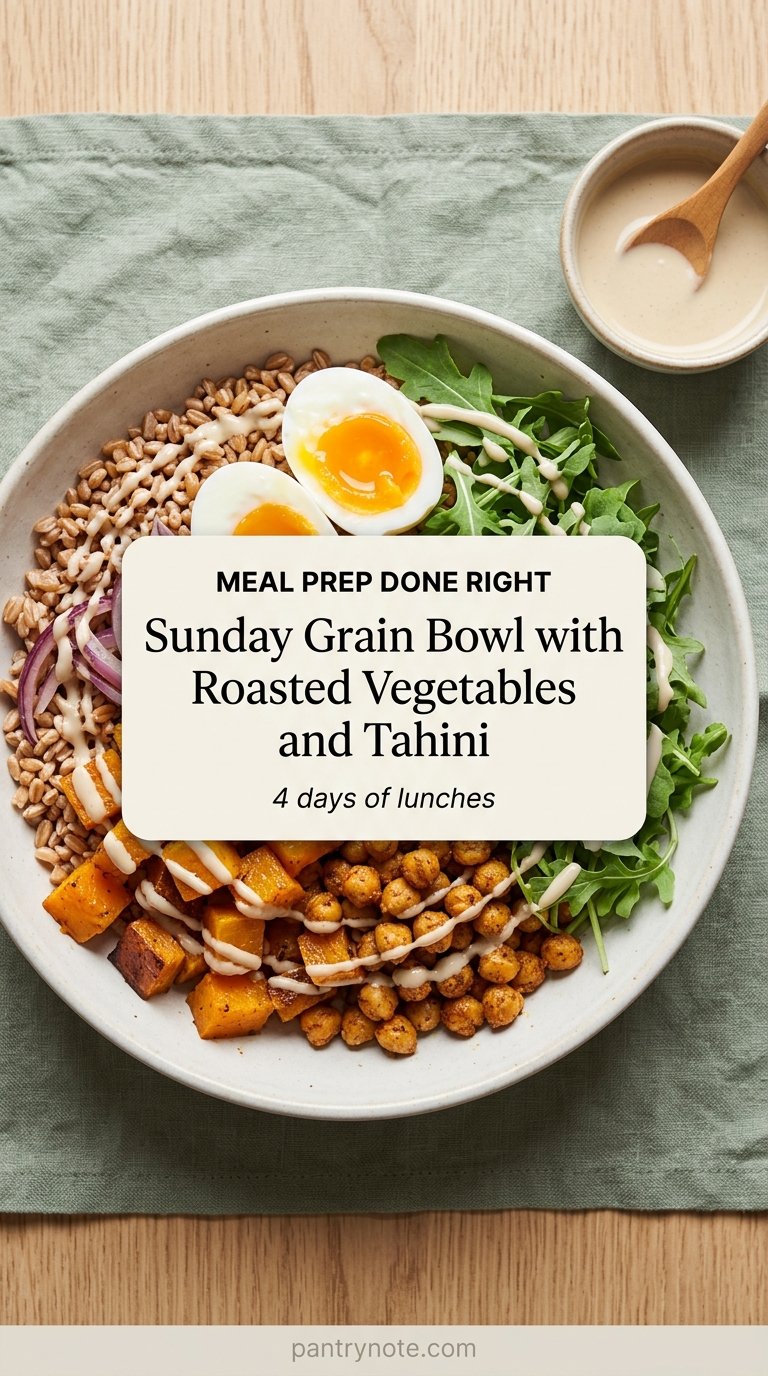
Sunday Grain Bowl with Roasted Vegetables and Tahini
This is the bowl that turned me into a meal prepper, which is not something I ever expected to say. Farro keeps its texture for days without going soggy. Roasted vegetables are better the next day. The tahini dressing improves in the fridge. The only thing you add at serving is a soft egg if you want one.
Sunday Grain Bowl with Roasted Vegetables and Tahini
Let me be direct about what this recipe actually is: it is a system, not a single meal. You spend one hour on Sunday doing relatively meditative kitchen work (roasting vegetables, cooking a pot of farro, whisking a dressing), and the result is four days of lunches or light dinners that require almost no effort to assemble. The components sit in separate containers and you combine them at the last minute, which means nothing gets soggy.
The grain bowl format has been somewhat exhausted by food content in recent years, so let me argue for this specific version. Farro is the right grain here: not quinoa, not brown rice.
Farro has a chewy, toothsome texture that holds its structure for days without going gummy, and a nutty wheat flavor that's more interesting than most neutral grains. The roasted vegetables are high-heat and a little caramelized, with enough variety in texture and color to keep the bowl interesting across multiple meals.
The tahini dressing is bright and slightly sharp from lemon juice, which cuts through the richness of everything else.
This makes four substantial servings. The active time is about 20 minutes; the rest is oven and stove time you can ignore.
Why this works
Grain bowls fail, and meal prep generally fails, when the components don't hold up independently over multiple days. The architectural principle here is keeping everything separate until serving, and choosing components that are designed to last.
Farro is an ancient wheat grain that contains more protein and fiber than most modern wheat, and its hull structure means the grains stay distinct even after days in the refrigerator. Unlike white rice (which can become hard and chalky when cold) or quinoa (which goes slightly slimy after a day or two), farro remains pleasant to eat straight from the fridge without reheating, or with just a brief microwave hit.
High-heat roasting is the right approach for meal prep vegetables specifically because it drives out moisture while caramelizing the exterior. Steamed or sautéed vegetables release water as they sit and can make the rest of the bowl wet. A properly roasted vegetable, caramelized and slightly crispy at the edges, sheds minimal liquid and actually holds up better after a day or two as the flavors concentrate.
The dressing is kept separately for the same reason. Even an oil-based dressing softens greens and can affect grain texture if left sitting together for days. By dressing at the point of service, you preserve the texture of everything in the bowl.
The tahini dressing specifically works here because tahini is an emulsified fat, ground sesame paste, that combines with lemon juice and water into a thick, creamy dressing without eggs or dairy. Lemon juice's acidity helps the proteins in the tahini tighten and create a stable emulsion. The result stays thick and spreadable rather than separating.
Ingredient notes
Farro
Look for semi-pearled or pearled farro rather than whole-berry farro: the former cooks in 25–30 minutes; whole-berry can take 40 or require overnight soaking. Emmer, spelt, and other ancient wheats work as substitutes. Organic Italian varieties (Rustichella d'Abruzzo makes a good one) have better flavor than generic brands.
Vegetables for roasting
This is where you adapt to the season and what's actually in your refrigerator. This recipe uses a combination of butternut squash, red onion, and chickpeas; they roast at the same temperature and time, making them practical.
In spring: asparagus, radishes, spring onions. In summer: zucchini, cherry tomatoes, eggplant.
In fall and winter: root vegetables (beets, carrots, parsnips) alongside squash.
Chickpeas
Canned is fine; drain and dry them thoroughly with a paper towel before roasting. Wet chickpeas steam rather than crisp. For truly crispy chickpeas, let them air-dry at room temperature for an hour before roasting.
Tahini
Use a natural, single-ingredient tahini: just sesame seeds, nothing added. Soom, Seed + Mill, and Al Wadi are all excellent.
Stir the jar before measuring, as the oil separates. Avoid highly processed, shelf-stable tahinis that have been emulsified with additives; they're thicker and sweeter but less complex.
Lemon
Fresh juice only. The bottled stuff is too acidic and lacks the aromatic compounds from the peel. Use one large lemon for the dressing.
Greens
A handful of sturdy greens (arugula, watercress, baby kale) added at serving (not stored in the assembled bowl). These wilt within minutes of dressing, so keep them separate.
How to make it
Preheat your oven to 425°F with two sheet pans inside: starting with a hot pan means the vegetables hit a hot surface and begin caramelizing immediately rather than steaming.
Peel and cube the squash into roughly one-inch pieces. Peel and quarter the red onion.
Drain the chickpeas, pat very dry, then toss everything separately with olive oil, salt, and pepper. Squash and onions go on one pan; chickpeas on the other.
This matters: chickpeas take about 30 minutes to crisp, while squash and onion need 25. Pull the chickpeas first when they're golden and making a slight rattling sound on the pan.
Everything gets a sprinkle of cumin and smoked paprika when it comes out of the oven.
While the vegetables roast, cook the farro. Bring a large pot of salted water to a boil, add the farro, and cook for 25 minutes until tender but still with a tooth. Drain, spread on a sheet pan to cool and release steam, then transfer to a container once room temperature.
The tahini dressing comes together in a small jar: tahini, lemon juice, water, a clove of raw garlic grated on a Microplane, salt, and a bit of olive oil. Shake vigorously.
It will look seized at first; keep shaking. Taste it; it should be bright and creamy with a clean sesame flavor.
Let everything cool completely before containerizing. Warm components generate steam, which condenses and waterloggs everything.
Tips and variations
Proteins
Add a soft-boiled egg, a few slices of grilled halloumi, or a portion of baked salmon or chicken. For a heartier vegetarian version, stir in a spoonful of hummus alongside the tahini dressing.
Swap the grain
Barley, wheat berries, or Israeli couscous all work. Avoid quinoa if you're making this for meal prep; it doesn't hold as well.
Meal prep efficiency
Roast two sheet pans of different vegetables simultaneously to vary the bowls throughout the week. One pan of root vegetables, one pan of cruciferous (broccoli, cauliflower), both at 425°F.
Make it a warm bowl
Briefly microwave the farro and vegetables and dress just before eating. Top with a freshly fried egg.
For a crowd
Double the farro and vegetables. The dressing recipe scales easily; just maintain the ratio of tahini to lemon juice to water.
Frequently Asked
How long does it keep?
Can I use a different grain?
Why does my tahini dressing seize up?
Is this recipe vegan?
 Save
Save

0 Comments
No comments yet — start the conversation below.