

Olive Oil in 2026: How to Read Labels, Spot Fakes, and Buy Bottles That Are Actually Good
Premium labels routinely hide old, fake, and refined oil. Here is the one date that matters, the red flags on the supermarket shelf, and how to taste real extra-virgin oil.
The hard truth about olive oil in 2026 is that a large share of what's sold as "extra virgin" doesn't meet the standard. Industry and academic testing has repeatedly estimated that up to half of the extra-virgin olive oil sold globally fails basic chemical and sensory tests for the grade: it's rancid, adulterated, oxidized, or simply old.
The bottle on the shelf can look premium, carry Italian flags and gold medallions, and still be a poor or fraudulent product. Buying good oil isn't about spending the most; it's about reading the label correctly and knowing which signals are real and which are marketing.
This guide breaks down what the grades actually mean, the single most important thing to look for on a label, the red flags that betray a low-quality or fake oil, how to store and use what you buy, and why none of this is snobbery: fresh, real olive oil simply tastes and performs better.
What do the olive oil grades actually mean?
The grade tells you how the oil was made and its chemical quality, and only the top grade is worth your money for finishing and everyday cooking.
Extra-virgin olive oil (EVOO) is mechanically pressed from olives without heat or chemical solvents ("first cold-pressed") and must fall below a defined free-acidity threshold while passing a sensory panel for defects. It retains the most flavor, aroma, and beneficial compounds. This is the one to buy.
Virgin olive oil is also mechanically pressed but to a lower quality standard, with slightly higher acidity and minor sensory defects allowed. It's fine but a step down.
Plain "olive oil" or "pure olive oil" is usually refined oil (stripped of flavor and defects by processing) blended with a little virgin oil for taste. It's a neutral cooking fat, not a flavor ingredient. "Light" olive oil refers to light flavor and color, not calories; it's refined oil, full marketing spin.
The grade matters because it determines both flavor and the polyphenol content that gives good EVOO its peppery bite and much of its health value. Refined grades have most of that processed out. If a recipe says to finish a dish with olive oil, like the raw drizzle over sheet-pan gnocchi, it means real extra-virgin, where the flavor lives.
What's the single most important thing on the label?
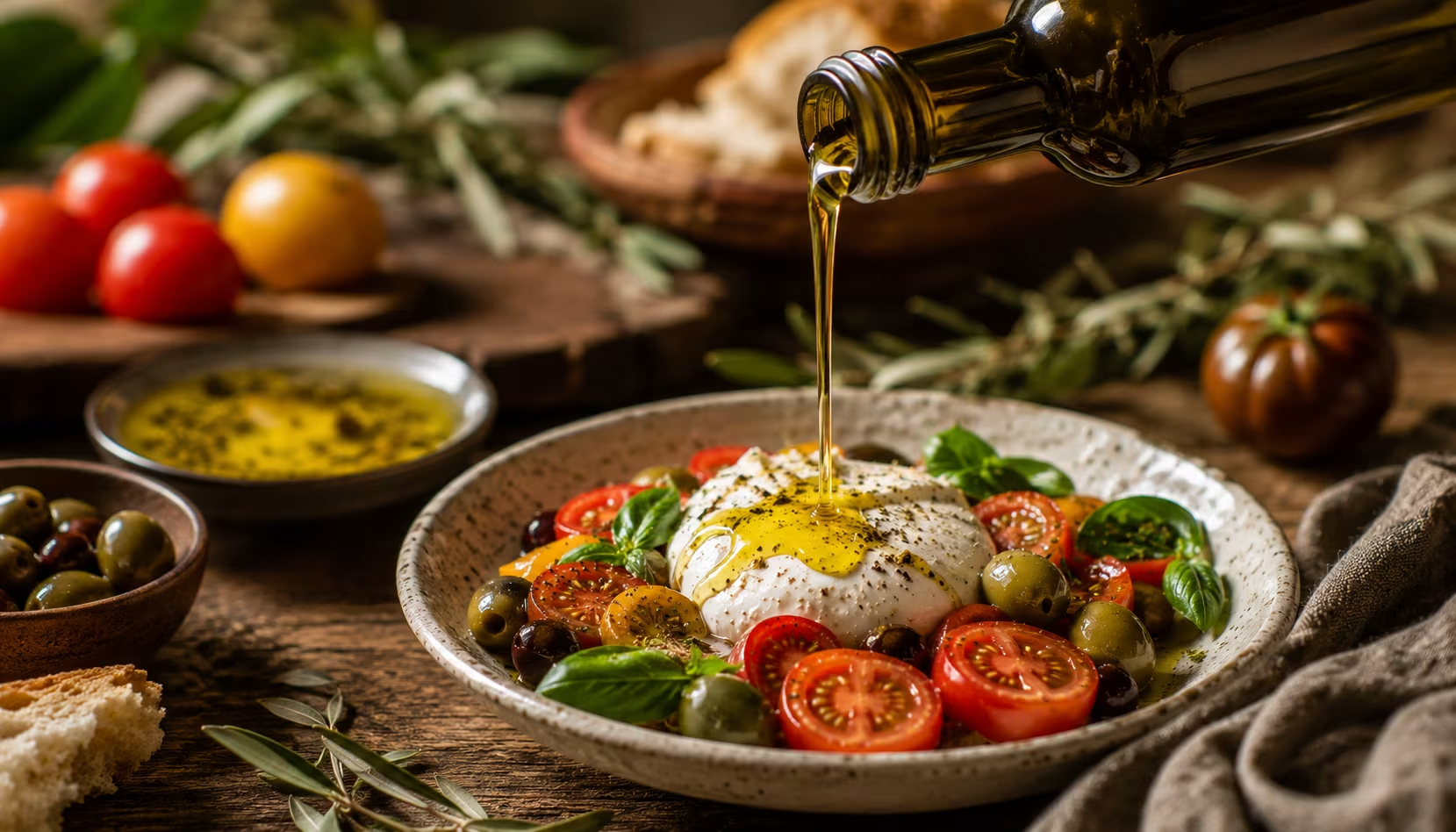
A harvest date, not a "best by" date. This is the one detail that separates a fresh, worthwhile oil from an old one masquerading as fresh, and most low-quality oils hide it precisely because it would expose them.
Olive oil is a fruit juice, and like juice it degrades from the moment it's made. It's at its best within roughly 12 to 18 months of harvest, after which the flavor flattens and the oil slides toward rancidity even unopened. A bottle that prints a harvest date, like "Harvested October 2025" or "Harvest 2025," is telling you exactly how fresh it is and signaling a producer confident in their product.
The "best by" date is nearly useless and often deliberately misleading. A producer can hold oil in tanks for eighteen months after harvest, bottle it in late 2025, stamp a best-by date of 2027, and you'll think it's fresh when it's already past its prime.
The best-by date measures time from bottling, which has nothing to do with when the olives were actually picked. Always look for harvest date first.
If there isn't one, assume the producer has a reason to hide the oil's true age, and choose a bottle that shows it.
What are the red flags of a low-quality or fake oil?
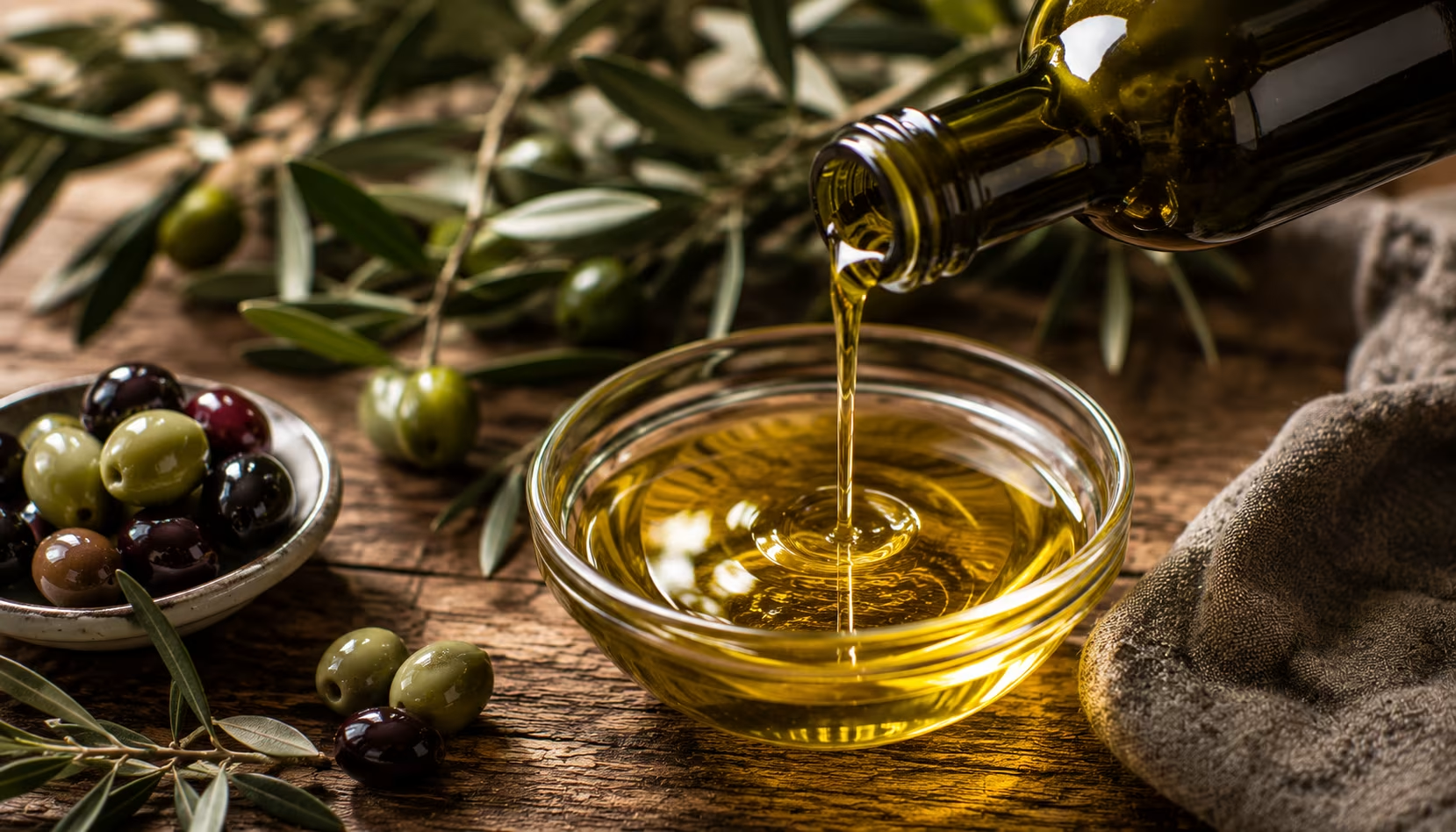
Several signals on the shelf reliably point to oil you should skip. None is absolute proof, but stacked together they tell a clear story.
- Clear glass or plastic bottles. Light is a primary cause of olive oil oxidation. Quality oil is sold in dark green or amber glass, or in tins, to protect it. A clear bottle on a bright shelf is either careless or hiding nothing worth protecting.
- Vague origin language. "Bottled in Italy," "Packed in Italy," or "Product of the EU" without a specific region or country of origin often means a blend of cheap oils from multiple unknown sources, merely bottled in Italy. Look for a single, specific origin.
- No harvest date. Covered above, and worth repeating: its absence is the loudest red flag.
- Suspiciously cheap pricing. Real extra-virgin olive oil costs real money to produce. A bottle dramatically cheaper than comparable EVOO is very likely refined oil, an old oil, or cut with cheaper seed oils.
- Empty superlatives without certification. "Premium," "imported," and gold-medallion graphics mean nothing on their own. What means something is a verifiable certification.
The fraud is well-documented; large-scale European enforcement actions, including widely reported olive oil adulteration raids, have seized tons of mislabeled and adulterated oil, some cut with cheaper seed oils and colored to pass as extra-virgin. This isn't a fringe problem; it's structural to a high-value commodity.
Which certifications and origins are worth trusting?
Certifications shift the trust from the marketing department to an independent body, which is exactly what you want in a category this prone to fraud.
PDO (Protected Designation of Origin) and PGI (Protected Geographical Indication) are EU schemes that legally tie the oil to a specific region and production method. For PDO, every stage (growing, harvesting, milling, and bottling) must occur within a defined geographic area, which makes the supply chain traceable and the origin claim enforceable. These seals are among the stronger guarantees on the shelf, though even they aren't immune to counterfeiting, so pair them with the other signals.
Other credible marks include the COOC (California Olive Oil Council) seal for California oils, which runs its own chemical and taste certification, and oils certified by the International Olive Council (IOC) standards. A specific named estate or producer with a single country and region of origin is itself a quality signal, because traceability is the enemy of fraud.
Origin tips worth knowing: single-origin oils from regions with strong production traditions (parts of Spain, Italy, Greece, Portugal, Tunisia, and increasingly California and Australia) tend to be more reliable than anonymous multi-country blends. Australian and Californian producers, working under strict domestic standards and harvesting in the opposite hemisphere's season, are often genuinely fresh options on Northern Hemisphere shelves.
Treat country of origin as a clue, certification as stronger evidence, and harvest date as the clincher. Knowing how to read these labels is exactly the kind of ingredient literacy that makes a well-built pantry actually good rather than just full.
How much should you spend, and is pricier always better?
Price is a weak signal on its own: it correlates loosely with quality but is easily gamed, so it belongs near the bottom of your decision list, below harvest date, certification, and packaging. Real extra-virgin olive oil costs real money to produce, so a suspiciously cheap bottle is a red flag. But an expensive one is no guarantee, because you can pay a premium for marketing, fancy packaging, and a famous name wrapped around mediocre or old oil.
The useful framing is value, not absolute price. A mid-range bottle from a reputable producer that shows a recent harvest date, a specific origin, a dark bottle, and ideally a PDO, PGI, or COOC certification will outperform a pricier bottle that hides its harvest date and origin behind a flashy label. Spend enough to clear the floor where fraud and refined oil live, then let the verifiable signals, not the sticker price, decide between options.
A practical strategy many cooks use is to buy two oils at different price points. Keep a reasonably priced, fresh mid-grade EVOO for everyday cooking and roasting, where heat dulls subtlety anyway, and a smaller bottle of a higher-quality single-estate oil reserved for finishing: drizzling raw where its flavor actually registers.
That way you're not pouring a $30 finishing oil into a hot roasting pan, and you're not finishing a delicate salad with a flavorless commodity blend. Matching the oil to the job is where the real economy lies.
How do you taste olive oil to judge quality?
You can learn to evaluate olive oil the way professional tasters do, and it takes only a few minutes to start recognizing the markers of a real, fresh oil. The official method is deliberately simple: warm a small amount in a glass cupped in your hand, smell it, then slurp it.
Pour a tablespoon into a small glass, cover it with your other hand, and warm it for a moment: body heat releases the aromas. Uncover and smell.
Fresh, good extra-virgin oil smells green and alive: of fresh-cut grass, green tomato, artichoke, almond, or ripe olives. A stale or rancid oil smells flat, waxy, like old crayons, putty, or nothing at all; that's the smell of oxidation, and it's the most common defect.
Then taste. Take a small sip and "slurp" it, drawing air across your tongue to spread it through your mouth.
A quality oil shows three positive traits: fruitiness (the olive flavor), a bitterness in the middle of the tongue, and a peppery pungency that catches in the back of your throat and may make you cough. That throat-catch is not a flaw: it's the signature of fresh, polyphenol-rich oil, and those same polyphenols carry much of the oil's health value and stability.
A bottle that tastes greasy, flat, musty, or fermented is defective, whatever the label claims. Taste a fresh, certified oil side by side with a cheap supermarket bottle once and the difference is unmistakable, and you'll never be fooled by packaging again.
How should you store and use olive oil once you buy it?
Good oil degrades fast under bad storage, so handling it correctly protects the money you spent. Three enemies do the damage: light, heat, and air, the same oxidizers that age the oil in the bottle.
Store it in a cool, dark cupboard, never on the counter beside the stove. That spot is the worst in the kitchen: the heat from the burners and the light from the window accelerate oxidation, and oil kept there can go stale months before its date. Keep the bottle tightly capped between uses to limit air exposure, and buy a size you'll finish within a couple of months of opening rather than a bargain jug that turns rancid before you reach the bottom.
On cooking with it: the myth that you can't cook with extra-virgin olive oil is overblown. Its smoke point is high enough for the vast majority of home sautéing, roasting, and pan-frying, and recent testing shows good EVOO is among the more stable oils under heat thanks to its antioxidants.
That said, there's a sensible economics to it: the delicate, peppery flavor and fragile polyphenols of a fine finishing oil are wasted and partly cooked off under high heat, so use a mid-grade EVOO or a neutral oil for hard searing and save your best, freshest bottle for finishing: drizzled raw over soup, salad, grilled vegetables, or bread, where its flavor actually shows. Buy fresh, store it dark and cool, taste the difference, and you'll never go back to the anonymous bottle that's been by the stove since last year.
Common olive oil questions
Does olive oil go bad? Yes. It doesn't spoil dangerously, but it goes rancid as it oxidizes, tasting flat, waxy, or musty. Use it within 12 to 18 months of harvest and within a couple of months of opening.
Is cooking with extra-virgin olive oil safe? Yes: its smoke point covers most home sauteing and roasting, and its antioxidants make it relatively stable under heat. Save your best, freshest bottle for finishing, where the flavor isn't cooked off.
Why is some olive oil peppery and bitter? That bite is a good sign: it comes from polyphenols, the antioxidants in fresh, high-quality oil. Flat, greasy oil with no pungency is usually old or refined.
 Save
Save


0 Comments
No comments yet — start the conversation below.