

How to Reduce a Sauce: The Technique That Transforms Thin Liquid Into Flavor
Reduction is home cooking's flavor multiplier. Simmer a thin liquid down and you concentrate its flavor and thicken it — no ingredients added. Here's the technique.
Reducing a sauce is one of the most powerful and least understood techniques in home cooking: you simmer a thin, watery liquid until enough water evaporates to leave behind a concentrated, glossy, intensely flavored sauce. It's how restaurants turn a splash of wine and stock into a sauce that clings to the plate, and it requires no special ingredients — just heat, a pan, and a little patience.
Most home cooks either don't reduce at all (and serve thin, weak sauces) or don't understand why it works, so they can't troubleshoot it. Understand the simple physics — evaporation concentrates everything that isn't water — and you can build a great sauce from almost any flavorful liquid.
Here's the technique, the science, and how to know exactly when to stop.
What does reducing actually do?
It removes water through evaporation, which concentrates the flavor and thickens the body of whatever's left behind. That's the whole mechanism, and understanding it explains every aspect of the technique.
A sauce or cooking liquid is mostly water carrying dissolved flavor compounds, proteins, sugars, and (often) gelatin. When you simmer it uncovered, water escapes as steam while everything else stays in the pan.
So as the volume shrinks, the flavor that was spread thin through all that water becomes packed into a smaller amount of liquid — it gets more intense, more savory, deeper. Reduce a cup of stock to a quarter cup and you've concentrated its flavor roughly fourfold.
This is why a reduced sauce tastes so much richer than the thin liquid you started with: you haven't added anything, you've removed the water diluting it.
Reduction also thickens the sauce, through two routes. As water leaves, the dissolved solids (sugars, proteins, and especially gelatin from stock or pan drippings) become more concentrated and the liquid naturally bodies up, going from watery to syrupy and clinging.
Sauces rich in gelatin — from homemade stock or a braise — thicken beautifully on reduction alone, no flour or cornstarch needed, achieving that glossy, lip-coating, restaurant quality. So reduction does two jobs at once: deeper flavor and better body, from a single, ingredient-free technique.
How do you reduce a sauce properly?
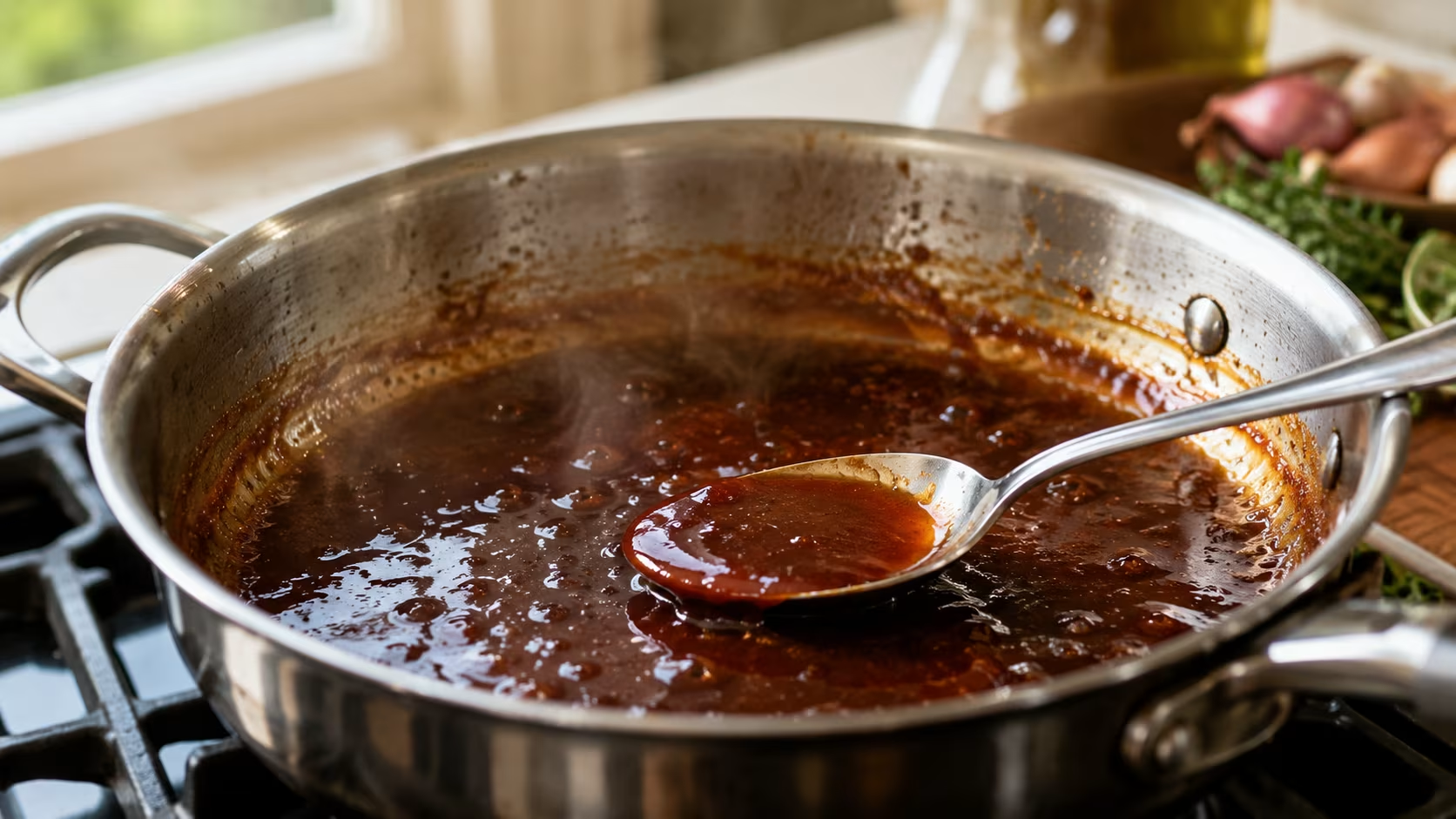
Use a wide pan, a steady simmer, and patience, and don't cover it. Each of those choices controls how fast and how well the reduction happens.
Use a wide pan or skillet, not a tall narrow pot, because evaporation happens at the surface — the more surface area exposed, the faster water escapes and the quicker the sauce reduces. A wide sauté pan reduces a sauce in a fraction of the time a deep saucepan would.
Keep the heat at a steady simmer to a gentle boil — brisk enough to evaporate water efficiently, but not such a violent boil that you risk scorching the concentrating sugars or, for emulsified sauces, breaking them. And leave the pan uncovered, obviously, since a lid traps the steam you're trying to release.
Then be patient and let it cook down, stirring occasionally and scraping the sides. As it reduces, the sauce will visibly thicken and darken, and the bubbles will get larger and slower as the liquid becomes more syrupy.
Toward the end, watch it closely — reduction accelerates as the volume drops, and a sauce can go from perfect to over-reduced (or scorched) quickly in the final minutes. Lower the heat as it concentrates.
The whole process is mostly hands-off simmering; the skill is in the watching, not the doing.
When do you know it's done?
When it reaches the "nappe" stage — thick enough to coat the back of a spoon — or hits the consistency your dish needs. Knowing when to stop is the part most people get wrong, in both directions.
The classic test is nappe (French for "to coat"): dip the back of a spoon into the sauce, then run your finger across it. If the sauce clings to the spoon and the line your finger drew stays clear without the sauce immediately running back together, it's reduced to a proper saucy consistency.
A sauce at nappe will coat food and cling to the plate rather than puddling thinly. For a glaze, you reduce further still, to a thicker, syrupy state.
Two cautions on stopping point. First, the sauce will thicken further as it cools, so pull it slightly thinner than your final target and let it set up — a sauce reduced to perfect thickness while screaming hot will be gluey once it cools.
Second, don't over-reduce: go too far and the sauce becomes a thick, overly intense, sometimes bitter or salty paste (especially bad if the liquid was salted — reducing concentrates the salt too, which is exactly why stock is left unsalted until the final dish). If you over-reduce, you can sometimes rescue it by whisking in a little more liquid.
The target is concentrated and glossy, not scorched and pasty — stop at nappe (or your dish's needed thickness), accounting for cooling.
How do you build a pan sauce by reducing?
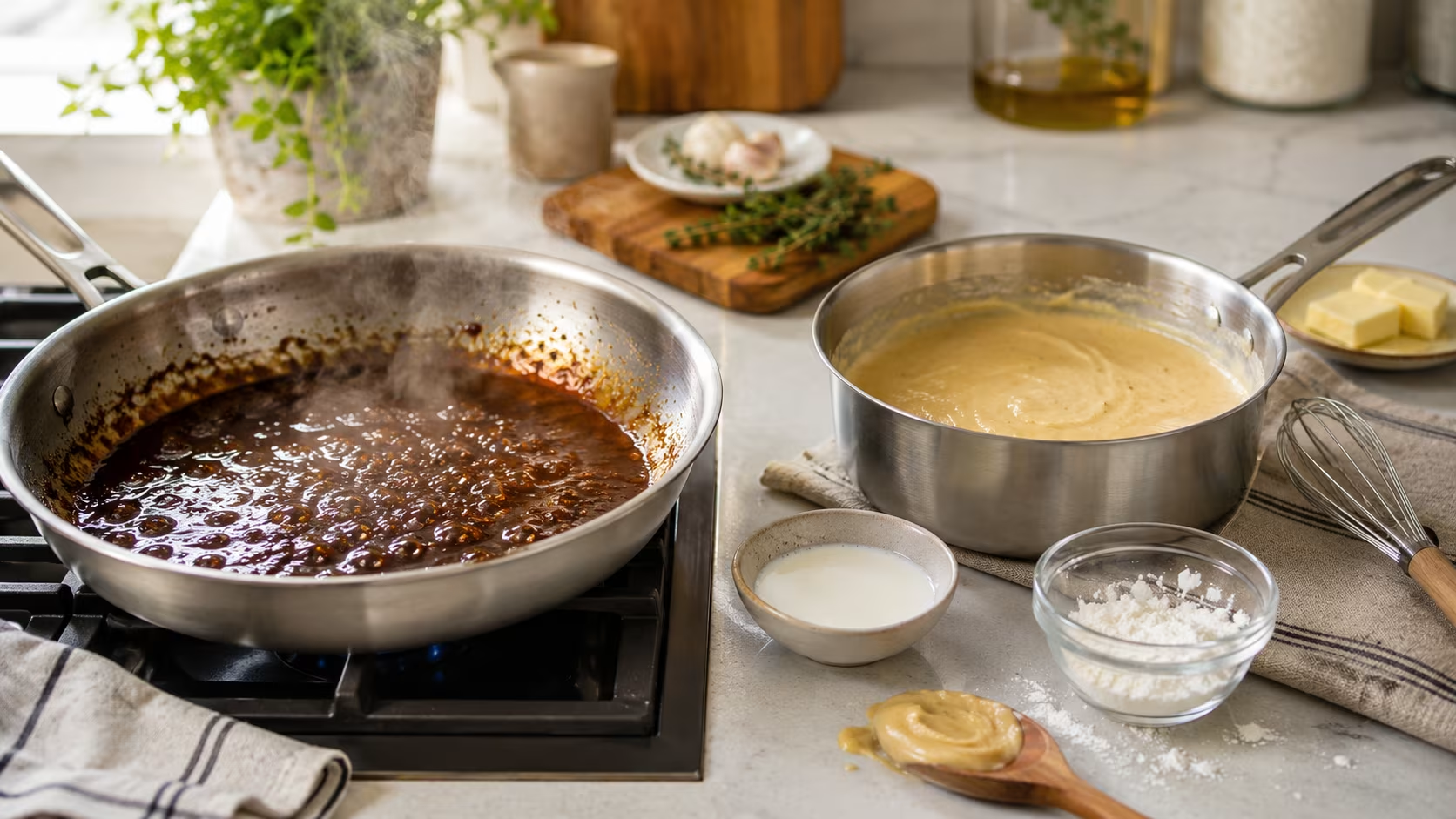
The classic restaurant pan sauce is reduction in action, and it's a sequence worth memorizing: deglaze, reduce, then mount with butter. It turns the browned bits left in a pan after searing into a glossy sauce in the time the meat rests.
After searing meat, there's fond — concentrated browned flavor — stuck to the pan. Deglaze it by pouring in a flavorful liquid (wine, stock, or both) and scraping up the fond with a wooden spoon as it bubbles; the liquid dissolves all that flavor. Then reduce that liquid down by half or more to concentrate it and build body — this is the step that turns a thin deglazing splash into an actual sauce, the same reduction at work in a chicken Marsala or piccata sauce. Finally, mount with butter (monter au beurre): off the heat, swirl in a knob or two of cold butter until it melts into the sauce, which adds richness, body, and a glossy sheen.
Season at the end, after reducing, never before — because reduction concentrates salt, a sauce salted early becomes too salty once it cooks down. Taste at the end and adjust salt and acid (a squeeze of lemon or a splash of vinegar brightens a rich reduced sauce).
That four-step sequence — deglaze, reduce, mount, season — is the backbone of countless pan sauces and gravies, and it all hinges on understanding reduction. The same logic finishes a braise: the gelatin-rich braising liquid is reduced into a glossy sauce.
What can you reduce, and what are the common uses?
Almost any flavorful liquid benefits from reduction, which is why it's such a broadly useful technique. The most common applications:
Pan sauces and gravies — deglaze-and-reduce, as above. Stock into demi-glace — reducing stock dramatically concentrates it into an intensely flavored base or glaze (a little goes a long way). Wine — reducing wine cooks off the raw alcohol and concentrates its flavor for sauces. Tomato sauce — simmering a watery tomato sauce reduces and concentrates it, deepening and sweetening the flavor (the same reason a white bean and tomato skillet tastes better after the tomatoes simmer down). Balsamic vinegar — reduced to a thick, sweet-tangy glaze for drizzling. Cream sauces — reducing cream thickens it into a clinging sauce. Braising and stewing liquids — reduced into rich, glossy sauces after the meat is done.
The unifying principle across all of them: if a sauce or liquid tastes thin, weak, or watery, the answer is usually to reduce it — simmer it down to concentrate what's there. It's the single most useful fix for an underwhelming sauce, and it costs nothing but time. Once you understand reduction, you stop serving watery sauces and start serving ones with real depth and body, built from liquids you already have in the pan.
What are the most common reduction mistakes?
- Not reducing at all. Serving thin, watery sauce is the most common miss. If a sauce tastes weak, simmer it down to concentrate it.
- Salting before reducing. Reduction concentrates salt, so a sauce salted early turns too salty. Season at the end, after it's reduced.
- Reducing in a narrow pot. Less surface area means painfully slow evaporation. Use a wide pan.
- Over-reducing. Going too far gives a thick, bitter, or oversalted paste. Stop at nappe, and remember it thickens more as it cools.
- Boiling an emulsified or cream sauce too hard. A violent boil can break a butter or cream emulsion. Keep it at a steady simmer for delicate sauces.
- Walking away at the end. Reduction speeds up as the volume drops; the last few minutes need watching to avoid scorching.
Common reduction questions
How long does reducing take? It depends on the volume, the pan width, and the heat — a small pan sauce reduces by half in a few minutes, while reducing a large pot of stock to a glaze can take much longer. Use a wide pan and a good simmer to speed it, and judge by consistency (nappe), not the clock.
Can I reduce instead of using flour or cornstarch to thicken? Often yes — especially for gelatin-rich liquids (stock, braising liquid, pan sauces), which thicken to a glossy body on reduction alone, no starch needed. For thin liquids with little gelatin, reduction concentrates flavor but a starch or butter mount may help with body.
Why did my reduced sauce turn out too salty or bitter? You over-reduced, or the liquid was salted before reducing, which concentrated the salt. Season at the end, stop at the right consistency, and if it's too intense, whisk in a little more unsalted liquid to bring it back.
Does reducing remove the alcohol from wine? Simmering cooks off much of the alcohol while concentrating the wine's flavor, which is exactly why you reduce wine in a sauce — to lose the raw, boozy edge and keep the depth. Some trace alcohol can remain, but the harsh raw-alcohol taste cooks away.
Reduction is the closest thing home cooking has to a flavor multiplier: simmer a thin liquid down, and you concentrate its flavor and build its body with nothing but heat and patience. Master deglaze-reduce-mount-season, learn to stop at nappe, and you'll turn pan drippings, wine, and stock into sauces with genuine restaurant depth.
How is reduction different from thickening with flour or cornstarch?
It helps to know when to reduce versus when to use a starch thickener, because they do related but different things. Reduction removes water to concentrate flavor and build body simultaneously — you end up with less sauce, but it's more intensely flavored and naturally thickened (especially if it's gelatin-rich). Nothing is added; the sauce just gets more of itself.
Flour (a roux) or cornstarch (a slurry) thickens without concentrating flavor or reducing volume — you add a thickener to bind the existing liquid, keeping the same amount and the same flavor intensity, just thicker. This is the right choice when you want to thicken a sauce but keep its volume and don't want to intensify (or over-salt) it, or when the liquid has little gelatin to body up on its own. A roux or slurry can also rescue a sauce you don't have time to reduce.
The two even work together: you might reduce a sauce to concentrate its flavor, then finish with a small slurry or a butter mount for extra body if needed. But as a rule of thumb — reduce when you want deeper flavor and have time; thicken with starch when you want body without concentrating or reducing volume. For gelatin-rich liquids (stock, pan sauces, braises), reduction alone usually does both jobs and tastes best, which is why restaurant sauces lean on it. Understanding the difference means you reach for the right tool instead of defaulting to flour every time.
 Save
Save

0 Comments
No comments yet — start the conversation below.