

Knife Skills 101: The Five Cuts Every Home Cook Needs
Better knife work makes cooking faster, safer, and better — and it comes down to a sharp blade, the right grip, the claw, and five cuts. Here are the fundamentals.
Good knife skills are the highest-leverage thing a home cook can learn, and they come down to a sharp knife, the right grip, and five basic cuts. Better knife work doesn't just make your food prettier — it makes cooking faster, safer, and more consistent, because evenly cut ingredients cook at the same rate.
Most people hold the knife wrong, cut with a dull blade, and saw at their food, which is slow, dangerous, and gives ragged, unevenly cooking pieces. Fix the grip, keep the blade sharp, learn the claw, and practice five cuts, and you'll transform from someone who dreads chopping an onion into someone who breezes through prep.
None of it requires talent — just the right fundamentals and a little practice.
Here are the fundamentals that actually matter, and the five cuts that cover nearly everything you'll ever need to do.
Why is a sharp knife safer than a dull one?
This is the most counterintuitive and important fact in knife skills: a sharp knife is far safer than a dull one. It seems backwards, but the logic is airtight, and internalizing it changes how you treat your knife.
A sharp knife glides through food with little pressure, so it goes where you aim it and does so predictably. A dull knife requires you to push hard and saw, and that extra force is exactly what causes accidents — the blade slips off the food's surface (especially something smooth like an onion or a tomato) and slides into your hand with all that force behind it.
A sharp knife bites in cleanly instead of skidding. Dull knives cause more cuts, and worse ones, than sharp knives do.
A sharp knife also makes better food: it slices cleanly through delicate ingredients (a tomato, fresh herbs) without crushing or bruising them, where a dull blade tears and mangles. So step one of knife skills isn't a technique at all — it's keeping your knife sharp. Hone it with a honing steel before most uses to realign the edge, and sharpen it on a whetstone or a pull-through sharpener every month or two to restore the actual cutting edge. A well-maintained chef's knife is the single most important tool in the kitchen, which is why it's worth buying and caring for one good one, as covered in the best kitchen knives guide.
How should you actually hold the knife?
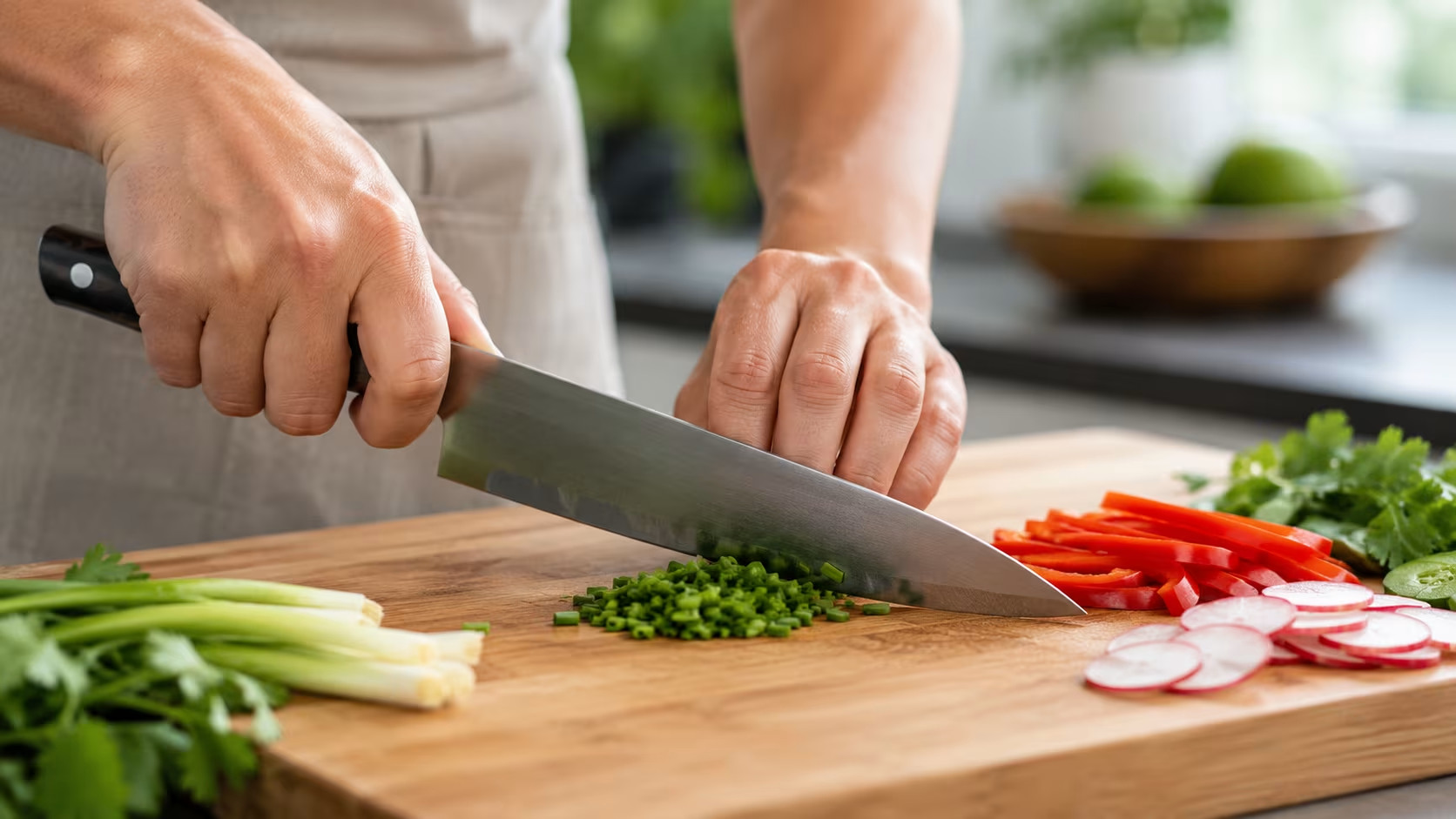
With the pinch grip — and this one change improves nearly everyone's cutting immediately. Most beginners hold the knife by wrapping all their fingers around the handle like a hammer, which gives poor control and tires the wrist. The pinch grip is how every trained cook holds a knife.
To do it: pinch the blade itself between your thumb and the side of your index finger, right where the blade meets the handle, and let your other three fingers wrap around the handle. Your hand is partly on the blade, not just the handle.
This feels strange at first but gives you dramatically more control and balance, because you're gripping the knife at its center of gravity and steering the blade directly rather than waving it from the end of the handle. It also reduces fatigue and lets you guide the blade precisely.
Your grip on the knife is only half of it. The other hand — the one holding the food — is where most cuts happen, which brings us to the claw.
What is the "claw," and why does it matter?
The claw grip is how you hold the food so you never cut your fingers, and it's the single most important safety technique in knife work. Master it and you can cut quickly with total confidence that the blade can't reach your fingertips.
Here's the claw: curl the fingertips of your guiding hand under and inward, tucking them back so your knuckles stick out forward, toward the blade, while your fingertips are protected behind them. You hold the food in place with your curled fingers, and the flat side of the knife blade rests lightly against the front of your knuckles. Because your fingertips are tucked safely behind your knuckles, the sharp edge never reaches them — at worst it touches a knuckle, and only if you raise the blade above knuckle height, which you don't.
The knuckles act as a guide, too: as you cut, you slide your clawed hand backward across the food in small increments, and the knife blade — sliding against your knuckles — follows along, automatically producing even slices. So the claw does double duty: it protects your fingers and it controls the width of each cut.
It feels awkward for the first few minutes and then becomes completely automatic. Never cut with flat, extended fingers; always claw.
One more fundamental: stabilize your cutting board. A board that slides is dangerous. Put a damp paper towel or a thin damp cloth underneath it, and it won't budge while you work.
What are the five cuts every cook needs?
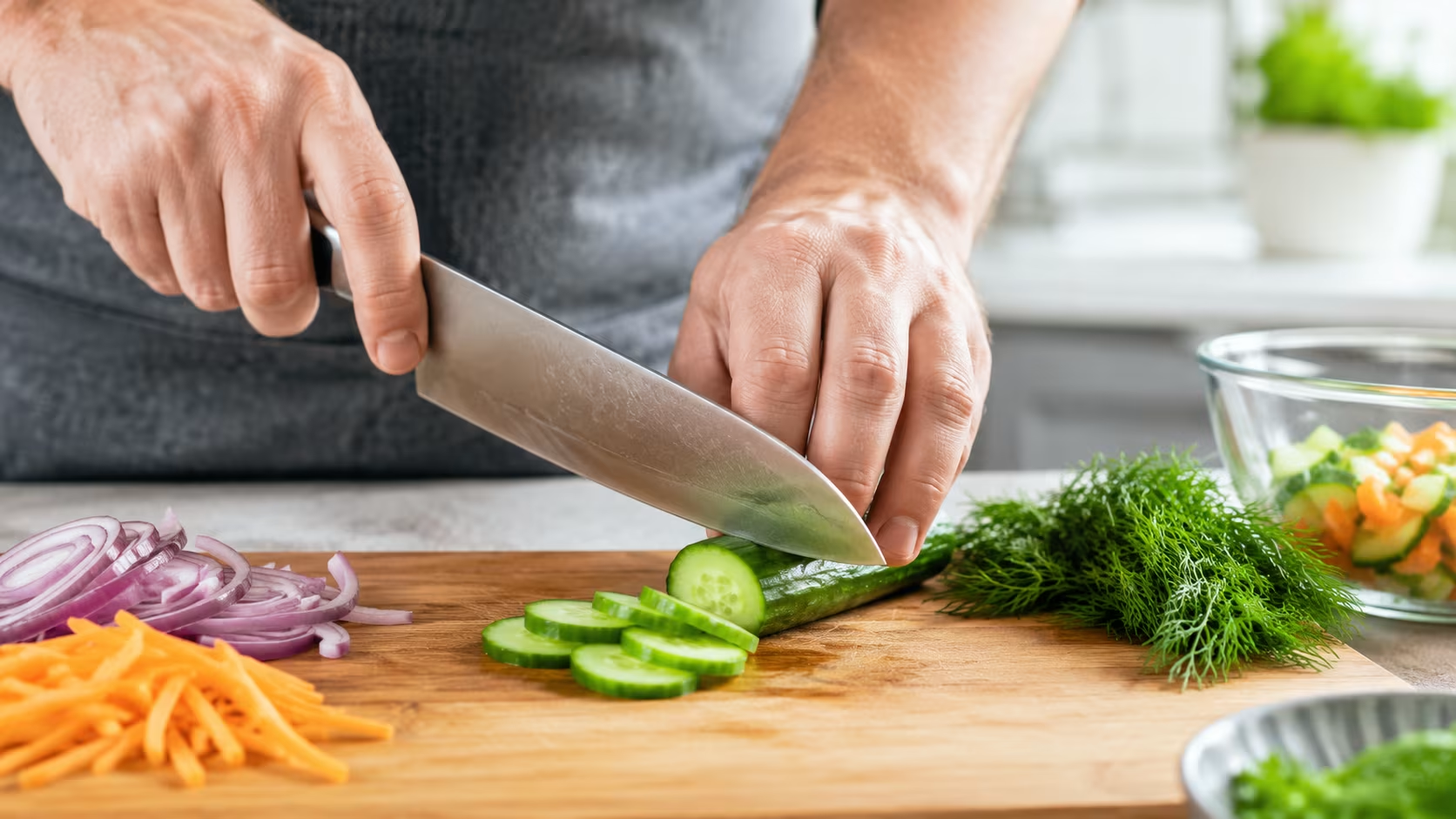
Five cuts cover the overwhelming majority of home cooking. Each builds on the others, and the key to all of them is even, consistent pieces so everything cooks at the same rate.
1. The slice. The basic cut — drawing the blade through the food in even pieces, using the claw to guide width.
Use a smooth forward-and-down (or back-and-down) motion, letting the knife's sharpness do the work rather than pressing straight down. This covers slicing rounds of cucumber, coins of carrot, or planks of any vegetable.
2. The dice. Cubes of a consistent size — small, medium, or large.
You make a dice by first cutting the food into planks, then stacking and cutting those into batons (sticks), then crosswise into cubes. A uniform dice means even cooking and a professional look.
This is the workhorse cut for onions, potatoes, and most vegetables.
3. The mince. A very fine chop, used for garlic, ginger, shallots, and herbs.
After roughly chopping, you hold the knife tip down on the board with one hand and rock the blade rapidly up and down across the pile, pivoting through it, until the pieces are tiny. Mincing maximizes surface area so aromatics release their flavor.
4. The julienne. Thin matchsticks — squaring off the food, slicing it into thin planks, then stacking and slicing those into thin strips. Julienne is used for stir-fries, slaws, and garnishes, and it's the precursor to a fine dice (a fine dice is just a julienne cut crosswise).
5. The chiffonade. A technique for leafy herbs and greens (basil, mint, leafy greens): stack the leaves, roll them tightly into a cigar, and slice across the roll into thin ribbons. It gives you delicate, even strands without bruising the leaves.
Learn these five and the right grip, and you can prep virtually any recipe. The unifying principle across all of them: consistency matters more than speed. Even pieces cook evenly; speed comes naturally with practice once the cuts are uniform.
How do you get faster and better?
Practice deliberately, prioritize evenness over speed, and let the speed come on its own. The cooks who chop fast on cooking shows aren't gifted — they've done it ten thousand times with correct fundamentals, and the speed is a byproduct.
Start slow and focus entirely on consistent, even cuts and correct form — the claw, the pinch grip, the rocking or slicing motion. If you chase speed before the fundamentals are automatic, you build bad habits and risk your fingers.
Cheap, forgiving vegetables are perfect practice material: buy a bag of carrots, onions, and celery and just practice dicing them evenly. Onions in particular are worth drilling, since they're in so many recipes and intimidate beginners.
Within a few practice sessions, the motions become muscle memory and you naturally speed up.
Two more habits accelerate progress. Keep your knife sharp (a sharp knife is easier and safer to cut with, so you improve faster), and use a properly sized chef's knife — an 8-inch chef's knife is the versatile workhorse for most tasks, and trying to do everything with a tiny paring knife slows you down. Good technique on a sharp, well-sized knife is the whole game.
Common knife skills questions
What knife do I actually need? An 8-inch chef's knife handles the vast majority of cutting tasks. Add a paring knife for small, detailed work (hulling strawberries, peeling) and a serrated bread knife for bread and tomatoes, and you've covered nearly everything — three knives, not a fifteen-piece block.
How do I cut an onion without crying (and evenly)? Cut the onion in half through the root, peel, and leave the root end intact (it holds the layers together). Make horizontal and vertical cuts toward — but not through — the root, then slice crosswise for an even dice. A sharp knife (less cell-crushing) and good ventilation reduce the tears.
How often should I sharpen my knife? Hone with a steel before most uses to keep the edge aligned; truly sharpen (whetstone or pull-through) every month or two with regular home use. If the knife is crushing tomatoes instead of slicing them, it's overdue.
Why do my cut pieces cook unevenly? They're different sizes. Evenness is the whole point of knife skills — uniform pieces cook at the same rate, so focus on consistent cuts rather than speed, and your finished dishes will improve as much as your prep.
Spend a few sessions drilling the grip, the claw, and these five cuts on a bag of cheap vegetables, and knife work stops being the tedious, slightly scary part of cooking and becomes the smooth, satisfying foundation everything else is built on.
How do you maintain the edge and choose a board?
Sharpening and honing are two different things, and confusing them is why many home knives are dull. Honing (with a honing steel) doesn't actually sharpen — it realigns the microscopic edge that bends out of true with use, and you do it frequently, even before each session. Sharpening (with a whetstone or a pull-through sharpener) removes a tiny bit of metal to create a fresh edge, and you do it occasionally, every month or two with regular use. Hone often, sharpen sometimes, and your knife stays genuinely sharp.
For the cutting surface, choose wood or plastic, not glass, stone, or ceramic — hard surfaces chip and dull your blade with every cut. A large end-grain wood board is gentlest on edges and pleasant to work on; a thick poly board is dishwasher-safe and budget-friendly. Whatever you use, stabilize it with a damp towel underneath so it can't slide.
Are expensive knives worth it? Up to a point — a quality chef's knife in the $50–$150 range with good steel and balance is a worthwhile lifetime tool, but beyond that you're mostly paying for prestige. Far more important than price is keeping whatever knife you own sharp; a well-maintained mid-range knife outperforms a neglected expensive one.
I'm left-handed — does that change anything? The grip, claw, and cuts are identical; just mirror the hand positions. Most chef's knives are symmetrical and work either-handed (some Japanese single-bevel knives are handed, but standard Western chef's knives are not).
What's the fastest way to improve? Keep the knife sharp, use the pinch grip and the claw every single time until they're automatic, and practice on cheap vegetables prioritizing even cuts over speed. Speed is a byproduct of correct, repeated technique — drill the fundamentals and it comes on its own.
Bottom line: the whole of knife skills is a sharp knife, the pinch grip, the claw, and even, consistent cuts. Drill those on cheap vegetables, prioritize evenness over speed, and within a few sessions chopping stops being a chore and becomes the smooth, fast, safe foundation of every meal you cook.
Do I need more than a chef's knife to start? No — a single good 8-inch chef's knife handles the vast majority of cutting. Add a paring knife and a serrated bread knife later, but the chef's knife alone, kept sharp and held correctly, will carry you through nearly every recipe while you build your skills.
Sources and verification
Check current details with these primary or subject-authority sources before acting on the information.
 Save
Save

0 Comments
No comments yet — start the conversation below.