

How to Poach an Egg Perfectly: The Two Techniques That Actually Work
A perfect poached egg looks like a restaurant trick but comes down to fresh eggs, gentle water, and timing. Here are the two methods that actually work at home.
A perfectly poached egg — a tender, set white wrapped around a hot, liquid yolk — looks like a restaurant trick but comes down to a few controllable variables: the freshness of the egg, the temperature of the water, and a little technique to keep the white from spreading into wispy threads. Most home poaching fails for one reason: people boil the water and use old eggs, then wonder why they get a ragged cloud of egg with a hard yolk.
Fix those two things and add one of two simple methods, and you'll poach eggs that hold their shape with a gloriously runny center every time. It's a five-minute skill that elevates toast, salads, grain bowls, and brunch.
Here's why eggs misbehave in the pot, the two techniques that reliably work, and how to nail the timing for that perfect runny yolk.
Why does egg freshness matter so much?
Because fresh eggs have firm whites that hold together, while old eggs have watery whites that spread into wispy strands the moment they hit the water. This single factor determines whether you get a neat, compact poached egg or a messy cloud, and it's the variable most people overlook.
An egg white has two parts: a thick, firm inner white that clings closely around the yolk, and a thinner, looser outer white. In a fresh egg, the thick white is dominant and tight, so when you slip it into the water it stays gathered around the yolk in a compact shape. As an egg ages, that thick white gradually breaks down and thins out, so more of it is loose, watery white that disperses into feathery threads in the simmering water — the classic ragged result.
So the single best thing you can do for a clean poached egg is start with the freshest eggs you can get. If you're not sure how fresh yours are, there's a simple test: a very fresh egg sinks and lies flat in a bowl of water, while an old egg stands up or floats (an air pocket grows inside as it ages). Use your freshest eggs for poaching and save older ones for hard-boiling or baking.
What's the trick to a neat shape? (Two techniques)
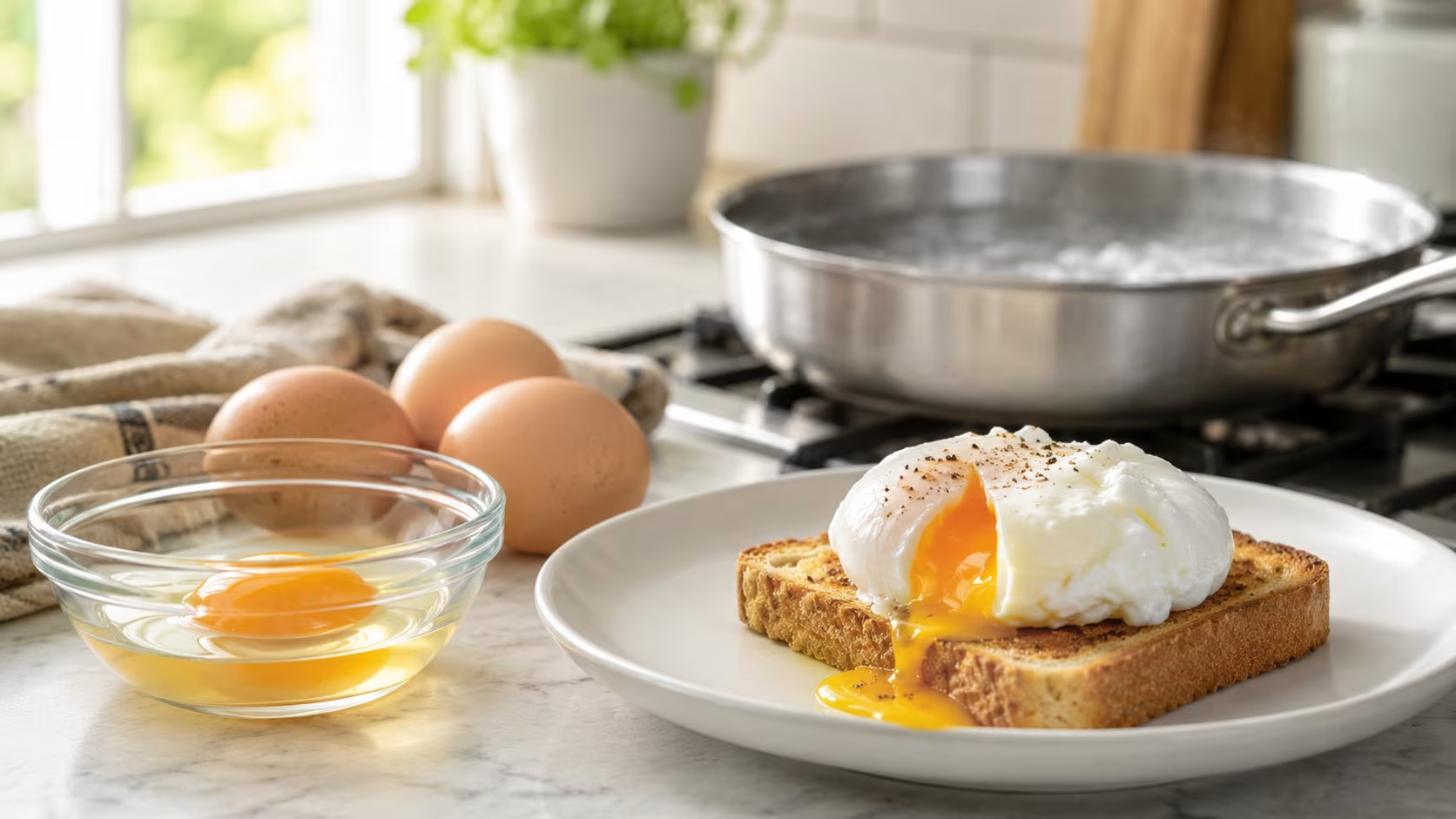
There are two reliable methods, and both solve the same problem — keeping the loose white from spreading. Pick whichever suits you.
The strainer method (the most reliable). Crack the egg into a fine-mesh strainer set over a bowl and let it sit for a moment. The thin, watery outer white — the part that would otherwise feather into threads — drains away through the mesh, leaving just the egg with its firm white intact.
Then gently lower the egg from the strainer (or tip it from a small bowl) into the simmering water. With the troublesome loose white already removed, you get a clean, compact poached egg with almost no wisps.
This method is so effective it largely compensates even for eggs that aren't perfectly fresh, which is why many cooks consider it foolproof.
The vortex (whirlpool) method. Stir the simmering water in a circular motion to create a gentle whirlpool, then drop the egg into the center of the spinning vortex. The swirling motion wraps the white around itself and the yolk, gathering it into a neat, rounded shape as it sets.
It works well for a single egg and looks impressive, though it's harder to do with more than one or two eggs at a time. For multiple eggs, the strainer method scales far better.
You can combine them — strain the egg and drop it into a gentle swirl — but the strainer alone is usually enough. Both beat just cracking an egg straight into still water and hoping.
Does adding vinegar help, and how hot should the water be?
Yes to a splash of vinegar, and the water should be at a bare simmer, never a rolling boil. These two together are what most failed attempts get wrong.
A splash of vinegar (a tablespoon or so of white or distilled vinegar per quart of water) helps the egg white set faster by speeding coagulation of the proteins, so the white firms up on contact and spreads less. It's a useful insurance policy, especially if your eggs aren't the freshest.
Use just a small amount — too much and you'll taste it or get a slightly rubbery white. If your eggs are very fresh and you use the strainer method, you can skip the vinegar entirely.
Water temperature is critical. The water should be at a gentle simmer — around 180 to 190°F, with small bubbles forming on the bottom and just barely breaking the surface, not a vigorous boil. A rolling boil is the enemy: its violent agitation thrashes the delicate egg white apart into shreds and can toughen it.
Bring the water to a boil, then reduce the heat until it calms to that bare, lazy simmer before you add the egg. Gentle heat cooks the white tenderly while letting it hold its shape.
A wide, shallow pan or a deep skillet with a few inches of water works well, giving the egg room without deep, churning water.
How long do you cook it for a runny yolk?
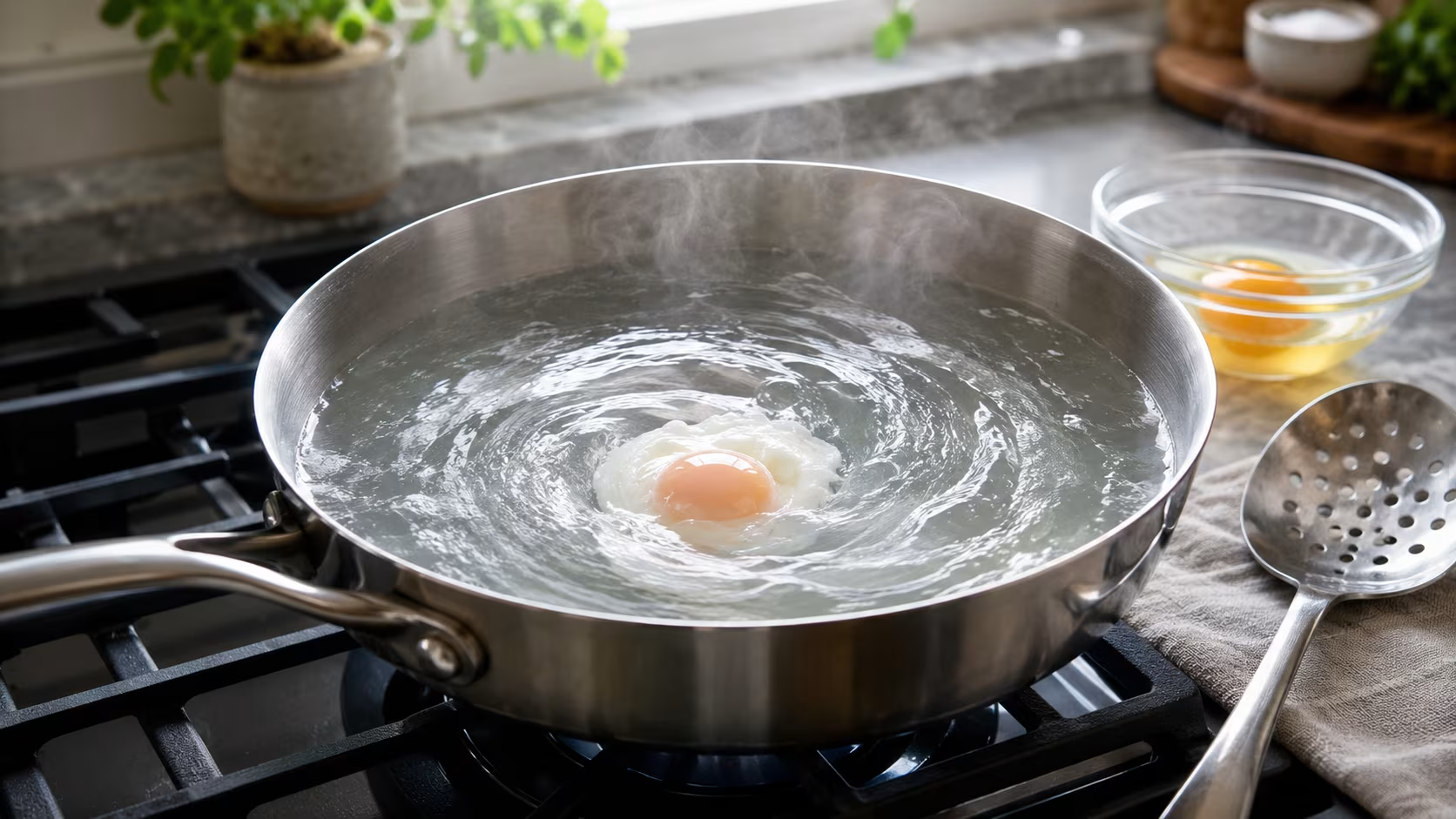
About 3 to 4 minutes for a classic poached egg with a fully set white and a warm, liquid yolk. Timing is everything here, because the difference between a perfect runny yolk and an overcooked solid one is just a minute or two.
Once the egg is in the simmering water, leave it mostly undisturbed and start timing. At around 3 minutes the white is set and tender while the yolk is still completely liquid — the ideal for most uses.
At 4 minutes the yolk is warm and beginning to thicken slightly at the edges but still runny in the center. Push past 5 minutes and the yolk starts to set into a firmer, jammy or solid state.
For a soft, runny yolk, 3 to 4 minutes is the window; pull it the moment the white looks set but still wobbles slightly.
Lift the egg out with a slotted spoon and let it drain — the spoon lets the water run off so you don't flood your plate. Rest it briefly on a paper towel or kitchen towel to blot the excess water, and trim any stray wisps of white with the spoon or a knife for a tidy presentation. Then serve immediately, while the yolk is hot and flowing.
Can you poach eggs ahead of time?
Yes, and this is the restaurant secret that makes poached eggs practical for a crowd. You can poach eggs in advance and reheat them, so you're not standing at the stove poaching one egg at a time while everyone waits.
To do it: poach the eggs as usual but pull them about 30 seconds early (slightly underdone), then immediately transfer them to a bowl of ice water to stop the cooking. This shocks them and halts the yolk from setting further.
Stored in the ice water (or just covered in cold water) in the fridge, they keep for a day or two. When you're ready to serve, slip the cold poached eggs into a bowl of hot (not boiling) water for about a minute to gently reheat them through without overcooking, then drain and serve.
This is exactly how brunch spots turn out dozens of eggs Benedict on demand.
For everyday cooking, this make-ahead trick means you can poach a batch on the weekend and add a perfect runny egg to a grain bowl or piece of toast in under a minute on a busy morning.
What do you serve a poached egg on?
A poached egg's runny yolk acts as an instant, rich sauce, so it pairs best with something that catches and soaks it up. The classics: eggs Benedict on a toasted English muffin, a poached egg on buttered toast or garlic butter mushroom toast, or perched on smashed avocado.
It's brilliant on top of a grain bowl, a salad (especially a frisée or a warm lentil salad), or hash, where the broken yolk dresses everything. It also crowns brothy and saucy dishes beautifully — a bowl of ramen, a white bean and tomato skillet, or a shakshuka-style dish — turning a simple plate into something rich and complete.
A finishing touch of flaky salt, cracked pepper, and maybe a drizzle of good olive oil or chili crisp is all a perfect poached egg needs to shine.
Common poached egg questions
Why does my egg white spread into wisps? Old eggs (watery whites) and water that's boiling too hard are the two causes. Use the freshest eggs you can, strain off the loose white through a fine-mesh strainer, keep the water at a bare simmer, and add a splash of vinegar.
Do I need vinegar? It helps the white set faster, but it's optional — with very fresh eggs and the strainer method you can skip it. If you do use it, a small splash is plenty; too much affects the taste and texture.
Can I poach more than one egg at once? Yes — the strainer method is best for multiples since each egg goes in clean. Give them room in a wide pan and don't crowd, and stagger them slightly so you can track each one's timing. The vortex method is really only practical for one or two.
Can I poach eggs in the microwave? You can — crack an egg into a mug of water, cover, and microwave in short bursts — but the texture is less reliable and there's a splatter/over-cooking risk. The stovetop methods give far more consistent, restaurant-quality results.
Master the fresh-egg-plus-gentle-water basics with either the strainer or the vortex, and the perfect poached egg stops being a restaurant luxury — it becomes a five-minute move that turns toast, salads, and bowls into something that looks and tastes like you tried much harder than you did.
How do you scale up and troubleshoot poaching?
For more than one or two eggs, the strainer method plus the make-ahead ice-bath trick is the only sane approach — poach a batch, shock them in ice water, and reheat them all at once in hot water just before serving. Trying to vortex six eggs at once is a recipe for chaos; the whirlpool is really a one-egg party trick.
If your whites still spread despite fresh eggs and a gentle simmer, strain more aggressively (let the loose white drain fully) and add a touch more vinegar. If your yolks keep overcooking, you're either leaving them in too long or your water is too hot — pull at 3 minutes and keep the water at a bare simmer. If the egg sticks to the bottom of the pan, the water wasn't deep enough or moving enough; use a few inches of water and give it a gentle stir before adding the egg.
Can I poach eggs without vinegar? Yes — with very fresh eggs and the strainer method, vinegar is optional. It mainly helps the white set faster, which matters most with older eggs. If you dislike any hint of vinegar flavor, skip it and rely on fresh eggs and gentle water.
What's the ideal water depth? A few inches — deep enough that the egg can float and set without immediately hitting and sticking to the bottom, but you don't need a huge pot. A wide, deep skillet or a medium saucepan works well.
Why is my poached egg tough or rubbery? Overcooking, water that's boiling too hard, or too much vinegar. Tender whites come from a gentle simmer and a short cook; a rolling boil and excess acid both toughen the protein.
Bottom line: fresh eggs, water at a bare simmer, a strainer or a vortex to corral the white, and a 3-to-4-minute cook give you a restaurant-quality poached egg — and the ice-bath make-ahead trick lets you do it for a crowd without stress.
Sources and verification
Check current details with these primary or subject-authority sources before acting on the information.
 Save
Save



0 Comments
No comments yet — start the conversation below.