

How to Make a Roux: The Sauce Foundation That Unlocks French and Cajun Cooking
A roux is just fat and flour cooked together, and it's the base of mac and cheese, gravy, gumbo, and the French mother sauces. Here's how to nail it every time.
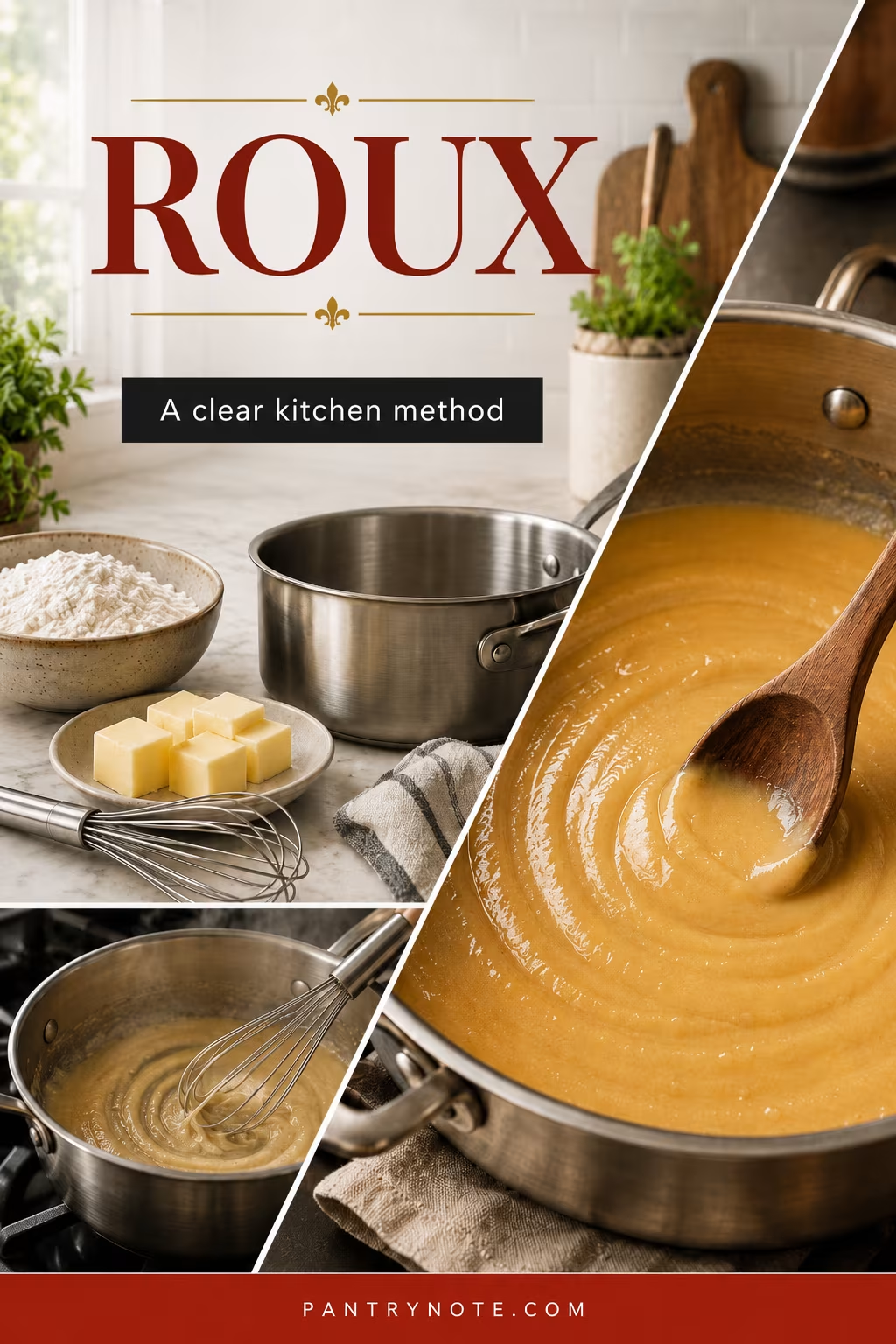
A roux is just equal parts fat and flour cooked together, and it's one of the most powerful three-minute skills in cooking — the foundation of macaroni and cheese, sausage gravy, gumbo, étouffée, and the entire family of French mother sauces. Master this one technique and a dozen dishes open up, because a roux is how you turn a thin liquid into a smooth, velvety sauce without lumps.
The catch is that "cook flour in fat" hides a few crucial details: how long you cook it changes everything, and how you combine it with liquid determines whether you get silk or paste with floury lumps. Here's the whole thing, demystified.
What exactly is a roux?
A roux is a cooked mixture of fat and flour in roughly equal parts by weight, used to thicken liquids. The fat is usually butter (classic French), but oil, bacon fat, or other fats work too. You melt the fat, whisk in the flour, and cook the paste for anywhere from a couple of minutes to nearly an hour, depending on what you want.
The way it thickens is simple chemistry. Flour is mostly starch, and starch granules swell and gelatinize when heated in liquid, trapping water and thickening it.
But if you just dumped raw flour into a hot liquid, it would clump instantly into lumps, because the starch on the outside of each clump gelatinizes and seals off the dry flour inside. Cooking the flour in fat first coats every starch granule in fat, keeping them separate so they can disperse smoothly into the liquid and thicken it evenly — no lumps.
That's the entire reason the roux step exists.
Cooking the flour in fat also does a second essential job: it cooks out the raw, pasty, "raw flour" taste. Uncooked flour tastes chalky and unpleasant, so even a quick roux is cooked for at least a minute or two to eliminate that. The longer you cook it, the more the flavor — and the color — change, which is the next key idea.
Why does the color of a roux matter?
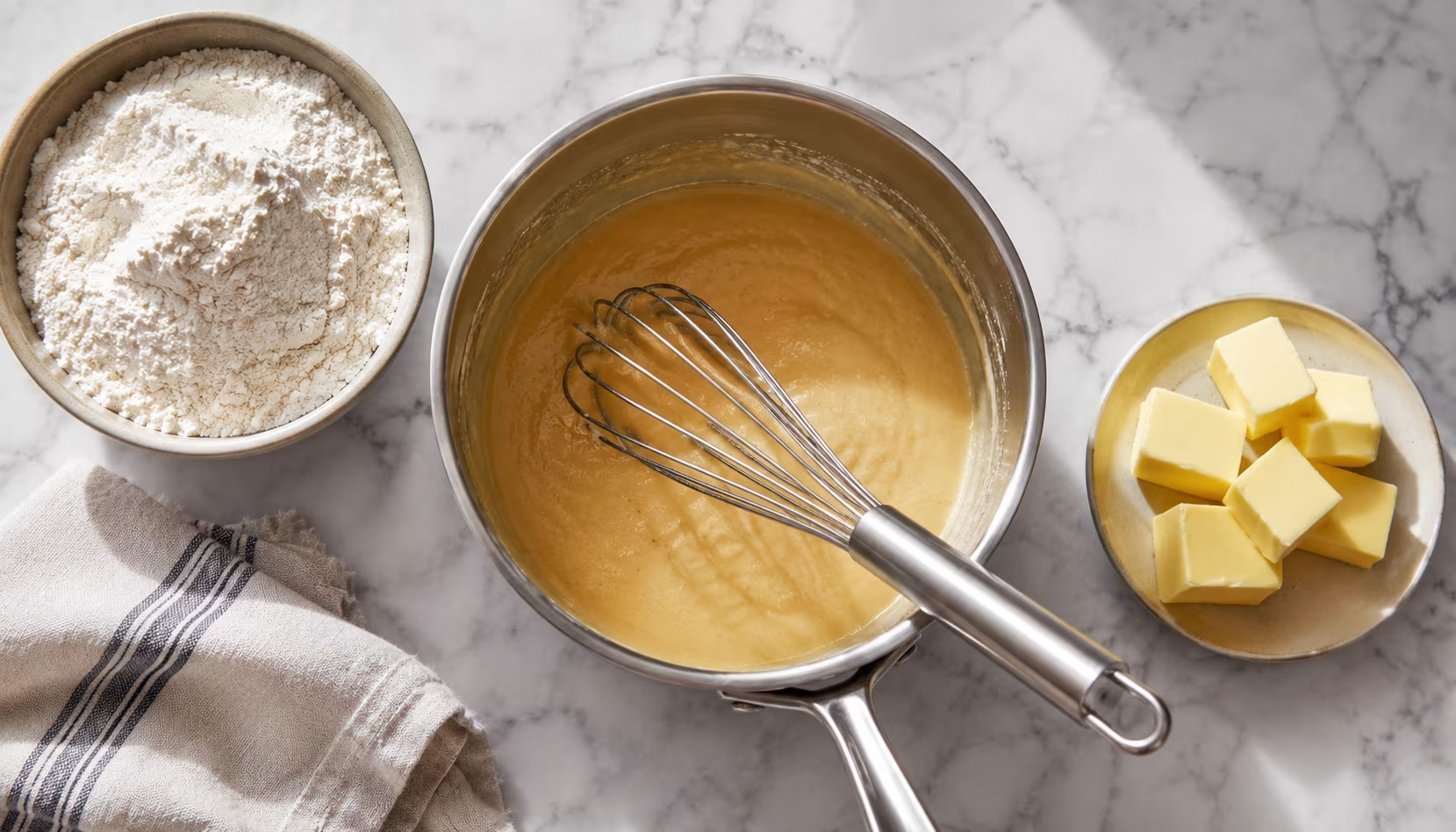
Because the cooking time changes both the color and the function: a longer-cooked, darker roux has more flavor but less thickening power. This trade-off is the heart of understanding roux, and it gives you four classic stages to choose from.
White roux is cooked just 2 to 3 minutes, only until the raw-flour smell goes and it's still pale. It has the most thickening power and a neutral flavor, and it's the base for béchamel (white sauce), mac and cheese, and cream soups.
Blond roux is cooked a few minutes longer, until it turns a light golden color and smells faintly nutty. It thickens nearly as well as white roux with a touch more flavor — the base for velouté and many gravies.
Brown roux is cooked longer still, to a peanut-butter brown with a distinctly nutty, toasty aroma. It has noticeably less thickening power but rich, deep flavor, used in some gravies and the French espagnole sauce.
Dark roux is the Cajun and Creole specialty, cooked patiently — often 30 to 45 minutes — to a deep mahogany or chocolate brown. It's prized for its intense, roasted, nutty flavor and is the soul of gumbo and étouffée.
But here's the key: a dark roux has very little thickening power left, because the prolonged heat breaks down the starch's ability to gelatinize. So gumbo made with dark roux relies on the roux for flavor and only modest body, often with okra or filé adding thickness.
The rule to remember: the darker the roux, the more flavor and the less thickening. Choose your stage based on whether you want a thick, neutral sauce (white) or deep, roasted flavor (dark).
How do you combine roux and liquid without lumps?
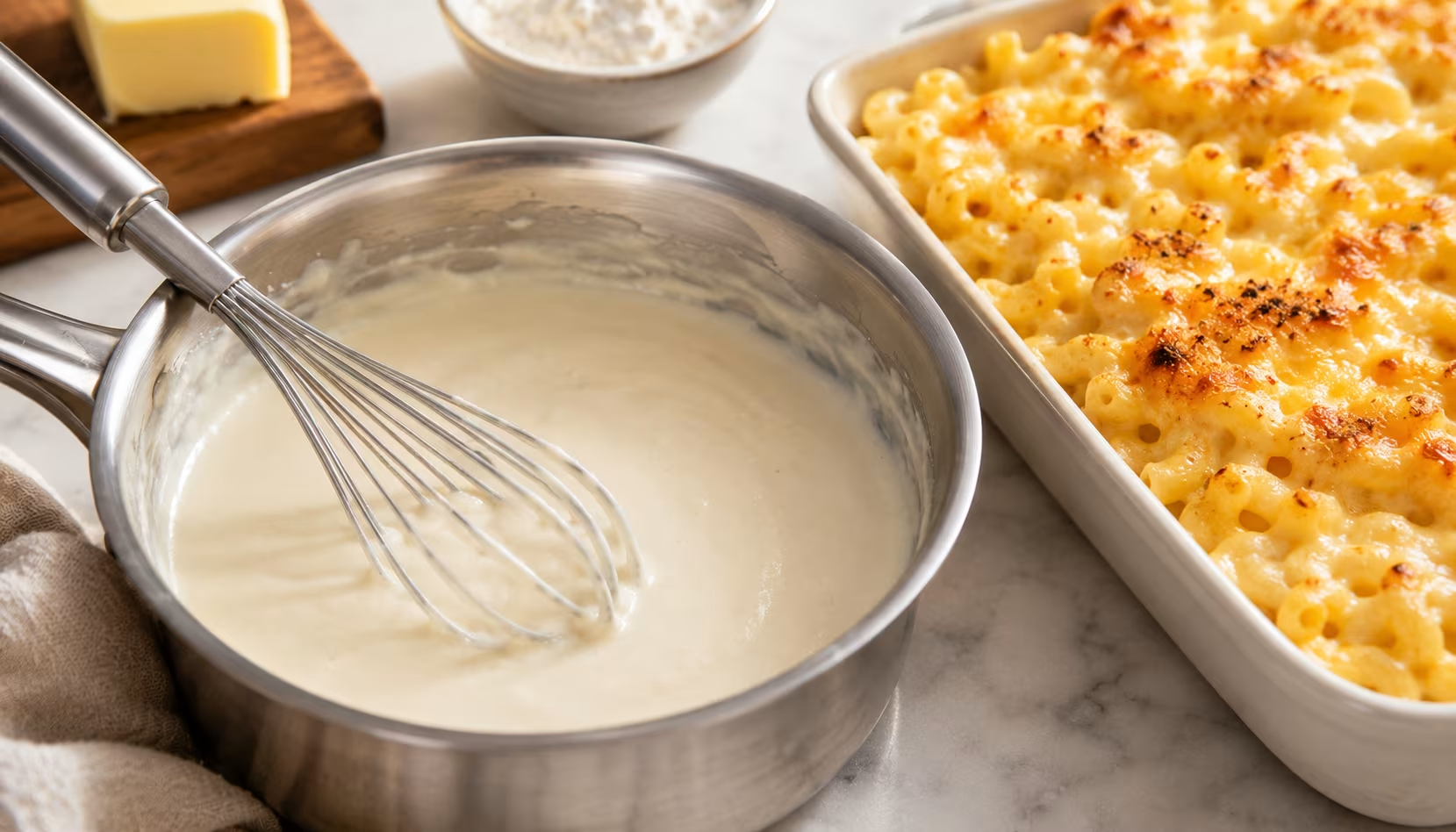
The golden rule: avoid adding hot liquid to a hot roux all at once. Lumps form from thermal shock and from dumping liquid too fast, so you control temperature and add gradually. There are two reliable approaches, and both work on the same principle.
The classic method is to add cold or cool liquid to your hot roux, gradually, whisking constantly. Pour in a little, whisk until it's a smooth thick paste, then add more, whisking, and keep going — each addition thins the mixture a bit more, and the constant whisking keeps it smooth as it comes together. The temperature difference and the gradual addition prevent the starch from seizing into clumps.
The alternative, equally valid, is to whisk hot liquid into a cooled roux gradually. Some cooks make the roux ahead, let it cool, then whisk in warm liquid. Either way, the principle is the same: don't combine two hot components all at once, and add the liquid in stages while whisking continuously.
A whisk is your best friend here — it breaks up any incipient lumps far better than a spoon. Add the liquid gradually, whisk constantly, and bring the sauce up to a simmer; it will thicken as it heats and the starch fully gelatinizes.
If you do get a few lumps despite your best efforts, a quick blitz with an immersion blender or a pass through a strainer rescues the sauce. Once the sauce reaches a simmer and thickens to your liking, you can finish and season it — and from there it's a short step to the reduction techniques that concentrate and perfect any sauce.
What ratio of roux to liquid should you use?
The thickness of your final sauce depends on how much roux you use per unit of liquid, and the classic French ratios give you a reliable starting point. They're worth memorizing because they make sauces repeatable.
For a standard, pourable sauce, a common ratio is about 2 tablespoons each of fat and flour per 1 cup of liquid for a medium-bodied sauce that coats a spoon. Use a bit less roux (around 1 tablespoon each per cup) for a thinner sauce or soup, and more (3 tablespoons each per cup) for a thick sauce. Remember that darker roux thickens less, so you may need a little more of a brown roux to achieve the same body as a white one.
Keep in mind the sauce will continue to thicken as it simmers and cools, so aim slightly thinner than your target and let it set up. If it ends up too thick, whisk in a splash more liquid; too thin, simmer it longer to reduce or whisk in a little more roux (cooked separately). Measuring fat and flour equally by weight or volume keeps the base consistent every time.
What can you actually make with a roux?
A roux unlocks an entire category of cooking, which is why it's such a high-value skill. At the French level, it's the foundation of three of the five "mother sauces": béchamel (white roux plus milk), velouté (blond roux plus stock), and espagnole (brown roux plus brown stock). From those three bases flow dozens of derivative sauces — add cheese to béchamel and you have Mornay, the sauce behind mac and cheese and gratins.
In American and Southern cooking, a roux is behind sausage gravy, biscuits and gravy, and cheese sauces. And in Cajun and Creole cuisine, the dark roux is the non-negotiable soul of gumbo and étouffée, where it provides that signature deep, roasted backbone. Homemade stock makes all of these dramatically better, which is one more reason to know how to make stock from scratch — a velouté is only as good as the stock you whisk into it.
Once you can make a roux, you stop buying jarred cheese sauce and packet gravy. A béchamel takes five minutes; a cheese sauce for mac and cheese, maybe seven. It's one of those foundational techniques that quietly makes you a more capable, self-sufficient cook.
Common roux questions
Can I make a gluten-free roux? Yes — you can brown rice flour or a gluten-free flour blend in fat the same way, though it behaves a little differently and won't develop quite the same nutty depth. For pure thickening without a roux, a cornstarch slurry (cornstarch whisked with cold water, added at the end) is the simplest gluten-free route, as covered in gluten-free cooking.
Why does my sauce taste pasty or floury? The roux wasn't cooked long enough to eliminate the raw flour taste, or the sauce didn't simmer long enough for the starch to fully cook. Cook the roux at least 2 to 3 minutes before adding liquid, and let the finished sauce simmer a few minutes.
Can I make roux ahead? Yes — roux keeps well in the fridge for weeks (some cooks keep a jar of dark roux ready for gumbo). Make a batch, cool it, and whisk warm liquid into the cold roux when you need a fast sauce.
My roux smells like it's burning — is it ruined? If it has black specks, yes — burnt roux tastes acrid and must be discarded (especially important for dark roux, where you're cooking right up to the edge). Keep the heat moderate and whisk constantly, particularly as it darkens.
Learn this equal-parts-fat-and-flour trick once and a whole world of smooth, lump-free sauces — French, Southern, and Cajun alike — becomes routine weeknight cooking instead of restaurant mystery.
How do you store roux and scale it?
Roux keeps remarkably well, which is why some cooks (especially for gumbo) make a big batch of dark roux and keep a jar in the fridge for weeks, scooping out what they need. A cooled roux stores airtight in the fridge for a couple of weeks and freezes for months; whisk warm liquid into the cold roux to build a fast sauce anytime. This is a genuine shortcut for the time-consuming dark roux in particular.
To scale, keep the equal-parts fat-and-flour ratio and adjust the total amount to the liquid you're thickening, remembering the rough guide of about 2 tablespoons each of fat and flour per cup of liquid for a medium sauce. Because darker roux thickens less, increase the quantity slightly when using a brown or dark roux to hit the same body.
What's a beurre manié, and how is it different? A beurre manié is equal parts raw (uncooked) flour and softened butter kneaded together into a paste, whisked into a simmering sauce at the end to thicken it quickly. Unlike a roux, the flour isn't cooked first, so it's a last-minute fix to thicken a sauce that came out too thin, not a base you build a sauce on. It does leave a slightly more raw-flour taste, so simmer briefly after adding.
Why did my roux-thickened sauce break or go grainy? Usually the liquid was added too fast or too hot all at once, or the sauce was boiled hard for too long. Add liquid gradually while whisking, and once thickened, keep it at a gentle simmer rather than a rolling boil.
Can I make a roux with whole-grain or alternative flours? Yes, though they behave differently — whole-wheat and gluten-free flours thicken somewhat less predictably and add their own flavor. For most classic sauces, all-purpose white flour is the reliable choice; experiment with alternatives once you know how a standard roux should behave.
What roux-to-liquid ratio makes mac and cheese? For a classic cheese sauce, start with a white or blond roux of about 3 tablespoons each butter and flour per 2 cups of milk for a sauce thick enough to coat pasta, then melt in 2 to 3 cups of grated cheese off the heat. The roux thickens the milk into béchamel; the cheese makes it Mornay.
Can I skip browning the flour and just thicken at the end? That's a slurry (cornstarch) or beurre manié, not a roux — both thicken without the cooked-flour flavor and color a roux provides. For sauces where you want depth and a silky body (béchamel, gumbo), make the roux; for a quick last-minute thickening, a slurry is fine.
Sources and verification
Check current details with these primary or subject-authority sources before acting on the information.
 Save
Save

0 Comments
No comments yet — start the conversation below.