
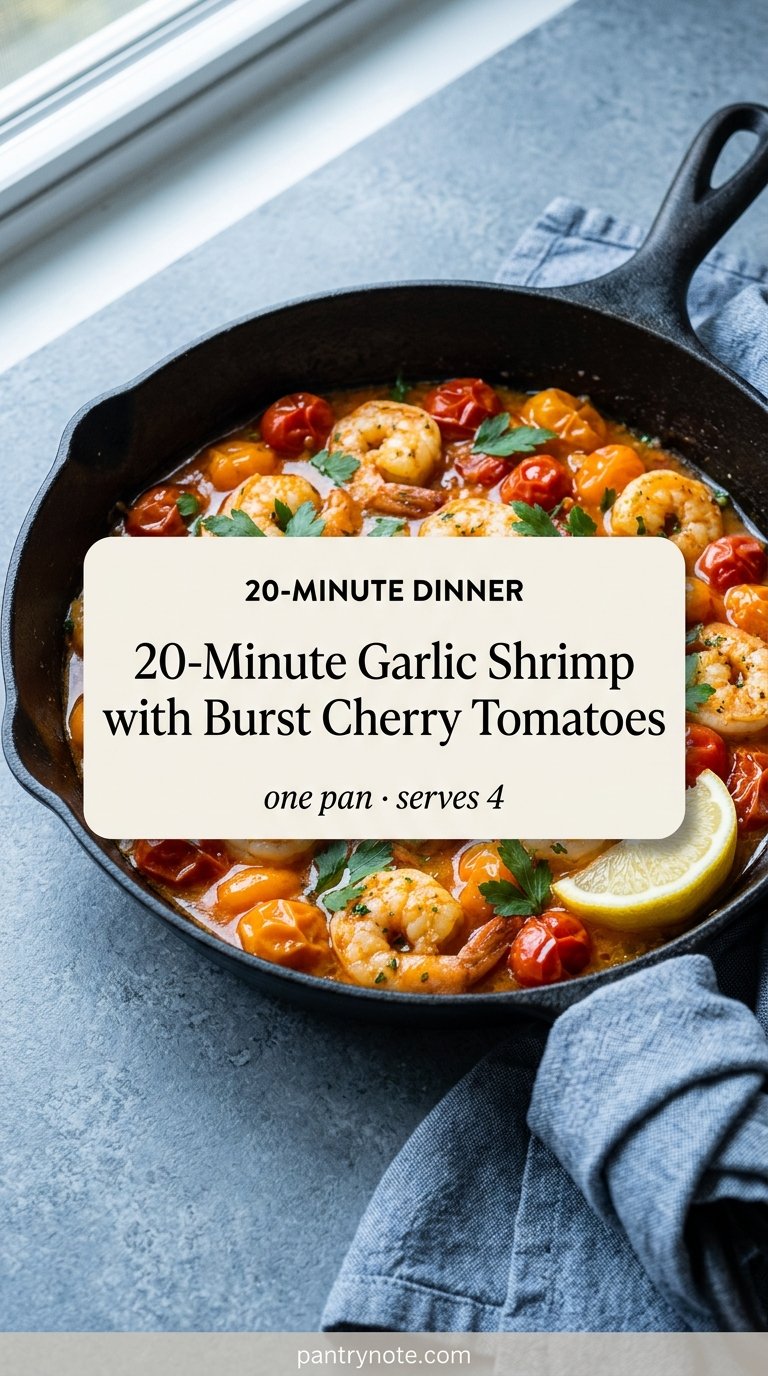
20-Minute Garlic Shrimp with Burst Cherry Tomatoes
Twenty minutes, one pan, and a handful of pantry ingredients. This shrimp dish proves that fast weeknight cooking doesn't have to be boring — the tomatoes burst open and form their own sauce, the garlic browns in olive oil, and the whole thing comes together with white wine and a squeeze of lemon.
20-Minute Garlic Shrimp with Burst Cherry Tomatoes
The 20-minute dinner is a real thing, not a marketing claim. This is one. It requires no advanced prep, no special equipment, and no technique beyond being present at the stove for about 15 of those 20 minutes, which, given the result, is more than a fair trade.
The concept is simple: shrimp cooked hot and fast in olive oil, combined with cherry tomatoes that burst open in the same pan to form a quick, bright sauce, all elevated by a generous amount of garlic, a splash of white wine, and a handful of fresh parsley. The shrimp bring sweetness.
The tomatoes bring acid and body. The garlic and wine bring everything else.
It works as a standalone dish over crusty bread, as a pasta sauce over linguine, or as a topping for polenta or orzo.
I make this on nights when I forgot to think about dinner until 6 PM. It has never disappointed. If you keep frozen shrimp in the freezer and a pint of cherry tomatoes on the counter (which you should), this is essentially on demand.
Why this works
Garlic shrimp is one of the simplest demonstrations of how a small amount of good technique produces a dramatically better result than the same ingredients without it.
Shrimp cook in about two minutes per side: their proteins tighten and coagulate quickly, which means the window between perfectly cooked and rubbery is narrow. The key is a hot pan and dry shrimp.
Moisture on the surface of shrimp prevents the Maillard reaction that produces the golden crust; wet shrimp steam rather than sear. This is why you pat them dry before cooking, and why you don't crowd the pan (crowding drops the temperature and produces steam instead of sear).
The tomatoes take slightly longer and are added after the shrimp comes out. You return the shrimp at the end just to warm through and absorb the sauce.
If you cook the shrimp in the tomato sauce from the start, the acid in the tomatoes tightens the protein and makes them rubbery, and the sauce takes too long to form, overcooking the shrimp in the process. Keeping them separate and recombining at the end preserves both.
Garlic's flavor changes dramatically depending on when you add it and how hot the oil is. Raw garlic in warm oil infuses gently, producing a mellow sweetness.
Garlic in very hot oil browns quickly and turns sharp and slightly bitter if you're not watching. Here, the garlic goes into the pan at medium heat before the tomatoes, which takes about two minutes, enough to turn golden and sweet without burning.
This timing is the core skill of Italian-American pan sauces.
White wine does two things: it deglazes the pan, picking up the fond (the browned garlic and shrimp bits), and it contributes acid and a subtle fruitiness. Use a dry white (Pinot Grigio, Sauvignon Blanc, Vermentino), something you'd drink. Cooking wine from the vinegar section is too acidic and salt-heavy.
Ingredient notes
Shrimp
Large or extra-large (21/25 or 16/20 count per pound) work best: they're easier to cook to the correct temperature without turning rubbery, and they have more presence in the dish. Buy peeled and deveined to save time.
Frozen shrimp is often fresher than the "fresh" shrimp at the seafood counter, which has typically been previously frozen and thawed. Thaw overnight in the fridge or under cold running water for 10 minutes.
Cherry tomatoes
Any color or variety. Sungold (orange, very sweet) produce a sauce that's slightly sweeter and less acidic.
Red cherry tomatoes are more intensely tomato-flavored. Grape tomatoes burst a little less dramatically but still work.
If it's January and cherry tomatoes aren't great, use a small can of whole San Marzano tomatoes broken up with your hands instead; the flavor will actually be better.
Garlic
Four cloves, thinly sliced rather than minced. Sliced garlic blooms more evenly in oil and gets a visible golden color, whereas minced garlic can catch and burn before sliced would. If you love garlic, go to six cloves.
White wine
Dry, not sweet. The acidity is part of the flavor profile. If you're avoiding alcohol, substitute low-sodium chicken broth plus an extra squeeze of lemon at the end.
Parsley
Fresh flat-leaf, added off heat. It wilts immediately but stays bright green; the raw herbal flavor is part of the finished dish.
Red pepper flakes
Optional but excellent. Start with a quarter teaspoon and increase to taste.
How to make it
The mise en place is the only prep: slice the garlic, dry the shrimp on paper towels and season with salt and pepper, measure the wine, pick the parsley.
Heat olive oil in a large skillet over high heat until shimmering. Add the shrimp in a single layer; do not stir them.
Let them cook undisturbed for 90 seconds, then flip each one. Another 60–90 seconds on the second side.
They should be pink and opaque with a slight golden spot on each side. Transfer immediately to a plate; they're done and will keep cooking if left in the hot pan.
Lower the heat to medium. Add the remaining olive oil and the garlic.
The sizzle should be enthusiastic but controlled; if it's violent, the pan is too hot and the garlic will burn. Stir frequently for about two minutes until the garlic is pale gold and the kitchen smells like a restaurant.
Add the cherry tomatoes. They'll make noise in the hot pan and start to burst almost immediately.
Press them gently with a spoon to help them along. Add the red pepper flakes now.
Cook for about five minutes, pressing and stirring, until most of the tomatoes have burst and released their juice and the sauce has thickened slightly.
Pour in the wine and scrape up any bits from the pan. Let it bubble for one minute.
Add a squeeze of lemon and taste the sauce for salt. Return the shrimp to the pan, toss to coat, and cook for just 30 seconds, only to warm through.
Off heat, add the parsley and a last drizzle of olive oil.
Tips and variations
Over pasta
Toss with half a pound of cooked linguine or spaghetti, adding pasta water to loosen. The sauce is perfectly proportioned for this.
Over bread
Serve with thick-cut sourdough toast to catch the sauce. This is genuinely one of the best ways to eat it.
Add greens
Wilt a few handfuls of baby spinach or arugula into the sauce just before returning the shrimp.
Make it richer
Finish with two tablespoons of cold butter stirred off the heat; it transforms the sauce into something more substantial.
Anchovy depth
Add one mashed oil-packed anchovy fillet with the garlic. It dissolves completely and adds savory depth without a fishy taste.
Scale up
The recipe doubles easily. Use a 12-inch or larger skillet and cook the shrimp in two batches to maintain sear.
Frequently Asked
Can I use frozen shrimp straight from the freezer?
What can I substitute for white wine?
Why are my shrimp rubbery?
Can I make this ahead?
 Save
Save
0 Comments
No comments yet — start the conversation below.