

Eating Well on $50 a Week: A Realistic Budget Cooking Guide
Eating well cheaply isn't about coupons — it's cooking from scratch on beans, rice, eggs, and seasonal vegetables, with spices doing the flavor work takeout can't.
Eating well on $50 a week is genuinely achievable for one person, but not by clipping coupons or eating ramen every night — it's done by building meals around a handful of cheap, nutritious, filling staples and cooking nearly everything from scratch. The single biggest lever isn't finding deals; it's cooking instead of buying convenience food and takeout, where most of a food budget quietly disappears.
Beans, rice, eggs, oats, seasonal vegetables, and a little meat as a flavoring rather than a centerpiece deliver enormous nutrition and satiety per dollar. This isn't deprivation cooking — it's the way much of the world has always eaten well on little.
Here's a realistic framework, the staples that stretch furthest, and how to keep it from becoming bland.
(Note: $50/week is a tight but workable budget for one person in many areas; costs vary by region and household size, so treat the dollar figure as a target to adapt, and the principles as the durable part.)
Where does a food budget actually leak?
Overwhelmingly into convenience: takeout, delivery, pre-made meals, and packaged snacks — not into the raw ingredients of home cooking. This is the most important realization, because it tells you where the savings really are.
A single takeout dinner often costs as much as several days of home-cooked meals built on staples. Pre-made frozen dinners, meal-kit services, bottled sauces, snack foods, and drinks (soda, juice, bottled coffee) all carry a steep convenience markup over making the equivalent yourself.
The money isn't leaking into the rice and beans; it's leaking into everything that's been pre-prepared for you. So the foundational move for budget eating isn't a clever shopping hack — it's simply cooking from scratch and treating takeout as a rare treat rather than a default.
The second leak is food waste: produce that spoils, leftovers that get forgotten, the half-bag of salad that turns to slime. Every dollar of food you throw away is a dollar of budget wasted, then often a second dollar spent replacing it with something quick.
So the two pillars of eating well cheaply are: cook from scratch (eliminate the convenience markup) and waste nothing (use what you buy). A loose weekly plan and a stocked pantry are what make both possible — they keep you cooking and keep food from rotting unused.
What are the cheapest nutritious staples to build around?
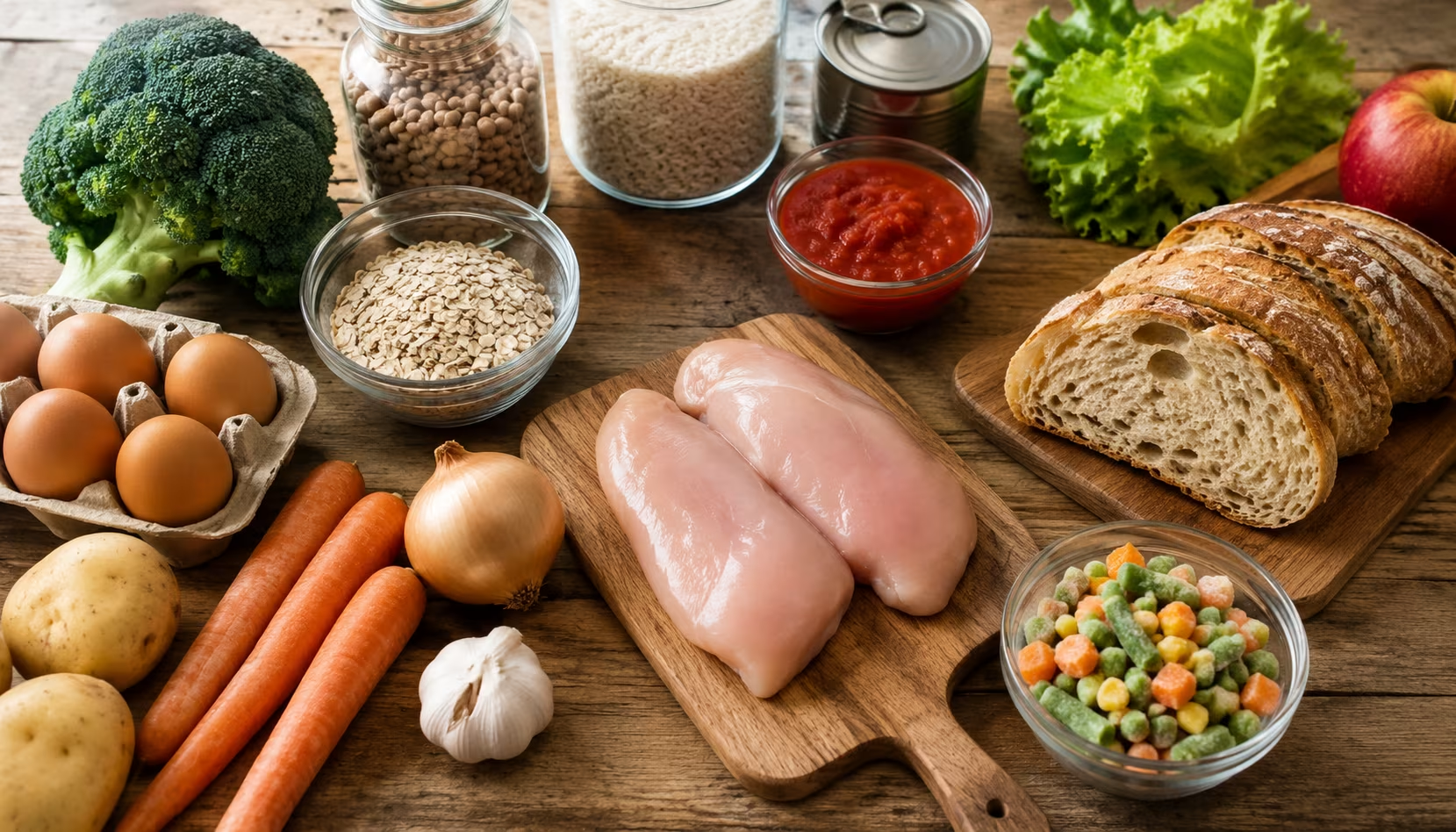
A small set of inexpensive, shelf-stable, nutrient-dense foods does the heavy lifting, delivering the most nutrition and satiety per dollar. Build your budget around these:
- Dried beans and lentils — extraordinarily cheap protein and fiber, filling, and endlessly versatile. Dried are cheaper than canned and a single bag stretches across many meals.
- Rice and other grains (oats, barley) — cheap, filling calories and the base of countless meals; oats make the cheapest, most satiating breakfast there is.
- Eggs — one of the best protein values, infinitely flexible from breakfast to dinner.
- Seasonal and frozen vegetables — in-season produce is cheapest and best, and frozen vegetables are inexpensive, nutritious, and never spoil. Cabbage, carrots, onions, and potatoes are cheap year-round and keep for weeks.
- Canned tomatoes — the base of sauces, stews, and soups for pennies.
- A little meat as flavoring — a whole chicken (far cheaper per pound than parts), or small amounts of cheaper cuts and ground meat used to flavor a bean or vegetable dish rather than as the centerpiece.
Notice the pattern: these are the same items that anchor a Mediterranean pantry and a basic pantry generally — versatile, durable, nutritious, and cheap. The strategy is to make these staples the foundation of most meals and treat more expensive items (meat, specialty ingredients) as accents. Beans and rice together form a complete protein and a satisfying, nutritious base for a remarkable number of cuisines.
How do you stretch protein and meat on a budget?
Treat meat as a flavoring and an accent rather than the centerpiece, and lean on cheap plant and egg proteins for most of your needs. Meat is usually the most expensive item in a cart, so using less of it (and cheaper forms) is the biggest single saving after cooking from scratch.
The mindset shift: instead of a big piece of meat per person per meal, use a small amount of meat to flavor a dish built mostly on beans, grains, and vegetables — the way a little sausage flavors a big pot of beans, a small amount of ground meat stretches into a hearty sauce, or a whole roast chicken provides meat for several meals plus a carcass for free stock. Buying a whole chicken and breaking it down yourself is far cheaper per pound than buying parts, and it yields multiple meals plus stock.
For most of your protein, lean on the cheap powerhouses: eggs, dried beans, and lentils, supplemented by canned fish (tuna, sardines) and tofu where it fits your budget. These deliver complete, satisfying protein for a fraction of the cost of meat.
Greek yogurt and cottage cheese, bought in larger tubs, are economical dairy proteins. The goal isn't to eliminate meat but to right-size it — a flavoring and occasional centerpiece rather than the default base of every meal — which both stretches the budget and, incidentally, lines up with how nutrition guidance suggests most people eat anyway.
How do you eat well cheaply without it getting boring?
Variety on a budget comes not from expensive ingredients but from spices, sauces, and varied techniques applied to the same cheap base. This is the secret that separates joyless budget eating from genuinely good cheap food: a pot of beans seasoned three different ways is three different meals.
The cheapest way to add huge variety is a well-chosen spice collection — spices are inexpensive per use and transform the same staples into different cuisines. The identical beans-and-rice base becomes Mexican with cumin and chili, Indian with curry spices, or Mediterranean with oregano and garlic.
A few good pantry spices are the highest-value flavor investment in budget cooking. Likewise, simple homemade sauces and dressings — a vinaigrette, a quick tomato sauce, a yogurt-garlic sauce — turn neutral staples into specific, craveable dishes for almost nothing.
Varying technique does the same work: the same potato is different roasted, mashed, fried, or in a soup; the same vegetable is different raw in a slaw, sautéed, or roasted. And cooking from a flexible repertoire rather than the exact same dish keeps it fresh — beans in a soup one day, in a white bean and tomato skillet another, in a salad a third.
Acid (a squeeze of lemon, a splash of vinegar) and a hit of something savory (a little cheese, a melted anchovy, soy sauce) make humble food taste finished. None of this costs much; it's seasoning and method, not pricey ingredients, that keep budget eating interesting.
What does a week of $50 eating actually look like?
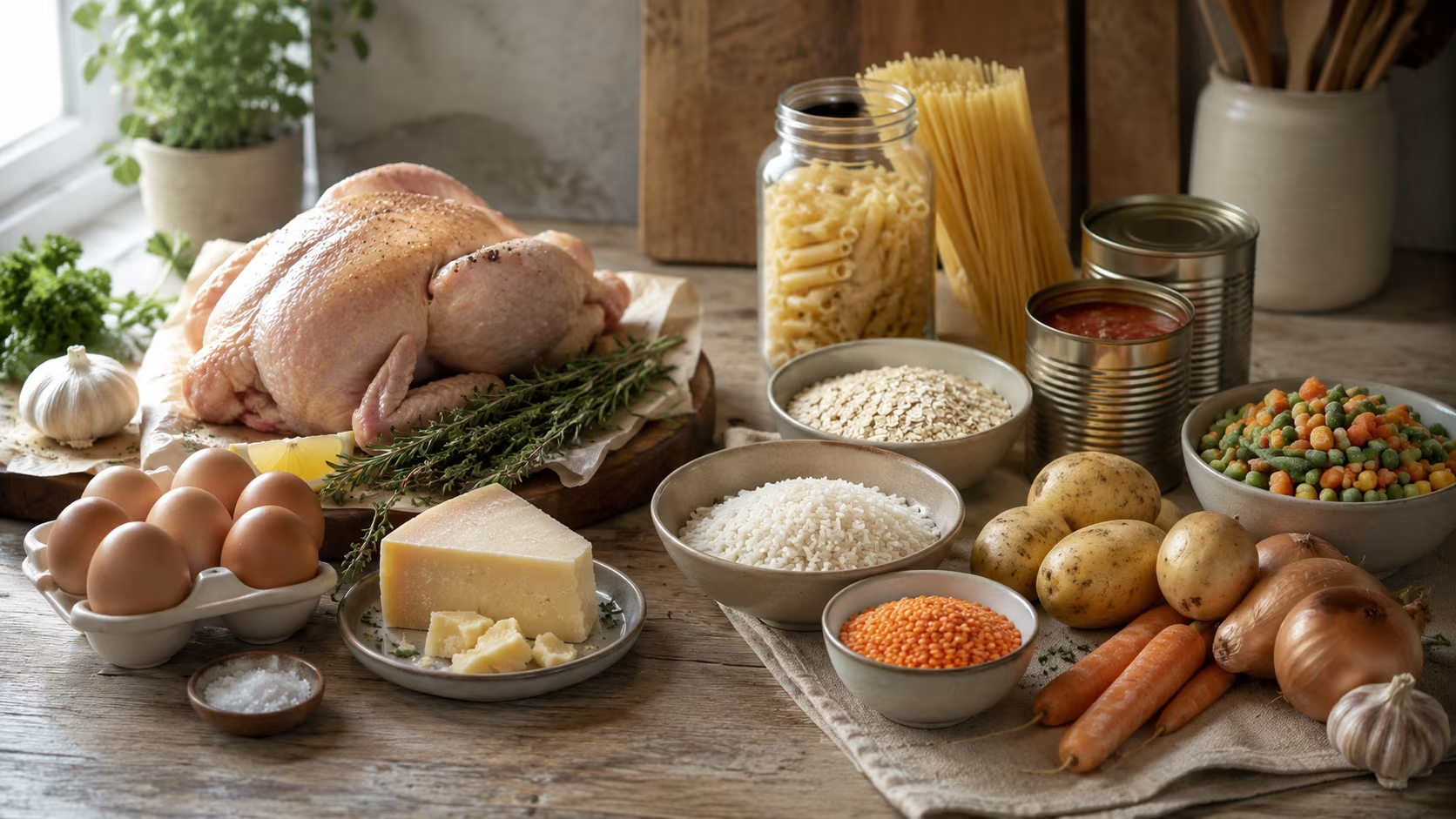
Here's a realistic, varied week for one person built on the staples, cooking from scratch, and wasting nothing. Breakfasts: oats with banana or a couple of eggs — pennies per serving. Lunches: a big pot of lentil or bean soup made on the weekend, eaten across several days, plus bread or rice. Dinners rotate the cheap base through different treatments: beans and rice with sautéed vegetables and spices one night; a frittata using up odds and ends another; pasta with a quick tomato sauce and a little cheese; a stir-fry of cabbage, carrots, egg, and rice; a roast chicken that becomes a dinner, then sandwiches or a grain bowl, then stock for soup.
The week leans on a pot of beans and a pot of grains cooked once and used several ways, eggs filling gaps, frozen and seasonal vegetables for nutrition and color, and a whole chicken or a little ground meat stretched across multiple meals. Spices and simple sauces keep each meal distinct.
Nothing fancy, nothing wasted, and genuinely nourishing — protein, fiber, vegetables, and enough variety that you're not eating the identical plate twice. This is the same component-and-pantry logic behind meal prep for one, pointed at the budget.
How do you shop to hit the budget?
Plan, buy staples in bulk, prioritize cheap-and-nutritious over cheap-and-empty, and minimize waste. The shopping trip is where the budget is won or lost.
Plan before you shop so you buy ingredients for specific meals rather than impulse items — a weekly plan plus a list is the single best budgeting tool. Buy the durable staples in bulk (dried beans, rice, oats, frozen vegetables) since they're cheapest per unit and don't spoil, while buying perishables in amounts you'll actually use. Prioritize nutrient density: cheap calories from beans, eggs, oats, and vegetables nourish you, while equally cheap calories from chips and soda don't — spend your limited dollars on food that feeds you. Shop the sales and seasons for produce, and consider cheaper stores, bulk bins, and discount produce. And waste nothing — use leftovers, freeze surplus, and turn scraps into stock — because thrown-away food is the most expensive food there is.
A practical rhythm: a big planned shop for staples, topped up with small fresh-produce runs, all anchored to a loose meal plan. Done this way, $50 a week for one person stretches to genuinely good, varied, nourishing eating — not survival rations.
Common budget cooking questions
Is dried really worth it over canned beans? For pure cost, yes — dried beans are dramatically cheaper per serving and a bag lasts a long time. They need soaking and simmering (or a pressure cooker), so the trade-off is time. Keep some canned for convenience and cook dried in batches (then freeze portions) for the savings.
Won't eating cheap mean eating unhealthy? The opposite, if you cook from scratch — beans, lentils, eggs, oats, and vegetables are among the most nutritious foods there are, and far healthier than the cheap processed convenience foods budget eaters are stereotyped as living on. Cooking from whole staples is both cheaper and healthier than packaged food.
How do I make beans and rice not boring? Spices, sauces, acid, and technique. Season the same base differently each time (cumin and chili; curry; garlic and herbs), add a squeeze of lemon or a splash of vinegar, top with a fried egg or a little cheese, and vary how you cook the vegetables. The base is cheap; the variety is free.
What's the single biggest money-saver? Cooking instead of ordering takeout or buying pre-made meals. The convenience markup dwarfs every other factor — replace most takeout with home cooking and the budget largely takes care of itself.
Eating well on $50 a week isn't about deprivation or extreme couponing — it's about cooking from scratch, building on cheap nutritious staples, using a little meat as a flavoring, wasting nothing, and leaning on spices and technique for variety. Do that, and a tight budget produces genuinely satisfying, nourishing food.
What quietly drains a tight food budget?
Beyond takeout and waste, a few less-obvious habits leak money, and naming them helps you plug the leaks. Drinks are a big one — soda, juice, bottled coffee, and the like add up fast and provide little nutrition; water, tap or filtered, and home-brewed coffee save a surprising amount. Snack foods and packaged convenience items (chips, granola bars, pre-cut produce, single-serve anything) carry steep markups for the convenience; buying whole and portioning yourself is far cheaper.
Shopping while hungry or without a list drives impulse purchases that blow the budget and often spoil unused. Brand loyalty on staples where store brands are identical (flour, rice, canned goods, spices) wastes money for no benefit. And buying the wrong quantities — family sizes that spoil, or tiny expensive packages of things you use constantly — costs either way; match quantity to your real usage.
The throughline is that a tight budget rewards intention: plan, shop with a list, cook from scratch, buy staples in sensible bulk, skip the convenience markups, and waste nothing. None of it is about deprivation — it's about not paying the premium that pre-made food, impulse buys, and waste quietly extract. Plug those leaks and $50 a week stretches remarkably far.
Is meal planning really necessary to eat cheaply? It's the single most effective budgeting tool — a plan keeps you cooking (not ordering out), buying only what you'll use (not wasting), and shopping with intention (not impulse). You don't need an elaborate system, but some loose plan is what makes cheap, good eating actually happen.
 Save
Save

0 Comments
No comments yet — start the conversation below.