

Olive Oil Cake with Orange and Almond
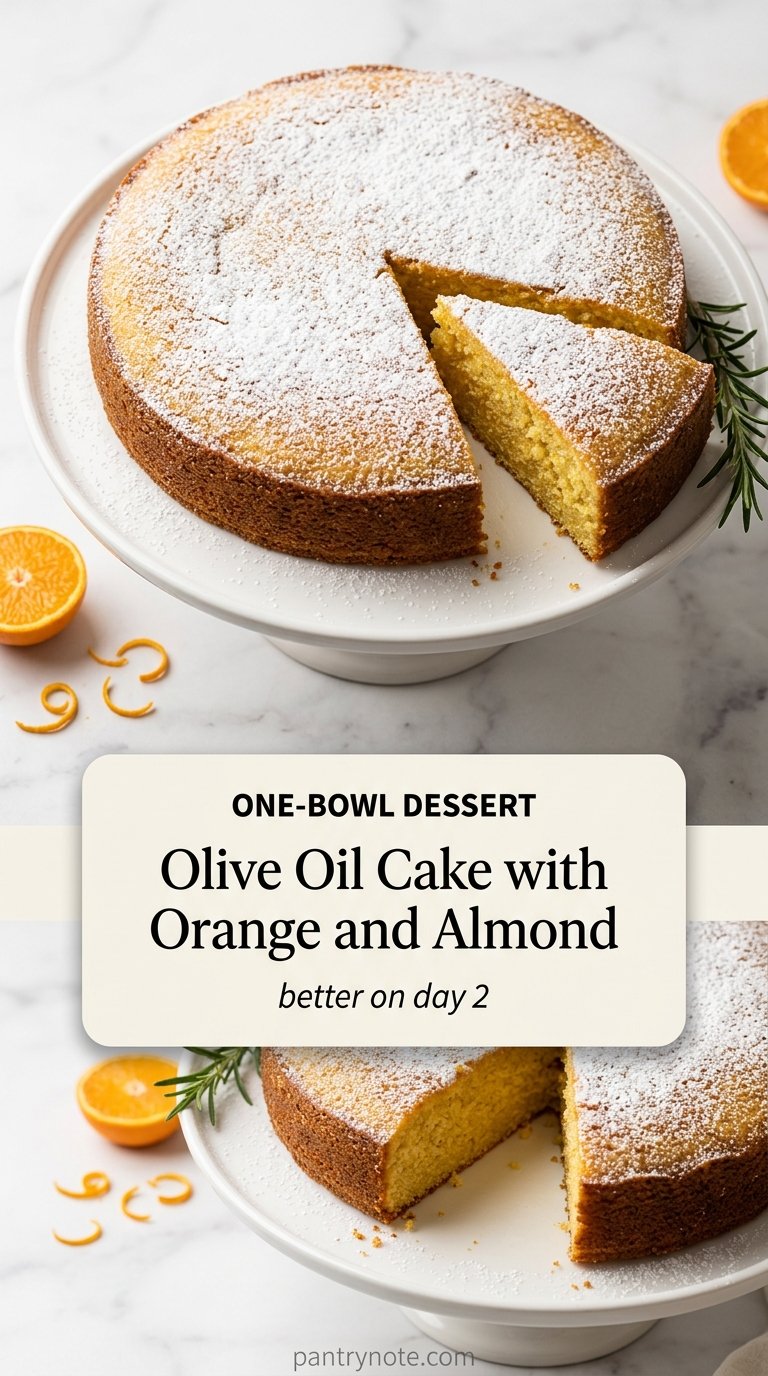
Olive oil cake sits in the category of things that sound a little unusual until you actually make one, at which point it becomes your go-to for every occasion that requires a cake but not too much fuss. This one is orange-forward, faintly almond, and keeps in a way that butter cakes simply don't.
Olive Oil Cake with Orange and Almond
I made my first olive oil cake because I was out of butter and too stubborn to go to the store. I made my second because the first one was better than it had any right to be. Now I make it deliberately, on purpose, and I've largely stopped apologizing for it.
The recipe has roots in Italian baking, particularly in regions where olive oil is cheaper and more available than butter: Liguria, Tuscany, the Veneto. In those places, olive oil cake is not a novelty; it's just cake.
It's what you bring to someone's house when you want to arrive with something homemade but don't feel like an elaborate production. It keeps well for three days at room temperature, which is genuinely unusual for a baked good.
And it gets better on day two, which makes it nearly unique.
This version leans into orange (both the zest and some juice) and uses a portion of almond flour alongside all-purpose for a crumb that's dense without being heavy. A good fruity olive oil is detectable in the finished cake, in the best possible way. Use oil you'd actually eat, not the supermarket commodity stuff.
Why this works
Olive oil cakes have a texture that's impossible to achieve with butter, and it comes down to fat physics. Butter is roughly 80% fat and 20% water; when you cream it with sugar, you're incorporating air into those water molecules, creating the lift of a typical American-style cake. Bake it and that air expands, producing a light, airy crumb that's delicious but also relatively perishable: the moisture in the water evaporates over a day or two and the cake goes stale.
Olive oil is nearly 100% fat with almost no water. You can't cream it, which means you can't incorporate air in the same way.
Instead, this cake relies on eggs beaten with sugar for its lift, and on the fat itself for moisture retention. Because olive oil doesn't contain water to evaporate, the crumb stays tender and moist for days longer than a butter cake.
This is the structural reason olive oil cakes age so well.
The almond flour serves a complementary purpose. Almond flour is finely ground almonds, which contain their own fat and have no gluten.
Replacing a portion of the all-purpose flour with almond flour reduces the gluten network, producing a more tender, slightly dense crumb. It also contributes flavor: a faint nuttiness that plays well with both the olive oil and the orange.
Orange zest is doing more work here than orange juice. Zest contains the essential oils from the skin, compounds like limonene and linalool, which are intensely aromatic and hold up well through baking. The juice, while present, can make the batter too wet; using it in restrained amounts adds brightness without affecting structure.
Finally: don't be afraid to use a genuinely good olive oil. Extra-virgin oils with grassy, peppery, or fruity notes translate beautifully into cake.
Neutral oils (the kind labeled "pure olive oil" or "light") lack the character that makes this cake interesting. You don't need to use your most expensive oil, but use one you'd actually put on a salad.
Ingredient notes
Extra-virgin olive oil
Fruity, medium-intensity varieties work best. Sicilian Nocellara, California Mission olive, or any cold-pressed EVOO with grassy or fruity tasting notes.
Avoid the deeply bitter, intensely peppery Tuscan styles; they can overpower the cake. Frankies Spuntino, California Olive Ranch, or Brightland are all good at various price points.
Almond flour
Blanched almond flour (made from almonds with the skins removed) gives a lighter crumb and a cleaner flavor than almond meal. Bob's Red Mill Super-Fine Blanched Almond Flour is widely available and reliable. Do not substitute almond meal without adjusting the liquid slightly.
Oranges
Use navel or Cara Cara for the zest; they're fragrant and not too bitter. Valencia oranges work well if you can find them.
Blood oranges are excellent in season and give the crumb a faint pink tint. Zest vigorously; the white pith below the colored skin is bitter.
Eggs
Three large eggs at room temperature. Room temperature eggs incorporate more easily and produce a more even batter. If you forgot to take them out, submerge them in warm water for five minutes.
Powdered sugar
The finishing dusting is optional but elegant. Add it right before serving so it doesn't get absorbed into the surface.
How to make it
This is a one-bowl cake, which is part of its charm. Start by whisking together the eggs and sugar in a large bowl until the mixture is pale yellow and slightly thickened: about two minutes with a hand whisk, or one minute with an electric mixer. You're building the primary structure here, trapping air in the egg proteins.
Next, whisk in the olive oil in a thin, steady stream. Go slowly at first, as if you're making a dressing; the fat needs to emulsify into the eggs rather than just pooling on top.
Once you've added half, you can add the rest more freely. Add the orange zest and juice.
Sift together the all-purpose flour, almond flour, baking powder, baking soda, and salt in a separate bowl, then fold them into the wet ingredients with a spatula until just combined. Some streaks of flour are fine at this point; they'll absorb as the batter rests.
Pour into a parchment-lined 9-inch round cake pan. The batter should be level and look slightly loose.
Into a 350°F oven for 40–45 minutes. The cake is done when a toothpick comes out clean and the top is deep golden, not pale, not just lightly colored.
The darker color is correct; it means the olive oil has had time to caramelize slightly, which develops the flavor.
Cool in the pan for 15 minutes, then turn out onto a wire rack. It will be fragile while hot and become sturdier as it cools. Dust with powdered sugar and serve slightly warm or at room temperature.
Tips and variations
Storage
Wrap tightly or keep under a cake dome at room temperature for up to three days. Do not refrigerate; it makes the crumb dense and the flavor flat.
Gluten-free adaptation
Replace the all-purpose flour with a 1:1 GF blend and increase the almond flour by two tablespoons. The cake will be denser but still excellent.
Lemon variation
Substitute lemon zest and juice for orange. Works particularly well with a rosemary infusion: heat the oil with a sprig of rosemary for five minutes, cool completely, then use as directed.
Serving
Excellent with a dollop of lightly sweetened whipped cream or a spoonful of thick Greek yogurt. Also good with a small glass of vin santo or a dessert Muscat.
Make it more fragrant
Add a half teaspoon of orange blossom water to the wet ingredients. Use restraint; it's potent.
For a dinner party
Bake the day before. Seriously. It will be better.
Frequently Asked
Can I taste the olive oil?
Can I use a different pan size?
Is this recipe dairy-free?
Why did my cake sink in the middle?
 Save
Save

0 Comments
No comments yet — start the conversation below.