

Gluten-Free Cooking That Actually Tastes Good: A Practical 2026 Guide
Stop chasing a perfect wheat-bread copy. Good gluten-free food comes from the right binder, a balanced flour blend, enough moisture, and cuisines that never relied on wheat.
Most disappointing gluten-free food fails for one reason: it tries to be a copy of wheat bread and loses. Gluten-free cooking that actually tastes good starts from the opposite premise: that you build flavor and texture with the right alternative ingredients and a clear understanding of what gluten was doing in the first place, rather than chasing a perfect imitation that the chemistry won't allow. Gluten is a specific protein network: a stretchy, gas-trapping, moisture-holding glue.
Remove it and you don't just remove a label, you remove the structural engineer of the dish. Good gluten-free cooking replaces that engineer deliberately.
This guide covers what gluten actually does, how to rebuild structure with binders and the right flours, the dishes that are naturally gluten-free and worth leaning on, and the cross-contamination basics that matter if you're cooking for someone with celiac disease rather than a preference.
Why does gluten-free baking go wrong so often?
Gluten does three jobs at once in conventional baking, and removing it breaks all three unless you compensate. It acts as the glue that holds crumb together, it provides elasticity so dough stretches and traps the gas that makes bread rise, and it helps retain moisture so the result isn't dry. Pull it out and substitute plain rice flour, and you get exactly the failure everyone recognizes: dense, crumbly, dry, and sandy.
The fix is a binder, and in most gluten-free baking that binder is xanthan gum, a polysaccharide that thickens and traps air, mimicking gluten's structural role. The dosing is precise and unforgiving.
Too little and the bake crumbles apart; too much and it turns dense, gummy, and flat. The reliable starting point, per baking references like The Loopy Whisk and Bob's Red Mill, is about ¼ teaspoon of xanthan gum per cup of gluten-free flour for cookies and cakes, scaling up toward ½–¾ teaspoon per cup for breads that need more lift and chew.
A second hidden trap: many commercial gluten-free flour blends already contain xanthan gum, in varying and unlabeled amounts. Add more on top and you over-bind. Always check the bag, and if it already lists xanthan or guar gum, skip adding your own.
How do you choose a gluten-free flour blend?
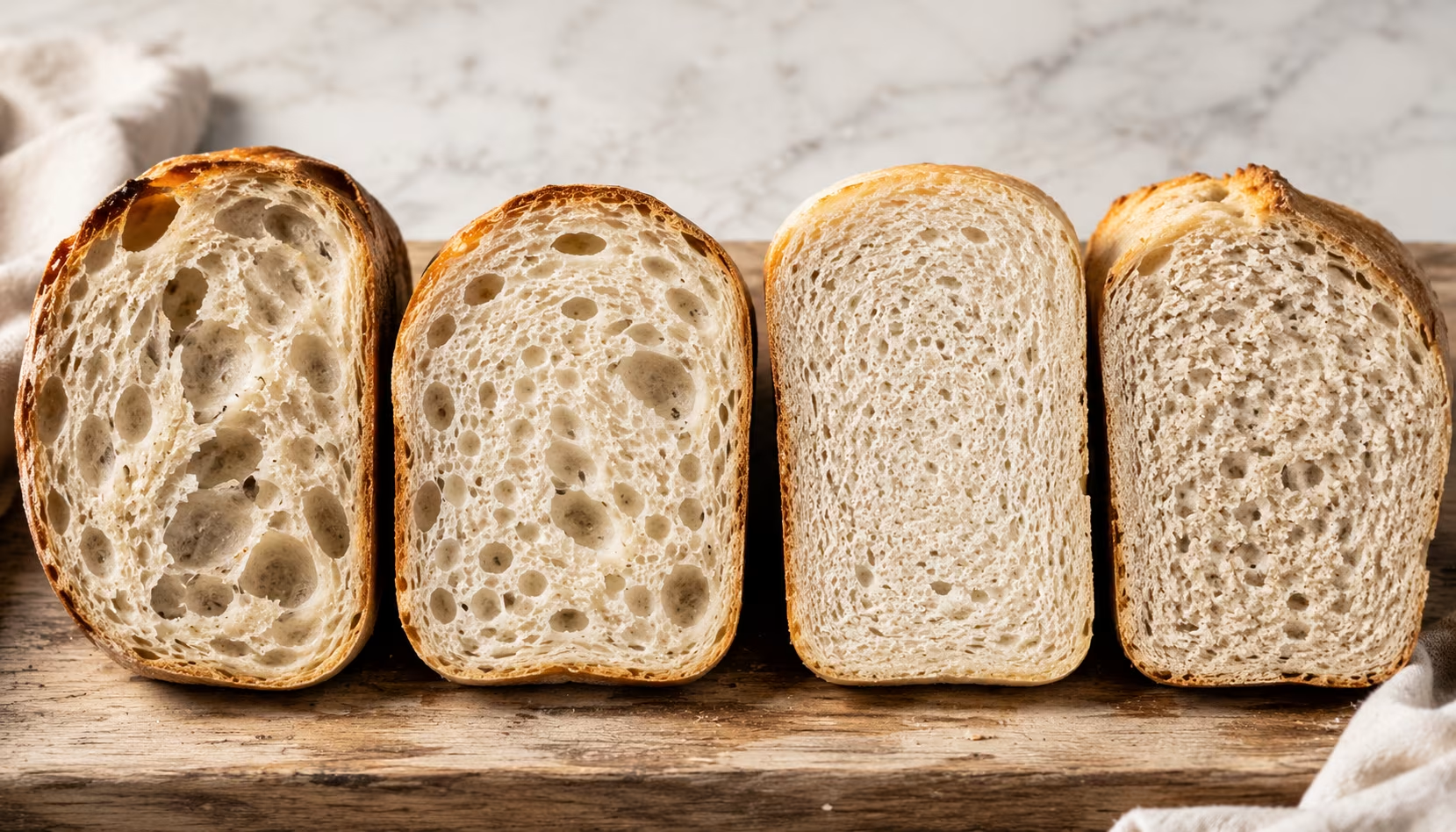
There is no single gluten-free flour, and that's the key insight. Wheat flour is one ingredient that does everything; gluten-free baking uses a blend of flours and starches that each contribute one property, balanced against the others.
The categories break down roughly like this. Starches (tapioca, potato, cornstarch) provide lightness, chew, and browning but no structure on their own. Whole-grain or protein flours (brown rice, sorghum, millet, buckwheat, oat) provide body, nutrition, and structure but can taste heavy or gritty alone. Higher-protein specialty flours (chickpea, almond, teff) add flavor and binding. A good all-purpose blend mixes a couple of structural flours with a starch or two and a binder, so no single property dominates.
For consistency, a tested commercial blend (King Arthur's Measure for Measure, Bob's Red Mill 1-to-1, and similar cup-for-cup products) takes the guesswork out and lets you substitute directly into many wheat recipes. Building your own blend is cheaper and more flavorful once you understand the categories, but start with a tested bag while you learn what each flour brings. Rice-heavy blends, in particular, often need a little extra moisture or binder, because rice flour absorbs liquid differently and can read dry and grainy if you don't account for it.
What's the trick to texture without gluten?
Beyond the binder, three levers fix the dryness and grit that plague gluten-free bakes, and each addresses a specific mechanism.
Add moisture and fat generously. Without gluten holding water in the crumb, gluten-free batters dry out faster, both in the oven and on the counter. Extra eggs, an additional egg yolk, more butter or oil, or a spoon of yogurt or applesauce all help the crumb stay tender. Gluten-free batters should generally look wetter than their wheat equivalents; resist the urge to "fix" a loose batter with more flour.
Let the batter rest. Many gluten-free flours, especially rice-based ones, absorb liquid slowly. Letting the mixed batter sit for 20 to 30 minutes before baking gives the flours time to fully hydrate, which dramatically reduces graininess. This single pause is the difference between a sandy muffin and a smooth one.
Lean on naturally finer or pre-cooked flours where grit is the enemy. Superfine rice flours, oat flour, and starches blend smoother than coarse-ground whole grains. For structure-critical bakes, a touch of psyllium husk alongside or instead of xanthan gives breads a more genuinely bread-like chew and crust, because psyllium forms a gel that more closely mimics gluten's extensibility.
Which dishes are naturally gluten-free and worth cooking?
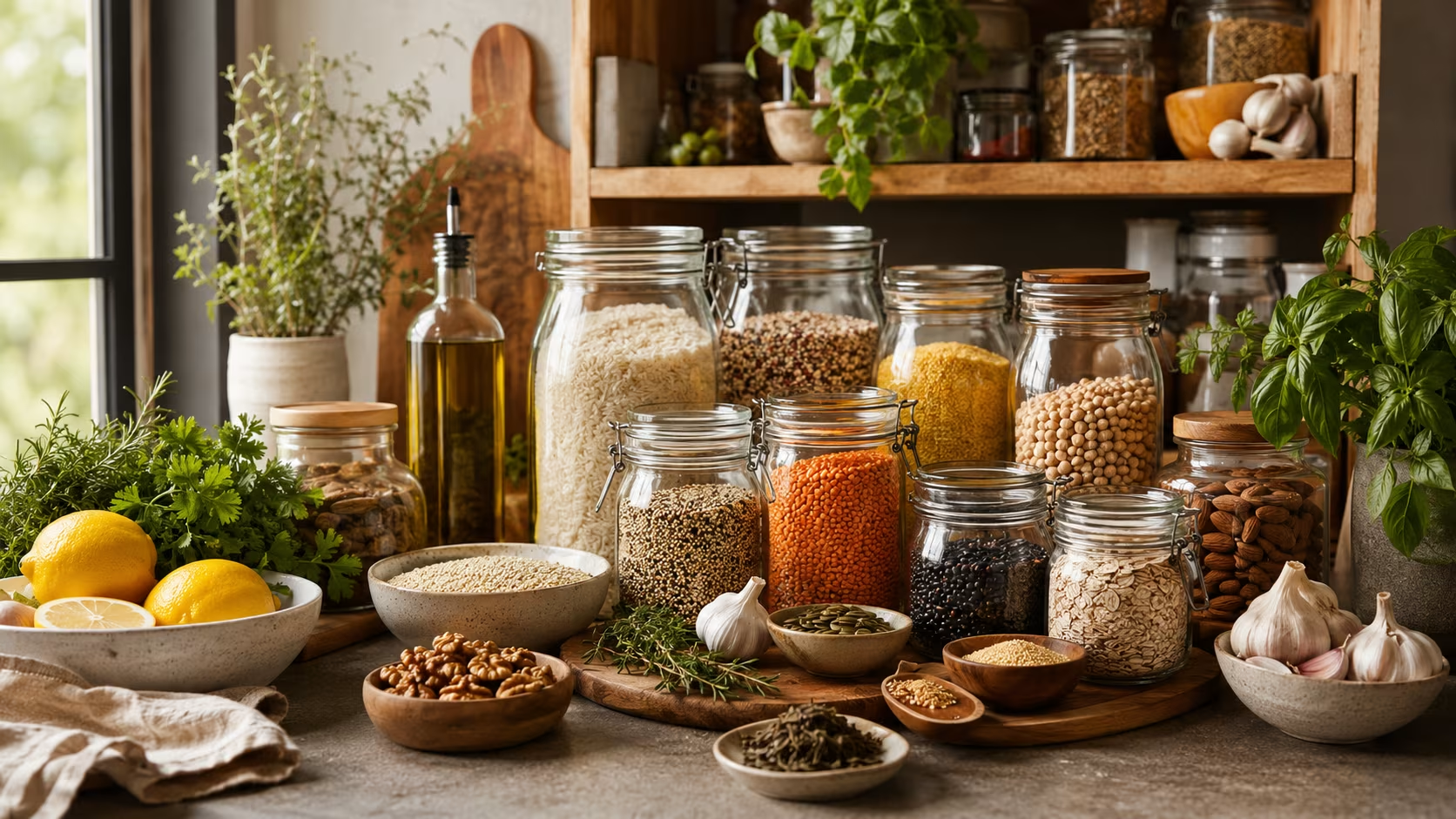
The fastest route to gluten-free food that tastes good is to cook things that were never built on wheat in the first place. Whole cuisines are largely gluten-free by default, and they're delicious because they're complete in their own right, not because they're avoiding anything.
Rice-based cooking is a vast, naturally gluten-free world: stir-fries (with tamari instead of regular soy sauce), rice bowls, risotto, biryani, paella. Corn-based traditions give you tortillas, tamales, polenta, and arepas.
Potato in all its forms (roasted, mashed, in gnocchi made without wheat) is safe ground. Naturally gluten-free proteins and vegetables roasted, grilled, or braised need no adaptation at all.
This is where gluten-free cooking stops feeling like deprivation. A pot of dal with rice, a plate of grilled fish with chimichurri and potatoes, a vegetable-and-bean stew: none of these are "gluten-free versions" of anything.
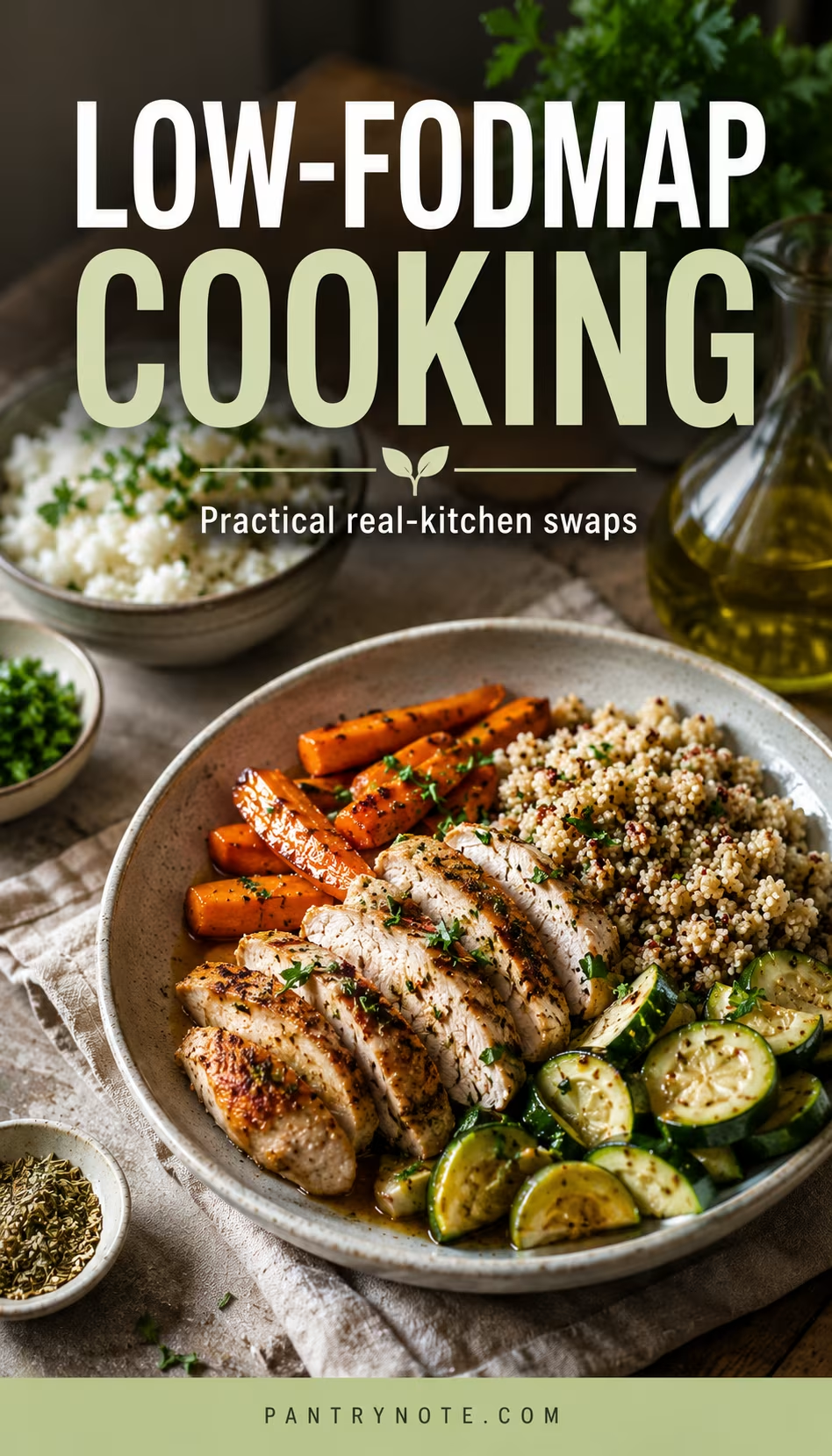
They're just good food that happens to qualify. Many of the same principles overlap with other practical eating approaches, so if you're also managing IBS, a lot of low-FODMAP cooking lives in this same naturally-gluten-free territory, and building meals around whole proteins fits neatly with high-protein cooking that doesn't burn you out.
How do you handle thickening sauces and breading?
Two everyday techniques quietly rely on wheat, and both have clean swaps.
For thickening, a wheat-flour roux is the usual culprit. Cornstarch is the simplest replacement: mix it with a little cold water into a slurry and stir it into simmering liquid at the end of cooking, where it thickens fast and clear.
For a roux-style base in gumbo or gravy, you can brown rice flour or a gluten-free blend in fat the same way you would wheat, though it behaves slightly differently and won't develop quite the same deep nuttiness. Arrowroot and tapioca starch work for glossy, delicate sauces but break down under long cooking, so add them late.
For breading and dredging, the goal is a crust that crisps and adheres. A dredge of cornstarch or rice flour gives an exceptionally crisp fried coating, which is why many tempura and Korean fried chicken batters are naturally starch-based and shatteringly crunchy.
Crushed cornflakes, gluten-free panko, ground nuts, or polenta all make excellent coatings for baked or fried foods. The mechanism is the same as with wheat: a dry, starchy exterior dehydrates and browns in hot fat.
You're just swapping which starch does it.
How do you stock a gluten-free pantry?
A well-built gluten-free pantry makes the difference between scrambling for substitutes mid-recipe and cooking with confidence, and it's mostly about having the right structural ingredients on hand so you're never tempted to force a wheat recipe to behave.
Keep a tested all-purpose gluten-free flour blend as your workhorse, plus a couple of single flours for specific jobs: almond flour for moisture and richness, oat flour (certified gluten-free) for tender baked goods, and a starch like tapioca or cornstarch for crisping and thickening. Stock your binders: a bag of xanthan gum lasts ages since you use it by the quarter-teaspoon, and psyllium husk is worth keeping for bread. These don't spoil quickly, so a small initial investment covers months of baking.
For everyday cooking rather than baking, the gluten-free pantry overlaps almost entirely with a normal one: rice, corn products, potatoes, dried beans and lentils, naturally gluten-free grains like quinoa and buckwheat, and tamari in place of regular soy sauce. The one ongoing discipline is label vigilance, since gluten hides in sauces, stock cubes, and processed goods under names like malt and modified food starch.
Keep a few certified gluten-free versions of the sneaky items (soy sauce, broth, oats) and the rest of the cupboard is already safe. This is the same build-from-versatile-staples logic behind any well-stocked pantry; gluten-free just adds the binders and a habit of reading labels.
What are the best naturally gluten-free swaps for pasta and bread?
The two foods people miss most on a gluten-free diet are pasta and bread, and the honest answer is that the best results often come from sidestepping a direct copy rather than chasing one.
For pasta, the gluten-free options have genuinely improved. Blends based on corn and rice, or on legumes like chickpea and lentil, hold their texture far better than the gummy early versions; the legume pastas in particular cook up firm and add protein.
The key technique is to cook them a minute less than the package says and rinse off excess surface starch, since gluten-free pasta releases more starch and turns mushy if overcooked. Naturally pasta-shaped alternatives (rice noodles in a stir-fry, polenta under a ragù, or potato gnocchi made without wheat) often satisfy the craving better than a so-so spaghetti substitute.
For bread, accept that gluten-free bread is its own thing rather than a wheat loaf clone, and judge it on its own terms. The best homemade versions use a psyllium-husk-enriched dough for genuine chew, baked in a tin for support.
But the more reliable route to happiness is leaning on naturally gluten-free breads from other traditions: corn tortillas, socca (a chickpea-flour flatbread), rice-flour crêpes, or arepas, which were never built on wheat and so taste complete rather than compromised. Approached this way, gluten-free eating stops feeling like a string of substitutions and starts feeling like a wider cuisine.
What about cross-contamination and eating safely?
This is where preference and medical necessity diverge, and it's worth being precise. For someone avoiding gluten by choice, a trace amount is harmless. For someone with celiac disease (an autoimmune condition where gluten triggers real intestinal damage), even tiny cross-contamination matters, and "mostly gluten-free" isn't good enough.
If you're cooking for a celiac household member, the practical safeguards are straightforward: use separate or scrupulously cleaned cutting boards, colanders, and toasters (toasters and wooden boards trap crumbs that are nearly impossible to remove); check labels on processed ingredients where gluten hides under names like malt, modified food starch, or soy sauce; and avoid shared frying oil that's cooked breaded items. Oats deserve special caution: naturally gluten-free, but routinely cross-contaminated in processing, so buy certified gluten-free oats. The Celiac Disease Foundation maintains current, detailed guidance worth consulting if a diagnosis is involved.
If gluten is a medical issue for you or someone you cook for, treat diagnosis and a personalized plan as a job for a clinician or dietitian, not a blog. What this guide gives you is the cooking craft: once the safety basics are handled, the path to gluten-free food that genuinely tastes good runs through the right binder, a balanced flour blend, enough moisture, a rested batter, and a healthy respect for the many dishes that were never about wheat to begin with. Start with one naturally gluten-free meal this week, nail it, and build outward from there.
Common gluten-free questions
Can I swap gluten-free flour one-to-one in any recipe? For many cakes, cookies, and quick breads, a tested cup-for-cup blend works directly. Yeasted breads and anything relying on gluten's stretch need real recipe changes, not just a flour swap.
Is xanthan gum necessary? For most gluten-free baking, yes: it replaces gluten's binding. Some bakers use psyllium husk instead, especially for bread. Skip both only in recipes designed without a binder.
Are oats gluten-free? The grain itself is, but oats are routinely cross-contaminated in processing. Buy certified gluten-free oats if you or someone you cook for has celiac disease rather than a preference.
 Save
Save
0 Comments
No comments yet — start the conversation below.