

The Real Kitchen Gear List for Cooking in 2026: What to Buy, What to Skip, What Lasts a Lifetime
Eight great tools beat forty mediocre ones. Here is the short list that does most of the cooking, what's worth real money, what lasts a lifetime, and what to never buy.
Most kitchen gear advice is a wish list written by someone who profits from the links. This real kitchen gear list for cooking in 2026 is the opposite: a short set of tools that do the most work, the items genuinely worth spending on, and the gadgets that gather dust in a drawer within a month.
The organizing principle is simple: buy fewer things, buy them well, and let versatility, not novelty, decide what earns counter space. A cook with eight excellent tools outperforms one drowning in forty mediocre ones.
The list below is grouped by how often a tool actually gets used and how much its quality changes the outcome. Where prices come up, treat them as current ballpark ranges rather than fixed figures, since cookware pricing shifts with sales and model years, and prioritize the categories where spending more genuinely buys you better results.
What are the few tools that do most of the work?
Eighty percent of home cooking runs through a handful of tools. Get these right and everything else is optional.
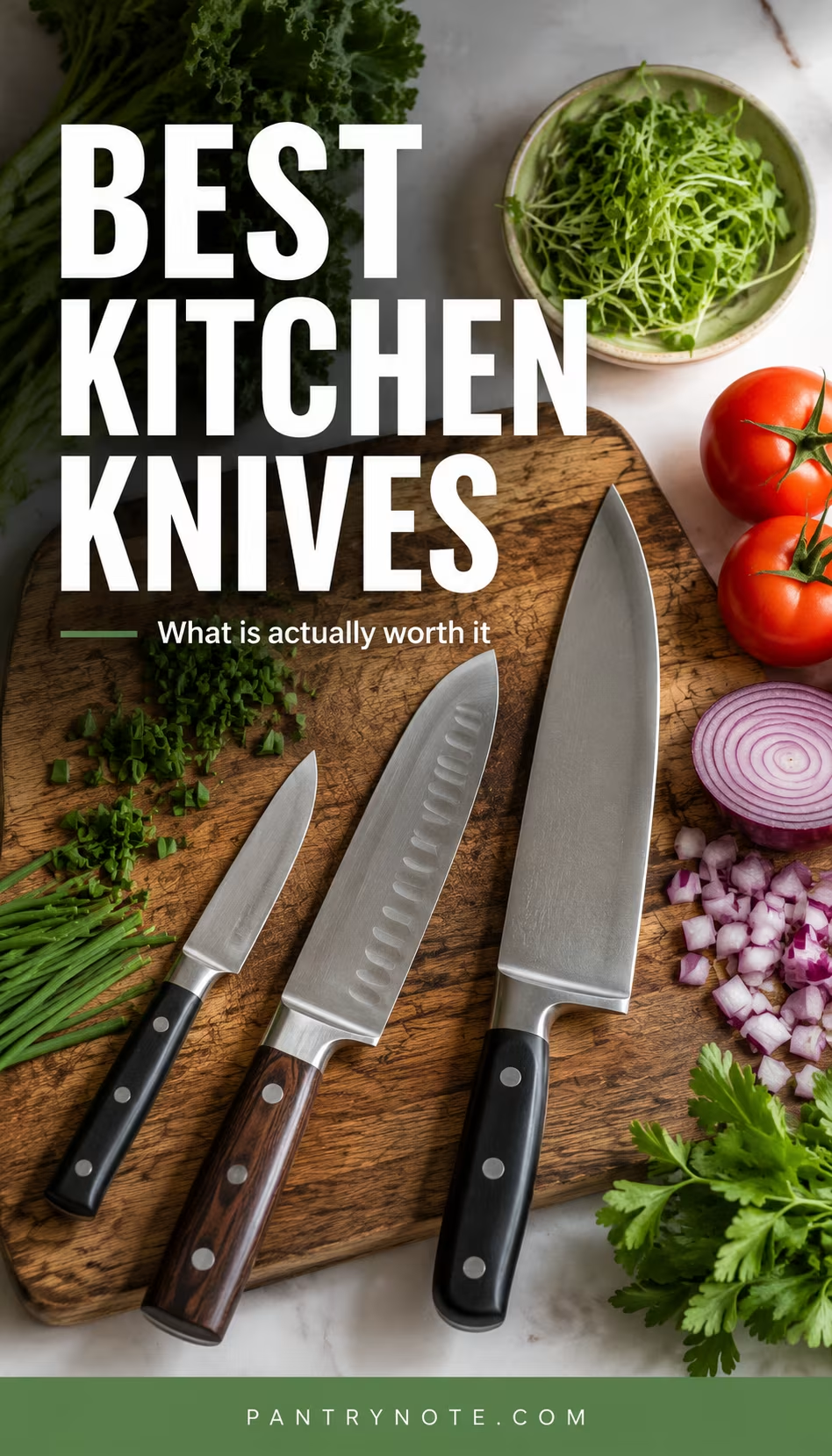
A chef's knife is the single most-used tool in any kitchen and the one most worth spending on. It chops, slices, minces, and breaks down nearly everything.
A good one runs roughly $50–$100; past that you're mostly paying for prestige and finish, not performance. What matters is edge retention and ease of sharpening, which track with the steel's hardness: a blade in the 58–60 HRC range holds an edge well without being so brittle it chips.
Buy it in person if you can, and hold it; balance and grip are personal, and the knife that feels right in your hand is the one you'll actually keep sharp.
A cutting board large enough to work on without ingredients tumbling off: end-grain wood or a thick poly board, not a flimsy thin one that slides. A pair of instant-read thermometer and a basic kitchen scale turn guesswork into precision: the thermometer ends overcooked meat and the scale makes baking repeatable.
A few mixing bowls, a fine-mesh strainer, and a rimmed sheet pan round out the genuinely-everyday list. None of these are glamorous.
All of them get used constantly.
Which three pans cover almost everything?
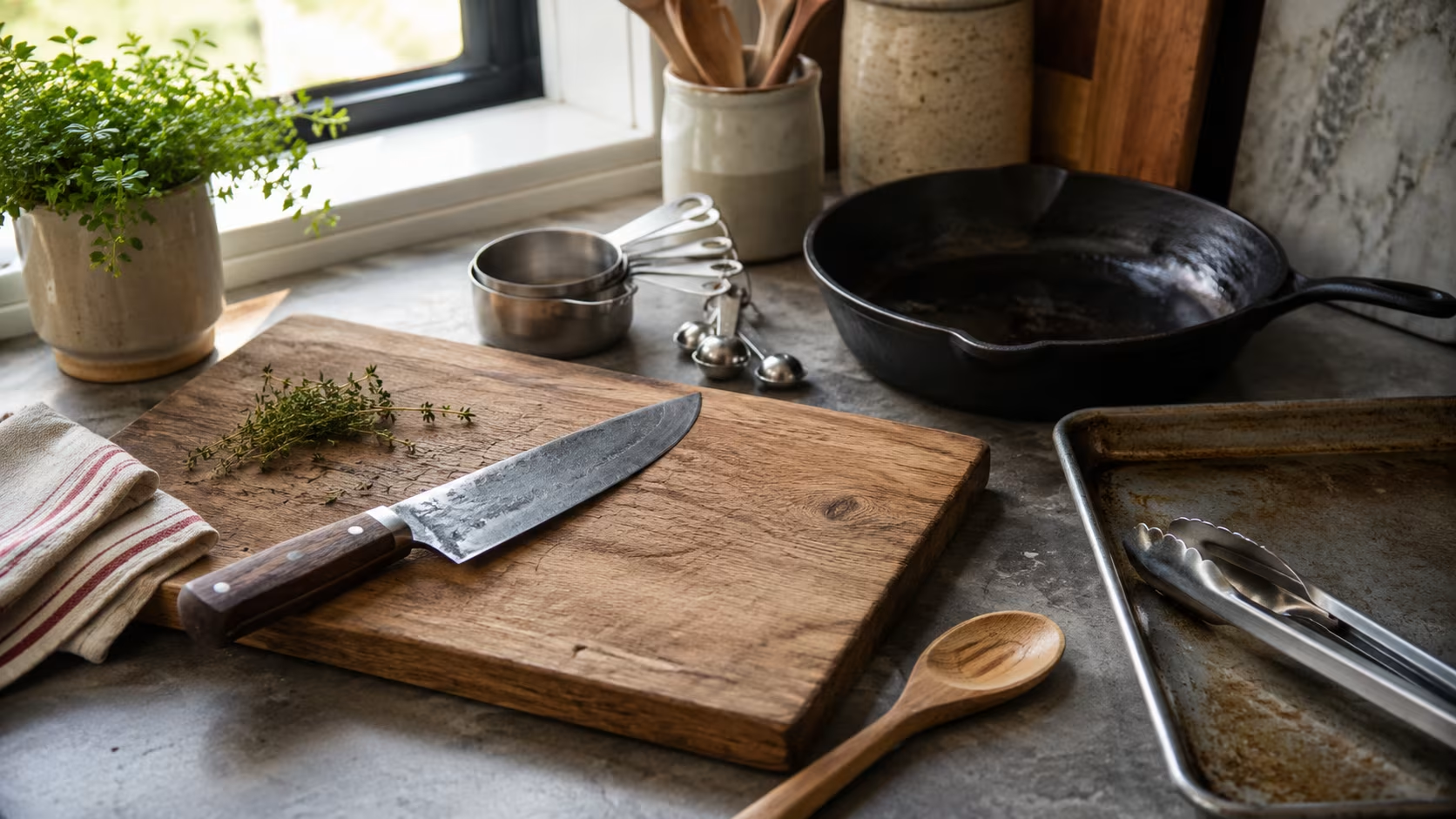
Cookware is where people overspend on sets and underspend on the pieces that matter. The honest truth from outfitting a kitchen is that three pans cover the overwhelming majority of cooking: a 12-inch cast iron or stainless skillet, a 3-quart saucepan, and a 6-quart Dutch oven. Buy those three well and you can skip the 14-piece boxed set entirely.
The skillet sears, fries, and builds pan sauces; cast iron holds and radiates heat beautifully for a crust, while stainless is lighter and better for acidic sauces. The saucepan handles rice, grains, blanching, and small-batch sauces. The Dutch oven is the workhorse: it braises, roasts, simmers stews, fries, and bakes bread, all thanks to heavy walls that hold steady heat and a tight lid that traps moisture for even, slow cooking.
On the Dutch oven specifically, the brand question is real and worth being clear-eyed about. Premium enameled brands like Le Creuset and Staub are excellent and last decades, but a large share of their price is finish and name.
Lodge, which has made cast iron since 1896, sells an enameled Dutch oven that performs the same core job (heavy, even, lid-trapping heat) for a fraction of the cost. Unless you want a specific color or heirloom finish, the budget enameled option cooks identically.
The deeper case for the three pans every kitchen needs is worth reading before you spend on a set you won't use.
What's actually worth spending more on?
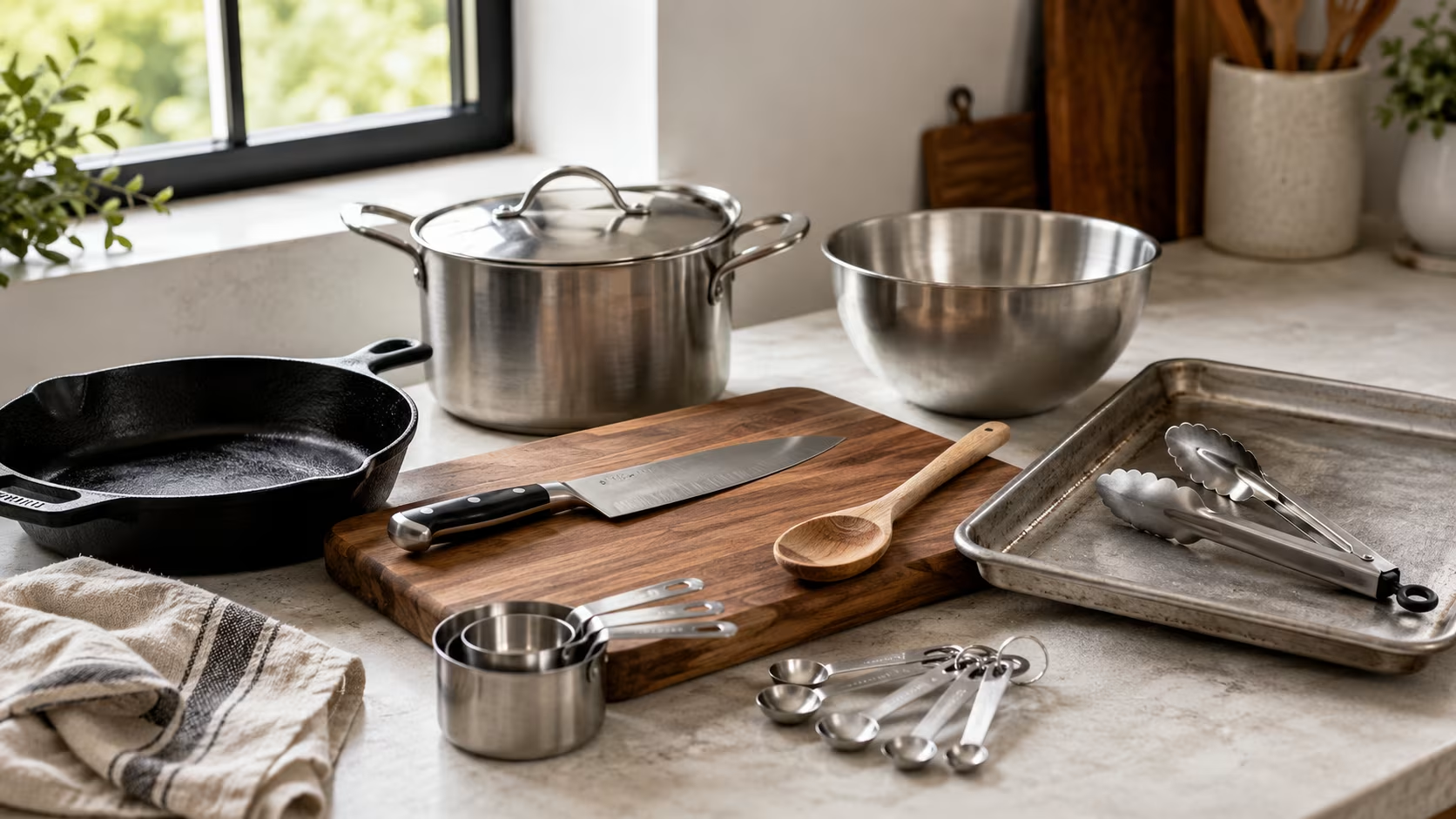
Spend where quality changes the result or the lifespan, and save where it doesn't. The rule sorts most purchases automatically.
Worth the money a chef's knife (a sharp, well-balanced blade changes every task you do daily), cast iron and a Dutch oven (essentially buy-it-for-life with basic care, and the cheap thin versions warp and cook unevenly), a good sheet pan (heavy-gauge aluminum won't buckle and warp in a hot oven the way flimsy ones do), and a sturdy cutting board (a quality board protects your knife edge and lasts years). These are tools whose performance and durability scale with what you pay, up to a reasonable ceiling.
Where premium spending stops paying off most small appliances, knife blocks and matching sets (you'll use three knives, not fifteen), and anything with a single function. A $400 stand mixer is worth it for someone who bakes weekly and meaningless for someone who bakes twice a year. The question isn't whether a tool is good; it's whether your cooking will use it enough to justify the cost and the storage. For knives in particular, the case for buying individually rather than in a block is laid out in the best kitchen knives in 2026 guide.
What can you skip entirely?
Whole categories of kitchen gear exist to be sold, not used. Skipping them is how you keep a functional kitchen instead of a cluttered one.
Single-use gadgets are the worst offenders: the avocado slicer, the strawberry huller, the banana slicer, the dedicated egg cooker, the garlic-specific gadgets. A chef's knife and a spoon do every one of these jobs, and the gadget does only its one job while taking a drawer. The mechanism of regret is predictable: you buy it for a specific recipe, use it once, and it lives in the drawer forever.
Boxed cookware and knife sets are usually a trap. They pad the count with pieces you'll never use (the tiny one-quart saucepan, the steak knives, the utility knife) to hit a number that looks impressive on the box. You'd be better served buying the three or four pieces you'll actually use individually, even if the per-piece price looks higher.
And be skeptical of trend appliances bought on impulse. Some earn their space; many don't. The honest sorting of which countertop machines justify the real estate and which don't is exactly the question the small kitchen appliances worth buying guide tackles, and the answer is far shorter than the marketing suggests.
What's the smartest order to buy gear on a budget?
Outfitting a kitchen all at once is expensive and usually wasteful, because you end up buying things you don't yet know whether you need. Buying in sequence, letting your actual cooking reveal the next gap, is both cheaper and smarter.
Start with the chef's knife and a cutting board. They're used in nearly every recipe, and a sharp knife changes the daily experience of cooking more than any other single upgrade.
Next, add one good pan: the 12-inch skillet is the most versatile starting point, handling everything from eggs to a seared steak to a one-pan dinner. With a knife, a board, and a skillet, you can cook the large majority of weeknight meals.
From there, let need drive the order. Add the Dutch oven when you want to start braising, making soups, or baking bread; add the saucepan for rice and grains; add a sheet pan for roasting.
Sprinkle in the cheap-but-essential small tools (a thermometer, a scale, a fine strainer, mixing bowls) as specific recipes call for them. The discipline is to buy the next thing only when you've hit its absence twice, which guarantees you'll actually use it.
This staged approach spreads the cost over months and leaves you with a kit shaped by how you really cook, not by a store's idea of a complete set. The same buy-as-you-need logic applies to small kitchen appliances, where the temptation to buy ahead of need is strongest and the regret is deepest.
Which gadgets are actually worth owning?
Not every specialized tool is a trap; a handful earn their drawer space because they do a frequent job meaningfully better or faster than the workarounds. The test is frequency of use times the size of the improvement.
A bench scraper is cheap, tiny, and genuinely useful: it moves chopped ingredients off a board, portions dough, and scrapes a work surface clean. A microplane grater transforms how you use garlic, ginger, citrus zest, and hard cheese, and there's no good knife workaround for finely grated zest.
A fish spatula, despite the name, is the best all-purpose thin metal turner for everything from eggs to pancakes to its namesake. A Y-peeler outperforms a straight peeler for speed and control. Kitchen tongs are an extension of your hand at the stove.
What unites these is that each does a common task better, not a rare task at all. Contrast them with the avocado slicer or the electric egg cooker, which do a rare or trivial task that a knife and a pot already handle.
When you're tempted by a gadget, ask how many times a month you'll reach for it and whether the alternative is genuinely worse. If it's "twice a year" or "a spoon works fine," skip it.
The knives that pass this test consistently are covered in detail in the best kitchen knives in 2026 guide.
How do you make good gear last a lifetime?
The "lasts a lifetime" promise only holds if you maintain the tools, and maintenance is mostly about a few habits.
Keep your knives sharp and stored safely. A dull knife is both more dangerous (it slips because you press harder) and worse to use; a few passes on a honing steel before each use keeps the edge aligned, and a whetstone or pull-through sharpener every month or two restores it. Store knives in a block, on a magnetic strip, or in blade guards, never loose in a drawer, where the edges chip against other metal.
Season and dry cast iron. Bare cast iron rusts if left wet, so dry it on the stove after washing and wipe a thin film of oil over it; that oil polymerizes into the slick, non-stick patina that makes a decades-old pan better than a new one.
Enameled cast iron needs less care but dislikes thermal shock and metal utensils. Hand-wash good knives and pans rather than running them through a dishwasher, whose heat and harsh detergent dull edges and strip seasoning.
Buy once, maintain consistently, and a small kit of quality tools will outlast a dozen cheap replacements. Start with the chef's knife and one good pan this year, learn to keep them in shape, and add the rest only as your actual cooking, not a marketing list, tells you what's missing.
Common kitchen-gear questions
What single tool should a beginner buy first? A good chef's knife. It's used in nearly every recipe, and a sharp, well-balanced blade improves your cooking more than any other single purchase.
Is expensive cookware worth it? Sometimes. Cast iron and a Dutch oven are buy-it-for-life and worth quality, though a budget enameled Dutch oven cooks the same as a premium one. Most small appliances don't justify a premium.
Do I really not need a knife set? Right. You'll use a chef's knife, a paring knife, and a serrated bread knife: three knives, not fifteen. Buy those individually and skip the block of fillers.
How often should I sharpen my knife? Hone it before most uses to realign the edge, and sharpen on a whetstone or pull-through every month or two depending on use. A sharp knife is safer than a dull one because it doesn't slip.
Should I buy nonstick pans? One inexpensive nonstick skillet is handy for eggs and delicate fish, but don't build your kitchen around it, since the coating wears out in a few years. Cast iron and stainless do the heavy lifting and last decades, so treat nonstick as a cheap consumable, not an investment.
Whatever you buy, resist the urge to fill drawers with single-task tools; a focused kit of quality basics, maintained well, will outcook a crowded kitchen of gadgets every time.
 Save
Save


0 Comments
No comments yet — start the conversation below.