
Low-FODMAP Cooking: The Practical Guide for People Actually Dealing With This
Low-FODMAP cooking is manageable once you know it's a temporary trigger-finding tool — and that garlic-infused oil restores most of the flavor it seems to take away.
If you've been told to try a low-FODMAP diet for IBS, you've probably discovered that most online advice is either dauntingly clinical or hopelessly vague. Low-FODMAP cooking is genuinely manageable once you understand what FODMAPs actually are, that the diet is a temporary diagnostic tool rather than a forever restriction, and a handful of practical kitchen workarounds — chief among them the garlic-and-onion problem and its surprisingly good solution. This guide is for people actually dealing with this: the practical mechanics of cooking flavorful food while identifying your triggers, written plainly. It's not medical advice — a low-FODMAP diet should be done with a registered dietitian who can guide the phases and protect your nutrition — but it's the cooking know-how that makes the process survivable and even enjoyable.
What are FODMAPs, and why do they cause problems?
FODMAPs are a group of fermentable carbohydrates — the acronym stands for Fermentable Oligosaccharides, Disaccharides, Monosaccharides, And Polyols — that are poorly absorbed in the small intestine in some people. The name is technical, but the concept is simple: these are specific types of carbs and sugars found in many common foods that, in sensitive people, trigger digestive symptoms.
Here's the mechanism. In people with IBS and similar sensitivities, these poorly absorbed carbs do two things in the gut.
They draw water into the intestine (osmotic effect), and they're rapidly fermented by gut bacteria, producing gas. The result is bloating, gas, cramping, pain, and altered bowel habits — the hallmark IBS symptoms.
It's not an allergy or an immune reaction (unlike celiac and gluten); it's a matter of these particular carbs being fermented and drawing water, causing physical distension and discomfort.
Crucially, FODMAPs are found across many otherwise-healthy foods — certain fruits, vegetables, grains, legumes, dairy, and sweeteners — which is why the diet feels so sweeping at first. The point of low-FODMAP eating isn't that these foods are "bad"; it's that temporarily reducing them calms symptoms, and then careful reintroduction reveals which specific FODMAP groups and amounts trigger you. Understanding that it's about fermentation and water in the gut, not a toxin or allergen, helps make sense of why portion size matters so much (more on that below).
Isn't low-FODMAP a permanent diet? (No — and this matters.)
No — and this is the single most important and most misunderstood thing about it. Low-FODMAP is a temporary, three-phase diagnostic process, not a lifelong restriction, and treating it as forever is both unnecessary and potentially harmful to your nutrition and gut health.
The diet has three phases. Phase 1, elimination: for a limited period (typically a few weeks), you cut high-FODMAP foods to calm symptoms and establish a baseline. Phase 2, reintroduction: you systematically reintroduce one FODMAP group at a time, in controlled amounts, to identify which ones trigger your symptoms and at what quantity — this is the actual point of the whole exercise. Phase 3, personalization: armed with that knowledge, you settle into a long-term diet that restricts only the specific FODMAPs and amounts that bother you, while eating everything else freely.
Most people are sensitive to only some FODMAP groups, and often only above a certain portion, so the end state is far less restrictive than the elimination phase. Staying in strict elimination indefinitely is a mistake — it needlessly limits your diet, can reduce beneficial gut bacteria, and risks nutritional gaps.
This is exactly why the process should be done with a registered dietitian, who guides the phases, ensures you're eating adequately, and helps interpret the reintroductions. The goal is freedom through knowledge, not permanent restriction.
If a clinician has suggested this diet for you, treat it as a temporary experiment to identify your triggers, not a life sentence.
What's the garlic and onion problem, and how do you cook around it?
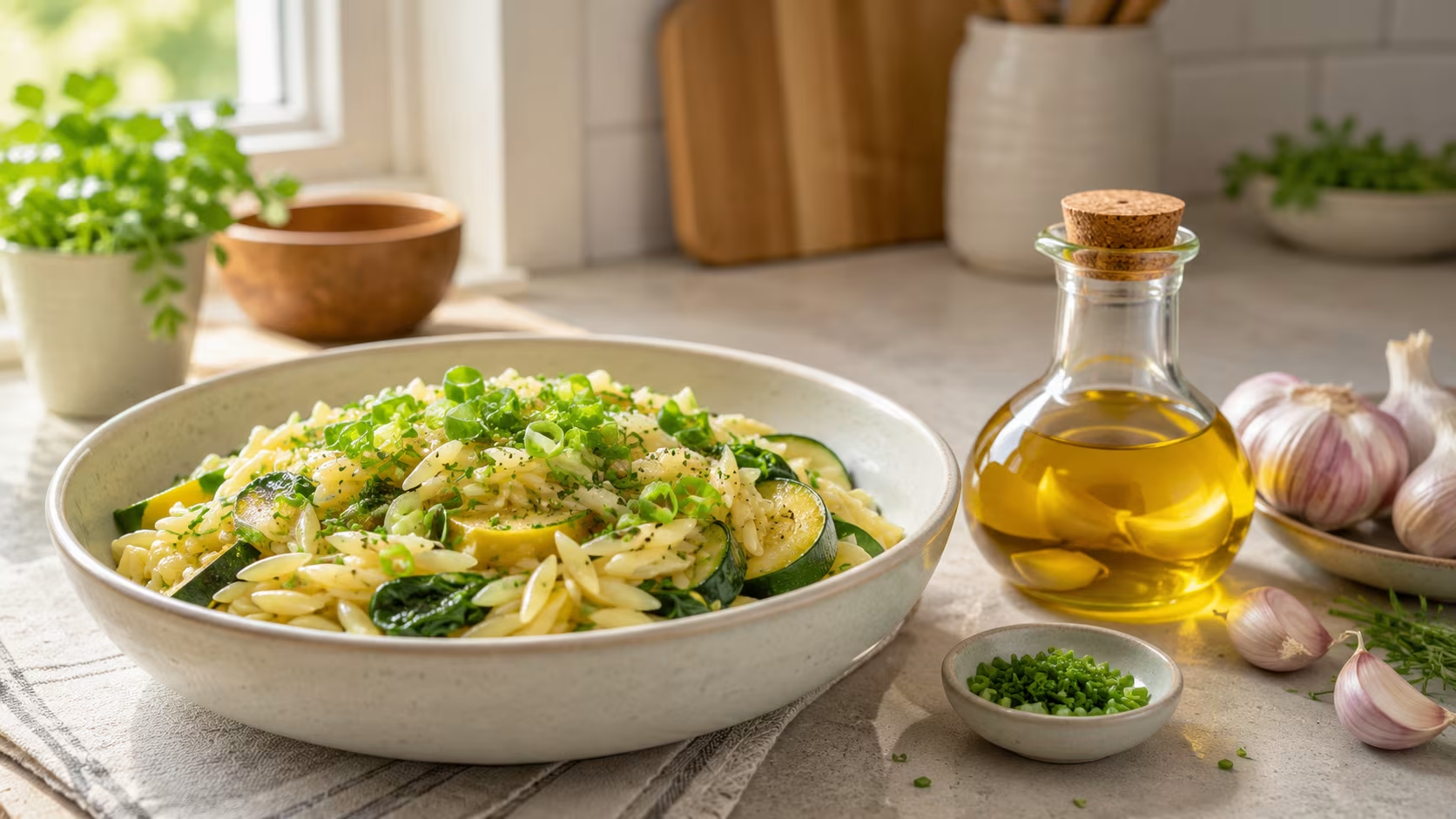
The hardest part of low-FODMAP cooking, by far, is that garlic and onion are high-FODMAP and are the flavor base of nearly everything savory. They're loaded with fructans (one of the "oligosaccharide" FODMAPs), and they're in almost every savory recipe, sauce, stock, and seasoning blend. Cutting them feels like cutting flavor itself — but there's an excellent workaround.
The key insight: fructans are water-soluble, not oil-soluble. This means you can capture garlic and onion flavor in oil without the FODMACs coming along. Garlic-infused oil (and onion-infused oil) is the low-FODMAP cook's secret weapon: gently heat garlic cloves or onion pieces in oil to infuse their flavor, then remove the solids. The fructans stay behind in the discarded solids (they don't dissolve into the oil), while the aromatic, flavorful compounds infuse the oil — giving you genuine garlic and onion flavor that's low-FODMAP.
You can buy commercial garlic-infused oil or make your own (with care for food safety — refrigerate homemade infused oil and use it promptly). This single technique restores most of the flavor the diet seems to take away.
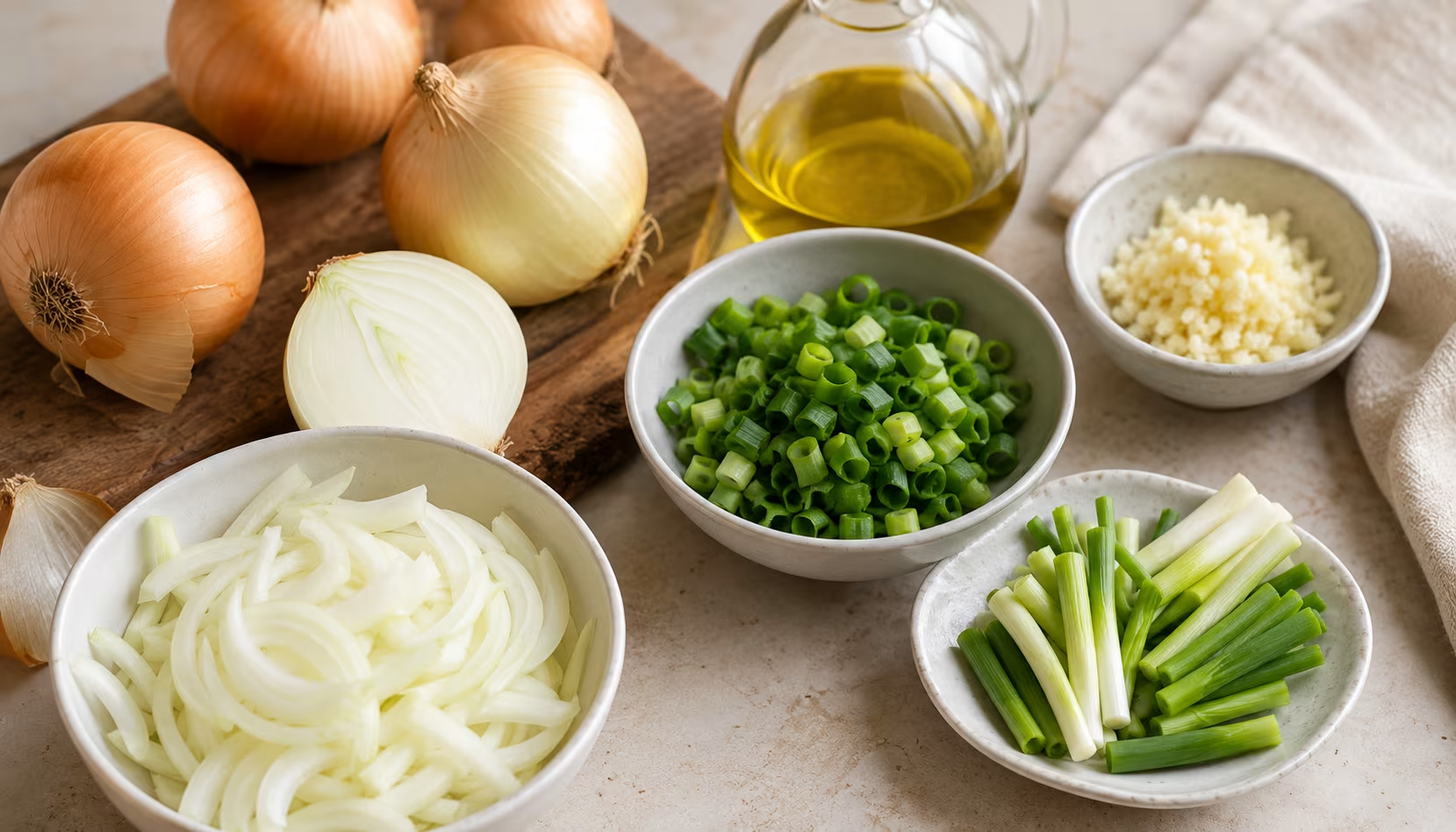
Beyond infused oil, lean on low-FODMAP aromatics and flavor-builders: the green tops of scallions/spring onions (the green part is low-FODMAP while the white bulb isn't), chives, fresh herbs, ginger, chili, lemon, and most spices (check blends, which often hide garlic and onion powder). Asafoetida (hing), a pungent spice, is sometimes used in tiny amounts to mimic onion flavor.
With infused oil as your base and these aromatics layered on, you can build deeply flavorful savory dishes without the high-FODMAP culprits. This is similar in spirit to how gluten-free cooking leans on naturally-safe ingredients rather than fighting the restriction.
Why does portion size matter so much in low-FODMAP cooking?
Because FODMAPs are dose-dependent — the same food can be low-FODMAP in a small portion and high-FODMAP in a large one, since it's the total amount of fermentable carbs that triggers symptoms. This is one of the most practical and liberating facts about the diet, and missing it makes people restrict far more than necessary.
Many foods aren't simply "allowed" or "forbidden" — they have a threshold. A small serving stays below the level that causes symptoms, while a larger serving crosses it.
For example, many foods that are problematic in big amounts are perfectly fine in a modest portion, and some high-FODMAP foods can be eaten in small, controlled quantities without trouble. This is why reputable low-FODMAP resources (like the Monash University app, the authoritative source, developed by the researchers who created the diet) specify portion sizes, not just yes/no lists — they tell you how much of a food is low-FODMAP before it tips over the threshold.
The practical upshots: don't assume a food is entirely off-limits without checking the portion guidance, watch out for "FODMAP stacking" (eating several moderate-FODMAP foods in one meal can add up to a high-FODMAP load even if each alone is fine), and use a trusted reference for amounts rather than generic lists. This dose-dependence is also why personalization in Phase 3 is so individual — your tolerance for a given food's portion is specific to you. Cooking low-FODMAP well means thinking in quantities, not just ingredients, which makes the diet far more flexible than the scary first impression suggests.
How do you build flavorful low-FODMAP meals?
Lean on the many naturally low-FODMAP foods, use the flavor workarounds, and build complete meals around safe proteins, grains, and vegetables — the diet leaves you far more to work with than it first appears. The trick is to focus on what you can eat rather than the restrictions.
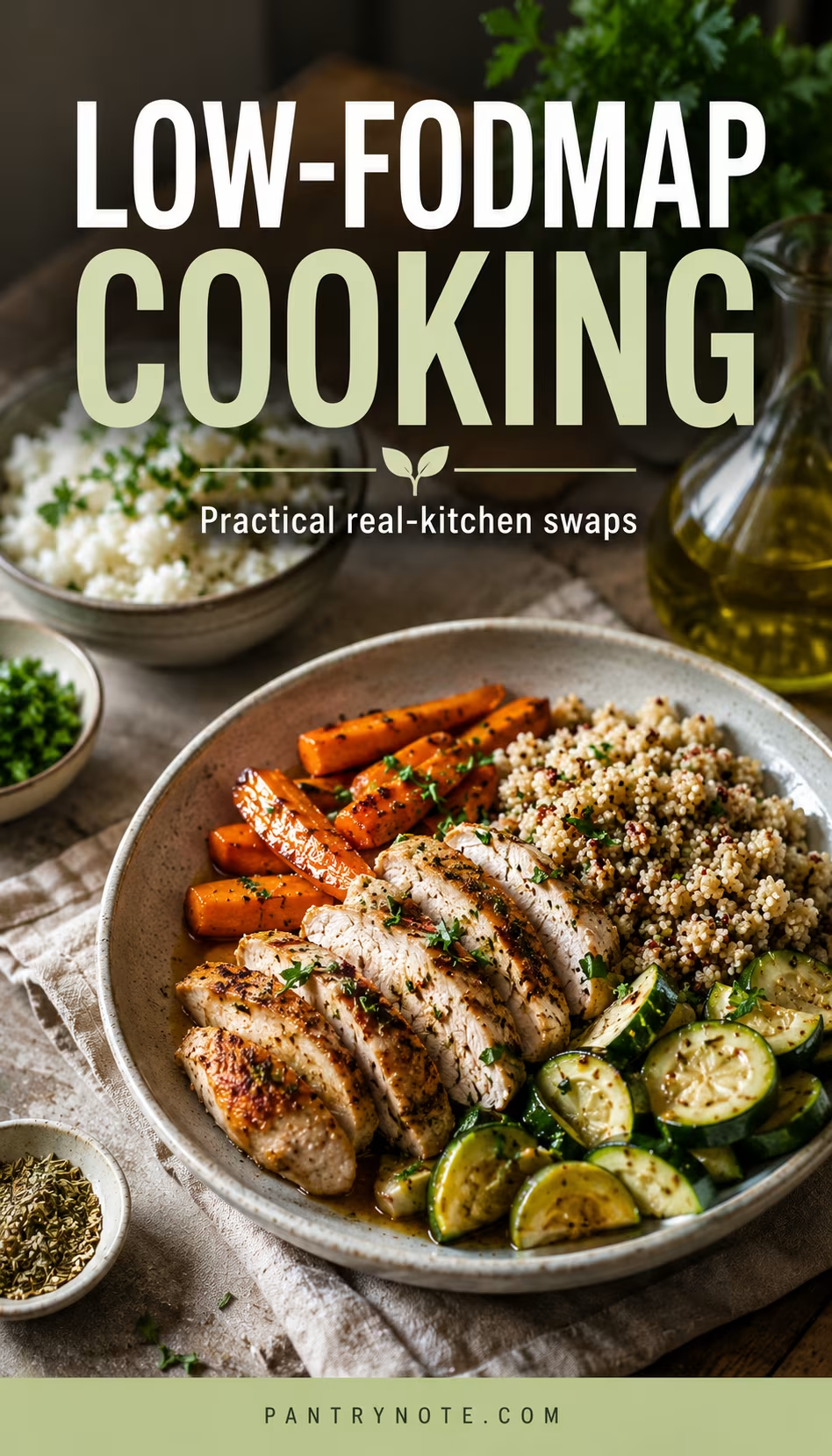
Plenty of foods are low-FODMAP in normal portions: proteins (plain meat, poultry, fish, eggs, firm tofu, and tempeh are naturally FODMAP-free), many grains (rice, oats, quinoa, and certified low-FODMAP or sourdough breads), lactose-free dairy and hard cheeses, and a wide range of vegetables (carrots, zucchini, bell peppers, spinach, green beans, potatoes, the green parts of leeks and scallions) and fruits (in appropriate portions — berries, oranges, grapes, firm bananas). Build meals around these: a grain bowl with rice, low-FODMAP vegetables, a plain protein, and a garlic-infused-oil dressing; a stir-fry using infused oil, scallion greens, ginger, and safe vegetables; a frittata; rice noodles with chicken and bok choy.
Flavor comes from the workarounds and from techniques that don't rely on the off-limits aromatics: garlic- and onion-infused oils, fresh herbs and chili, citrus and safe acids, good searing and roasting for browned depth, hard cheeses, and most spices. Maintain a pantry of your reliable safe staples so you always have the makings of a meal.
Done this way, low-FODMAP eating during the elimination phase is genuinely varied and flavorful — not the bland, sad food people fear. And because it's temporary and personalized, you're working toward reintroducing as much as your body tolerates, not living on a permanent restricted list.
This article is for general information and isn't a substitute for medical or dietary advice. A low-FODMAP diet should be undertaken with guidance from a doctor or registered dietitian who knows your situation, both to confirm it's appropriate and to protect your nutrition through the phases.
Common low-FODMAP questions
Is low-FODMAP the same as gluten-free? No — they overlap (wheat is high in fructans, a FODMAP, so many low-FODMAP people limit it) but they're different. Gluten-free targets the gluten protein for celiac/sensitivity; low-FODMAP targets fermentable carbs for IBS. Many naturally gluten-free foods are also low-FODMAP, which is why the diets share territory, but they're not interchangeable.
Can I eat garlic and onion at all? Not the flesh in the elimination phase (they're high in fructans), but you can have their flavor via garlic- and onion-infused oil, since the troublesome fructans are water-soluble and don't transfer to oil. The green tops of scallions and chives are also low-FODMAP. Many people can reintroduce some tolerance later.
How long does the elimination phase last? Typically a few weeks (often cited around 2-6), just long enough to calm symptoms and establish a baseline — then you move to reintroduction. It's not meant to last indefinitely; staying in strict elimination long-term is discouraged and is why dietitian guidance matters.
What's the best tool for checking foods and portions? The Monash University FODMAP app is the authoritative reference, created by the researchers who developed the diet; it gives specific low/high ratings and portion sizes for foods, which generic online lists usually lack. Use a trusted, portion-aware source rather than yes/no lists.
Low-FODMAP cooking is far more manageable than the scary first impression: understand that it's a temporary diagnostic process, lean on garlic- and onion-infused oils and the wide range of naturally safe foods, think in portions rather than absolutes, and work with a dietitian. Done that way, you can eat flavorful, varied food while you identify your real triggers — and end up with a personalized diet far less restrictive than where you started.
What does a sample low-FODMAP day look like?
Seeing a concrete day makes the diet feel far less restrictive. Breakfast: oats (low-FODMAP in a normal portion) with a firm banana, a handful of blueberries, and lactose-free milk or a low-FODMAP yogurt; or scrambled eggs with sautéed spinach cooked in garlic-infused oil and a side of sourdough toast. Lunch: a rice bowl with grilled chicken, carrots, zucchini, bell pepper, and the green tops of scallions, dressed with garlic-infused oil, lemon, and herbs. Snack: a small handful of suitable nuts, a firm banana, or rice cakes with peanut butter (in portion). Dinner: a stir-fry of chicken or firm tofu with low-FODMAP vegetables (bok choy, carrots, peppers), ginger, scallion greens, and chili, over rice, finished with a splash of garlic-infused oil and tamari (check portion).
Notice that nothing here tastes like deprivation — it's flavorful, varied, and built around the garlic-infused-oil workaround plus naturally safe foods. The day stays low-FODMAP by using infused oils instead of garlic and onion flesh, watching portions of moderate-FODMAP foods, and avoiding FODMAP stacking (too many moderate items at once). This is the elimination phase done well; reintroduction then expands it based on your personal tolerance.
Can I eat out on a low-FODMAP diet? It's harder, since garlic and onion are everywhere in restaurant food, but possible — choose simply-prepared dishes (grilled proteins, plain rice, simple vegetables), ask about garlic and onion, and lean on naturally safe options. Many people find the elimination phase easiest cooking at home, then have more flexibility once they've identified their triggers in the personalization phase.
 Save
Save


0 Comments
No comments yet — start the conversation below.