

The 14-Meal Family Rotation: A Practical Framework for Weekly Dinner Planning
A rotation of about 14 trusted meals turns family dinner from a nightly decision into picking from a proven menu — enough variety, almost no daily thinking.
The endless "what's for dinner?" question gets exhausting fastest in a family, where you're feeding multiple people with different preferences night after night. The 14-meal family rotation solves it with a simple framework: build a list of about fourteen dinners your household actually likes, and cycle through them.
Two weeks of meals, rotated, gives you enough variety that nothing feels repetitive, while eliminating the daily burden of inventing something new from scratch. It's not a rigid schedule — it's a menu of trusted options you draw from, which is exactly why it works where elaborate meal plans fail.
Here's how to build your rotation, why fourteen is roughly the right number, and how to keep it fresh over time.
Why does a rotation work when meal planning usually fails?
Because it removes the hardest part of feeding a family — the daily decision — without demanding rigid scheduling or constant novelty. Most meal-planning systems fail because they ask too much: plan every meal weekly from scratch, or follow a fixed menu that collapses the first chaotic evening. A rotation asks almost nothing once it's built.
The core problem with family dinners isn't cooking; it's the relentless, recurring decision of what to cook, made while tired, for people with opinions. Deciding fresh every night is decision fatigue at its worst, and it's what drives families to expensive, repetitive takeout.
A rotation front-loads that decision once — you build the list of meals the family likes one time — and then every future night is just picking from a known, pre-approved menu instead of inventing from infinity. You've converted an open-ended daily problem into a simple selection from a list.
It also threads the needle between two failure modes. A rigid seven-day menu is brittle (one off night breaks it) and gets boring fast.
Total improvisation is exhausting and decision-heavy. A rotation of trusted meals is flexible but structured — enough options for real variety, enough familiarity to require no thinking, and no rigid day assignments to break.
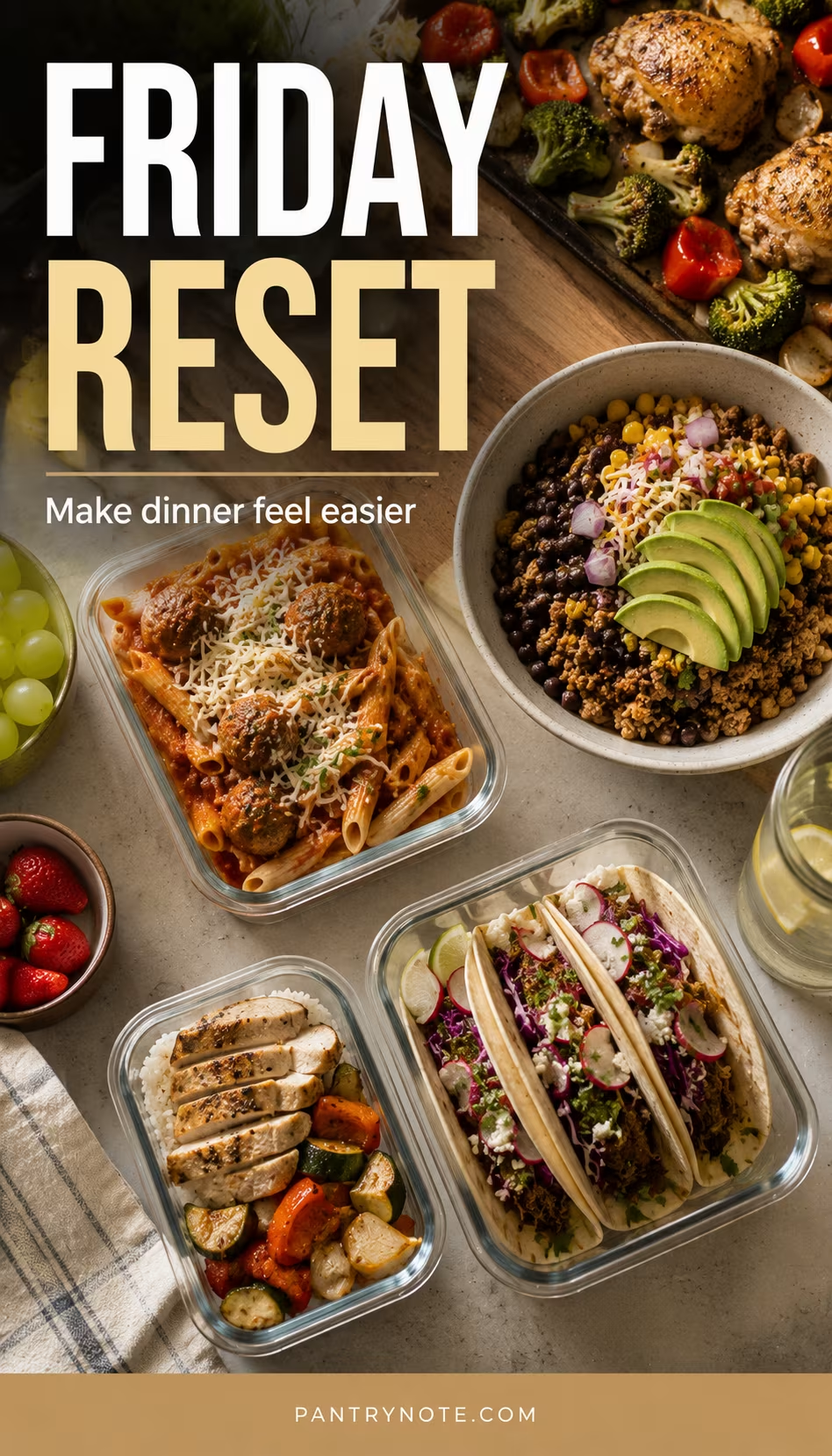
This is the same insight behind the Friday reset: separate the deciding from the cooking, and batch the deciding. The rotation is the deciding, done once and reused.
Why about fourteen meals?
Because fourteen is roughly the sweet spot where you get enough variety that meals don't feel repetitive, but not so many that the list becomes unmanageable or includes dishes you rarely make well. The exact number isn't sacred — anywhere from about ten to twenty works — but fourteen has a useful logic.
Fourteen dinners is two weeks of meals, so if you rotate through them, any given dish comes around only about every two weeks, which is infrequent enough that it stays welcome rather than tiresome. Most people happily eat a favorite dinner every couple of weeks; far more often and it gets old, far less often and you're maintaining a sprawling list of dishes you make rarely (and therefore less well). Fourteen also comfortably covers the realistic number of dinners a family actually cooks at home across two weeks, accounting for leftovers and the occasional night out.
A smaller rotation (say ten) is simpler but cycles faster, risking monotony; a larger one (twenty-plus) offers more variety but is harder to keep stocked for and means more dishes you make infrequently. Fourteen balances variety against manageability.
The point isn't to hit exactly fourteen — it's to have enough trusted meals that variety is automatic and nothing repeats too soon, while keeping the list small enough that you cook each dish often enough to nail it and can shop for it efficiently. Treat fourteen as a target, not a rule, and adjust to your household's appetite for variety.
How do you build your rotation?

Start by writing down the meals your family already likes and you already make well, then organize them for variety. You're not inventing fourteen new dishes — you're cataloging and rounding out what already works, which is why building the rotation is easier than it sounds.
Begin with a brain-dump: list every dinner your household genuinely enjoys and you can cook reliably. Most families already have a core of eight or ten such meals; you just haven't written them down.
Then fill the gaps to reach about fourteen, deliberately adding variety so the rotation isn't all one type. A good rotation spreads across:
- Protein variety: some chicken, some beef/pork, some fish, some vegetarian/bean meals, so you're not eating the same protein constantly.
- Cuisine variety: Italian, Mexican, Asian-style, comfort food, etc., for different flavors.
- Effort variety: several fast weeknight meals (20-30 minutes) for busy nights, plus a few more involved dishes for when you have time.
- A few flexible "formats" that adapt to what's on hand — taco night, stir-fry night, pasta night, grain bowls, breakfast-for-dinner — which stretch the rotation because the specifics can change.
Lean on dishes that suit your real life: family-friendly, not too fussy, and ideally able to use overlapping ingredients to simplify shopping. Building the rotation around a stocked pantry and affordable staples also makes it cheaper and easier to keep ingredients on hand. Write the final list somewhere visible — a note on the fridge or in your phone — so planning becomes "pick from the list" rather than "think of something."
How do you actually use the rotation week to week?
Loosely — pull meals from the list as a flexible menu, not a fixed schedule, and let the week's reality shape which ones you cook. The rotation is a pool of options, and treating it that way is what makes it survive a real family week.
Each week (or whenever you plan and shop), pick several meals from your fourteen to cook that week, choosing based on what fits — fast meals for busy nights, the more involved dish for a night you have time, and what you already have ingredients for. Don't assign specific dishes to specific days; keep them as a list to draw from so a changed schedule doesn't break the plan.
Build your shopping list from the meals you've chosen, which is fast because the recipes are familiar and the ingredients often overlap. Then over the week, cook them in whatever order suits each evening.
Crucially, build in flexibility: plan for a leftovers night and a night out or takeout, because those happen in family life, and rotate roughly so dishes don't repeat too soon but without rigid tracking. Some families like loose theme nights layered on top (Taco Tuesday, pasta night, etc.), which removes even the "which meal" decision by assigning a category to a day while leaving the specifics flexible.
The rotation also pairs perfectly with a weekly planning session and with batch-prep components: the rotation tells you what, the planning session handles shopping, and prep makes the cooking faster. Used loosely, the rotation means you're never staring into the void at 6 p.m. — you're just picking tonight's dinner from a short list of things everyone already likes.
How do you keep the rotation from getting stale?
Refresh it gradually — swap out dishes that have gotten tired and add new ones you've tried and liked, treating the rotation as a living list rather than a fixed set. A rotation kept static for a year will eventually bore everyone; one that evolves stays fresh indefinitely.
The practical approach: every so often (every season, or whenever a dish starts drawing groans), retire a meal or two that the family has tired of and add a new one or two you've tested and the household enjoyed. Try a new recipe occasionally outside the rotation, and if it's a hit and you can make it reliably, promote it into the rotation in place of something stale. This keeps the list current without ever forcing you to plan from scratch — you're always editing a working list, not rebuilding it.
Seasonal rotation is a natural refresh: lean on lighter, quicker meals and fresh produce in summer, heartier soups, stews, and braises in winter, so the rotation shifts with what's in season and what you crave. You might even keep a loose summer set and winter set.
Also keep the rotation honest by dropping dishes that are more trouble than they're worth — if a meal is always a hassle or someone always complains, replace it. Over time, this gentle editing produces a refined, reliable, household-tailored rotation of dinners everyone likes and you can cook well, which is the whole goal: dinner becomes a solved problem, not a nightly negotiation, while still evolving enough to stay interesting.
Common rotation questions
Does it have to be exactly 14 meals? No — fourteen (two weeks) is a useful target that balances variety against manageability, but anywhere from about ten to twenty works depending on your household's appetite for variety. The point is enough trusted meals that nothing repeats too soon, kept small enough that you cook each well and shop efficiently.
Won't my family get bored eating the same 14 meals? Not if the rotation has real variety (different proteins, cuisines, and formats) and you refresh it over time — at fourteen meals, any dish comes around only about every two weeks, which most people find perfectly welcome. Swap in new dishes periodically and rotate seasonally to keep it fresh.
How is this different from meal planning? A rotation is the menu of options you plan from; meal planning is the weekly act of choosing and shopping. They work together — the rotation eliminates the "what do we even eat?" decision, and a weekly planning session handles picking and shopping. The rotation is what makes the weekly planning fast.
How do I handle picky eaters or different preferences? Build the rotation from meals that already satisfy the household, lean on flexible formats (taco night, build-your-own bowls, pasta with optional toppings) where each person customizes, and keep a couple of reliable crowd-pleasers in the mix. The rotation is your family's list, so it's tailored to what actually works for your eaters.
The 14-meal family rotation turns dinner from a nightly decision into a solved system: build a list of about fourteen meals your household likes and cooks well, draw from it loosely each week, and refresh it gradually over time. You get genuine variety with almost no daily decision-making — the single biggest relief in feeding a family week after week.
What does a sample 14-meal rotation look like?

A concrete example shows how variety and manageability balance out. A workable family rotation might be: (1) tacos or fajitas, (2) spaghetti with a meat or marinara sauce, (3) a stir-fry with rice, (4) roast chicken with vegetables, (5) burgers or sliders with a salad, (6) a soup or chili with bread, (7) a sheet-pan dinner (protein plus vegetables), (8) a curry or dal with rice, (9) baked or pan-seared fish with a side, (10) homemade pizza, (11) a grain bowl (build-your-own), (12) a pasta bake or lasagna, (13) breakfast-for-dinner (eggs, etc.), and (14) a flexible "leftovers or fridge-clear" night.
Notice the deliberate spread: different proteins (chicken, beef, fish, vegetarian), different cuisines (Italian, Mexican, Asian, comfort food), and a mix of fast weeknight meals and a couple of weekend projects, plus flexible formats (tacos, stir-fry, grain bowls, pizza) whose specifics can change each time. That variety is what keeps a rotation from feeling repetitive even though it's a fixed-ish list, and the flexible formats effectively multiply the fourteen into far more actual meals.
Your rotation should be your household's version of this — built from dishes your family actually likes and you cook well — but the structure (protein variety, cuisine variety, effort variety, a few flexible formats, and a leftovers night) is what makes any rotation work. Write your fourteen down, and weekly dinner planning becomes picking from a proven menu.
Should the rotation be the same every two weeks? Not rigidly — it's a pool to draw from, not a fixed schedule. Pull meals from your list of fourteen in whatever order suits each week, skip or repeat as needed, and refresh the list over time. The fourteen meals give you the variety and the no-thinking convenience; how you sequence them week to week stays flexible.
 Save
Save

0 Comments
No comments yet — start the conversation below.