

The Friday Reset: A Weekly Dinner System That Ends the "What's for Dinner?" Problem
The dinner scramble is a decision problem, not a cooking one. A short weekly planning session moves all the deciding off your exhausted weeknight self, for good.
The daily "what's for dinner?" scramble isn't a cooking problem — it's a decision problem, and the Friday reset solves it by moving all the deciding to one low-stakes session at the end of the week. Instead of standing in front of the fridge at 6 p.m. every night with no plan, decision fatigue setting in, and a takeout app calling your name, you spend twenty minutes on Friday loosely mapping the week ahead and shopping for it.
The cooking still happens night to night, but the hard part — figuring out what — is already done. It's less about rigid meal prep and more about removing the recurring daily friction that drives most people to order out.
Here's how the system works and why Friday is the right day.
Why does deciding what to cook feel so hard?
Because it's a recurring, open-ended decision made at the worst possible time — when you're tired, hungry, and depleted at the end of a workday. This is decision fatigue: the well-documented phenomenon where the quality of your decisions degrades after a long string of them. By dinnertime, you've made hundreds of small choices all day, and "what should I cook from infinite possibilities, with whatever happens to be in the house?" is exactly the kind of open-ended question your depleted brain wants to avoid.
So you default to the path of least resistance, which is usually ordering delivery or eating something joyless. The problem was never that you can't cook — it's that you were asked to plan, decide, and execute all at once, while exhausted. The cooking itself is often the easy part; it's the cold-start decision that defeats people.
The Friday reset attacks this directly by separating the deciding from the cooking. When the decision is already made — when you've got a loose plan and the right groceries — dinner becomes a matter of execution, not invention. You're no longer asking "what's for dinner?"; you're just answering a question you already settled on Friday. That shift, from open-ended daily decision to simple nightly execution, is the whole point, and it pairs naturally with a deep pantry that makes execution even easier.
What exactly is a Friday reset?
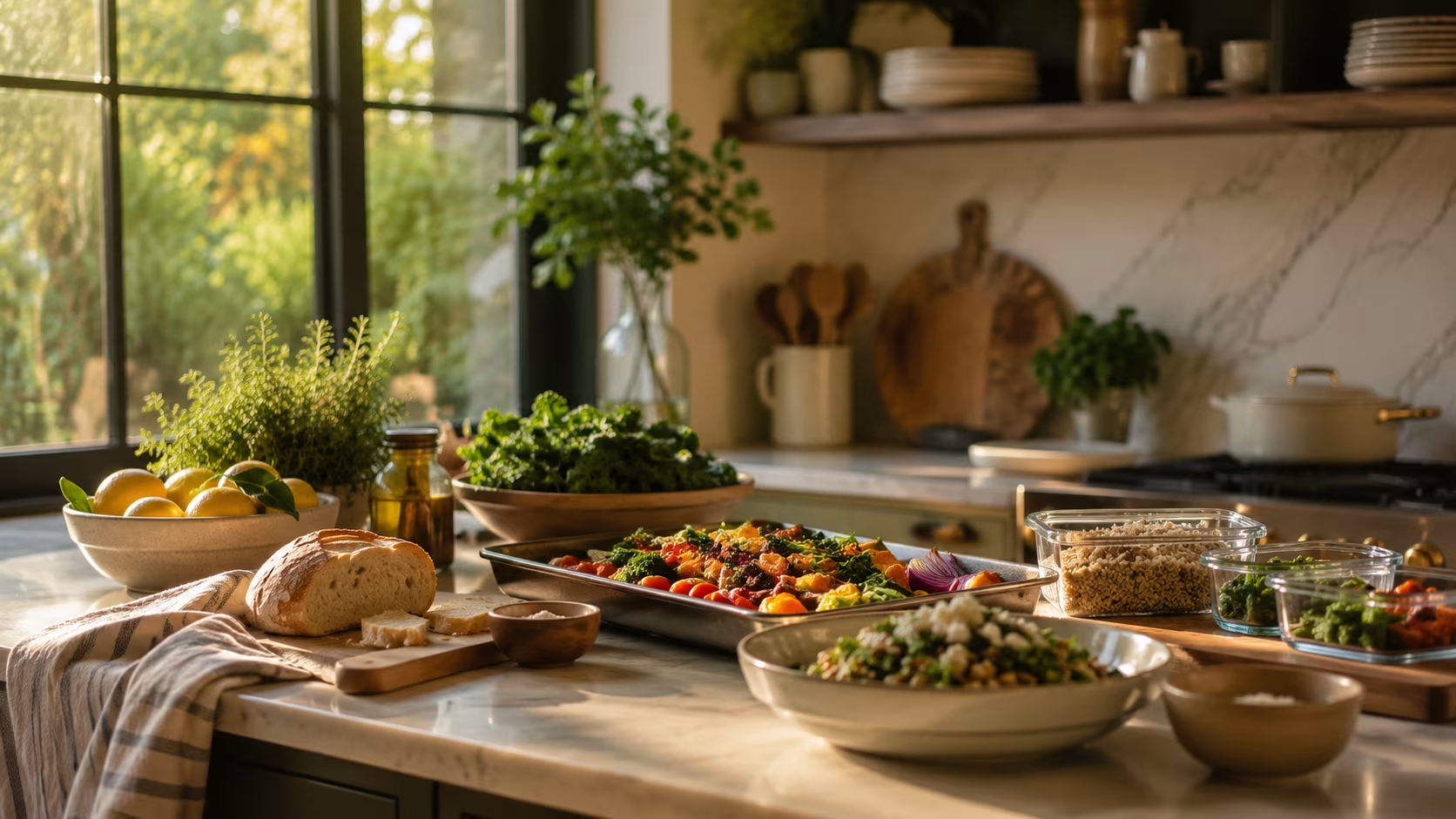
A Friday reset is a short weekly planning session — typically 15 to 30 minutes — where you decide the week's dinners, check what you already have, and build a shopping list, so the coming week runs on autopilot. It's planning-forward, distinct from a cooking-forward Sunday reset, though the two pair beautifully.
The session has a simple rhythm. First, take stock of what's already in the fridge, freezer, and pantry — what needs using up, what you're well stocked on.
Second, loosely plan the week's dinners: not a rigid menu nailed to specific days, but a short list of, say, five or six meals you'll rotate through as the week unfolds, shaped by what you already have and what's quick versus involved. Third, build the shopping list from that plan, and shop (or order groceries) so everything's on hand.
That's it. You're not cooking anything yet — you're removing the friction that will otherwise hit you every single evening.
The plan should be flexible: think of it as a menu of options for the week rather than a contract, so a night that goes sideways doesn't break the system. The goal is to never again open the fridge at dinnertime with no idea and nothing thawed.
Why Friday specifically?
Because Friday sits at the natural seam of the week, when you have the information and the headspace to plan without the pressure of cooking immediately. The exact day matters less than having a consistent one, but Friday has real advantages.
By Friday you know how the past week actually went — what you bought and didn't use, what you're sick of, what's about to spoil — so your plan is grounded in reality rather than optimistic Monday-morning intentions. You can plan the weekend's slightly more involved cooking and the weeknights' fast meals together. And crucially, planning on Friday lets you shop over the weekend, when most people have more time, so the week starts fully stocked rather than requiring a frazzled Tuesday grocery run.
There's also a psychological fit: Friday planning is low-stakes and forward-looking, a pleasant "here's what we'll eat" rather than a chore. Some people prefer to fold it into a weekend grocery routine; others like Friday afternoon as a wind-down ritual.
The principle is simply to pick one consistent day and make the weekly plan a habit, so the deciding always happens in a calm, batched session rather than nightly under duress. If Friday doesn't fit your life, any regular day works — the system, not the specific day, is what ends the dinner scramble.
How do you actually plan the week without overcomplicating it?
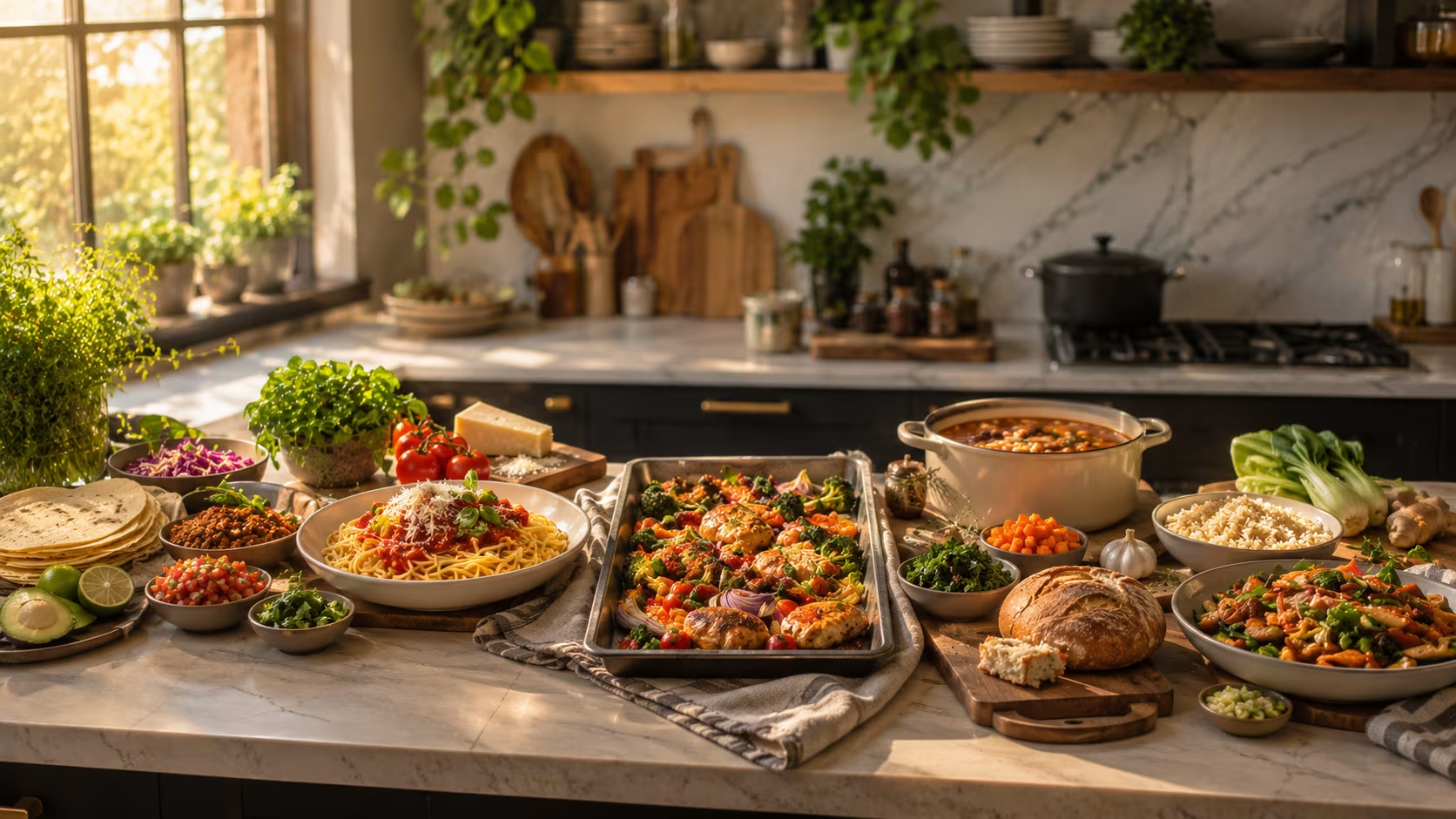
Keep it loose, lean on a rotation, and plan for reality — including leftovers, busy nights, and one flexible "wildcard" slot. Over-planning is what kills these systems; a rigid seven-day menu collapses the first time Wednesday doesn't go as scripted.
A workable structure for the week: plan around five dinners, not seven, leaving room for one leftovers night and one night out or takeout, because those happen anyway and planning for them prevents waste. Mix the effort level — a couple of fast 20-minute meals for busy nights, one or two slightly more involved dishes for when you have time, and lean on quick standbys you can make half-asleep. Don't assign meals to specific days; keep them as a pool you pull from based on how each evening actually feels, which makes the plan resilient to a schedule that changes.
Build the plan around what you already have and what's on sale or in season, which saves money and reduces waste. And establish a few reliable rotation meals — dishes you can make without thinking — so you're not inventing from scratch every week; a loose family or household rotation of go-to dinners means planning is often just picking from a known list rather than starting blank. The aim is a plan loose enough to survive a real week but firm enough that you never face the 6 p.m. void.
How does the Friday reset save money and reduce waste?
Through the same mechanism that ends the dinner scramble: planning. The two biggest drains on a food budget are impulse takeout and wasted groceries, and a weekly plan attacks both directly.
When you have a plan and the right ingredients on hand, the marginal effort of cooking drops below the effort of ordering out, so the expensive default — delivery — stops winning by attrition. Over a month, replacing even a few takeout nights with planned home cooking can outweigh an entire grocery bill.
And because you shop from a list built around meals you'll actually make, you buy what you'll use and use what you buy, instead of the optimistic produce that liquefies in the crisper drawer. Planning around what's already in the house and what's on sale compounds the savings.
This makes the Friday reset a cornerstone of eating well on a tight budget: the plan ensures cheap, nutritious staples get bought and cooked rather than forgotten, and it prevents the double cost of wasted groceries plus replacement takeout. The thrift isn't about coupons or deprivation — it's structural. You spend less because you waste less and order out less, both of which flow directly from having decided in advance.
How do you make the habit stick?
Start tiny, keep it pleasant, and let it earn its place. Most planning systems fail not because they don't work but because people start too ambitiously and burn out by week three.
For the first few weeks, don't plan all five dinners — just plan two or three and shop for them. Notice how much calmer those nights feel when the decision and the ingredients are already handled.
That small, repeatable win builds the habit; the fuller version comes naturally once you trust the payoff. Tie the reset to something you already do — coffee on Friday afternoon, the existing weekend grocery trip — so it piggybacks on an established routine rather than demanding a new slot of willpower.
Keep the planning genuinely low-effort: a sticky note on the fridge or a running list in your phone is plenty; you don't need an elaborate spreadsheet or an app, and the fancier the system, the faster it gets abandoned. Give yourself permission to have an off week without guilt — the weeks you plan will more than pay for the weeks you don't. Do a quick Friday reset, even a loose one, and the relentless daily "what's for dinner?" question simply stops being a question.
Common Friday reset questions
How is this different from a Sunday reset? A Friday reset is about planning and shopping (deciding what to eat and getting the groceries); a Sunday reset is about prepping components (actually cooking ahead). They're complementary — plan on Friday, shop on the weekend, optionally prep on Sunday. Do just the planning and you've already solved the hardest part.
What if my week is unpredictable? That's exactly what the loose, pool-of-meals approach is for. Don't assign meals to days; keep a flexible list and a couple of fast standbys, and build in a leftovers night and a wildcard slot. The plan bends to your week instead of breaking.
Do I have to plan every dinner? No — plan five and leave room for leftovers and a night out. Over-planning causes waste and burnout. The goal is to eliminate the daily decision void, not to script every meal rigidly.
What if I don't feel like cooking the planned meal? Keep the plan as a flexible pool, not a fixed schedule, so you can swap any night's choice for another from the week's list. As long as you have ingredients for a few planned meals on hand, you have options — which is the whole point.
Spend twenty minutes once a week deciding and shopping, and you trade the nightly dinner panic for calm execution. The food gets better, the budget improves, and the single most draining recurring question of home life quietly disappears.
What tools or structures make planning easier?
You don't need an app or an elaborate system — but a few light structures make the weekly plan faster and more sustainable. The simplest is a running list: a sticky note on the fridge or a note in your phone where you jot the week's planned meals and build the shopping list. That's genuinely all most people need, and the low-tech version is the one you'll actually keep using.
A couple of optional structures help if planning still feels effortful. Theme nights remove decisions entirely — "pasta night," "stir-fry night," "soup night," "breakfast for dinner" — so each week you're just filling in which pasta or stir-fry rather than choosing from infinity. Families especially find themes cut the deciding dramatically.
A master list of go-to meals (a written list of 15-20 dinners your household reliably likes) turns planning into picking from a menu instead of inventing, which is the whole idea behind a meal rotation. And keeping a well-stocked pantry and freezer means your plan can lean on staples you already have, so planning and shopping are lighter.
Whatever you use, keep it dead simple. The fanciest planning systems — color-coded spreadsheets, dedicated apps with a learning curve — are the ones most likely to be abandoned, because the friction of maintaining them defeats the purpose. A sticky note, a theme or two, and a list of trusted meals is a system you'll still be using in six months, which is the only kind that actually ends the dinner scramble.
What if I genuinely can't plan a whole week? Then plan three dinners and leave the rest flexible. Even a partial plan eliminates most of the nightly decision void, and it's far more sustainable than an ambitious full plan you abandon. Start small and let the habit grow.
 Save
Save



0 Comments
No comments yet — start the conversation below.