

Meal Prep for One: A System That Doesn't Waste Food or Your Sunday
Most meal-prep advice is built for families and fails a single cook. Here's a system that beats both solo-cooking enemies — food waste and eating the same thing all week.
Cooking for one is its own distinct challenge, and most meal-prep advice — built around feeding families — actively works against you. Meal prep for one has two enemies that don't trouble bigger households: food waste (recipes and package sizes assume four people, so half of everything rots) and monotony (cook one big batch and you're eating the identical thing for six days until you hate it). A system that actually works for a single person solves both — it uses up what you buy before it spoils, and it gives you variety without cooking every night.
The good news is that cooking for one is also the most efficient scale there is: cook once, eat several times, with no one else's preferences to negotiate. Here's how to do it without wasting food or sacrificing your whole Sunday.
Why is cooking for one uniquely hard?
Because the entire food system — recipes, grocery packaging, and conventional meal-prep wisdom — is built for households of four, and scaling down creates friction at every step. Understanding the two specific failure modes is the key to designing around them.
The first is waste. A recipe serves four; a bunch of herbs, a head of cabbage, a carton of stock, or a pack of chicken thighs is sized for a family. Buy these for one person and a large share spoils before you can use it — the half-bunch of cilantro that liquefies, the three-quarters of a cabbage you never touch again, the unused half-can of tomato paste. Single people throw away a disproportionate amount of food, and it's expensive.
The second is monotony. The standard meal-prep solution — cook one giant batch on Sunday and portion it into six identical containers — is brutal for one person, because there's no one to share variety with and you're staring down the same meal every day until Friday. By Wednesday you're sick of it and ordering out, which wastes both the prepped food and money.
Big-batch single-recipe prep, the default advice, is exactly the wrong approach at this scale. A system for one has to deliberately engineer variety and right-size purchasing — which, done well, turns the constraints into the efficiency of cooking once and eating several times.
How do you prevent food waste when shopping for one?
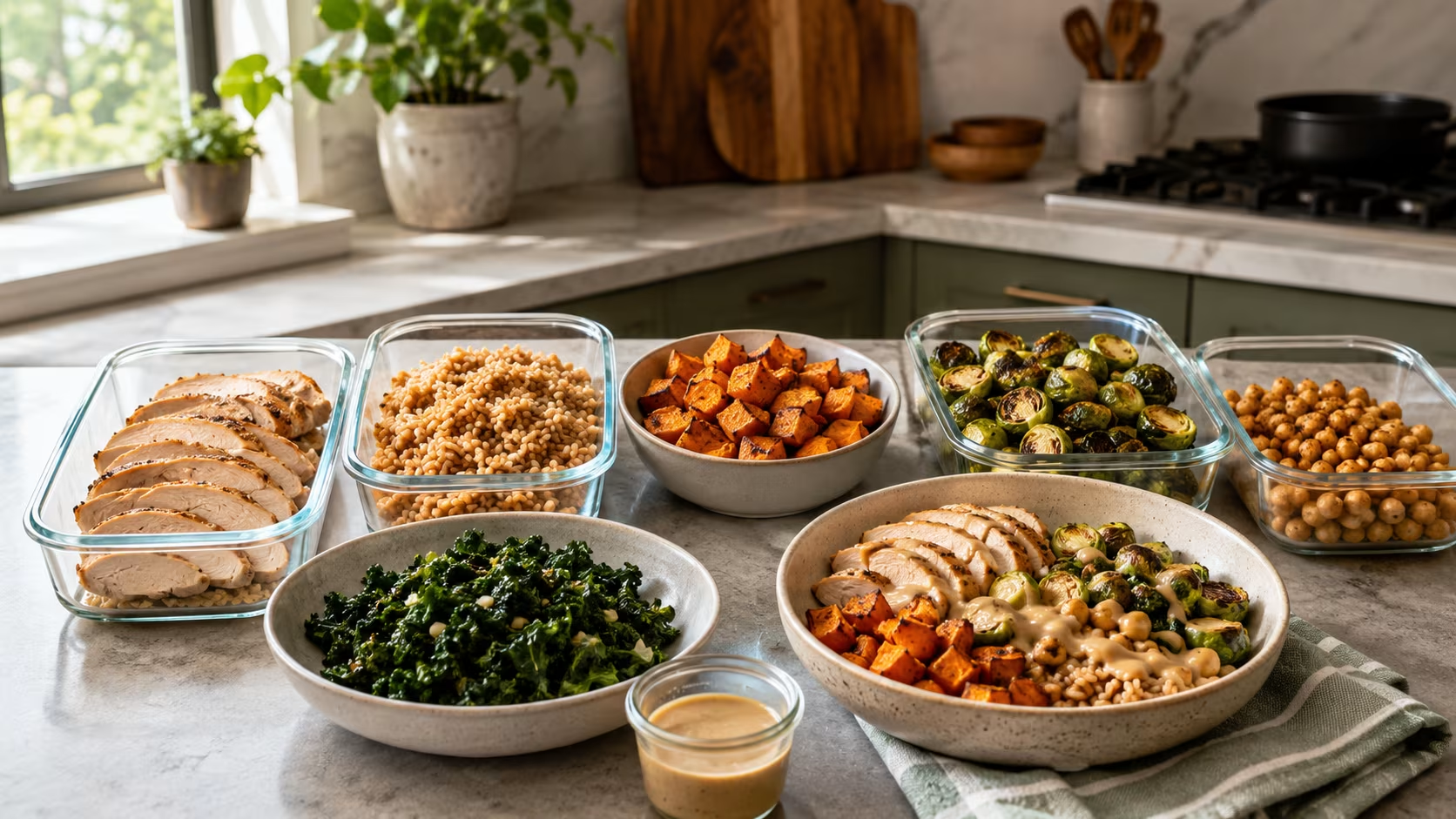
Buy deliberately for the way you actually cook, lean on the freezer and shelf-stable staples, and prefer ingredients you can use across multiple meals. Waste is a purchasing problem as much as a cooking one, so the fix starts at the store.
Shop with a plan and buy only what you'll realistically use before it spoils — it's better to shop a bit more often for smaller amounts of perishables than to buy family-sized produce that rots. Lean heavily on the freezer: buy frozen vegetables (no spoilage, portion exactly what you need), freeze half a loaf of bread, freeze portions of meat in single servings, and freeze leftovers and components. The freezer is a single person's best friend because it pauses the spoilage clock entirely.
Favor versatile, shelf-stable staples that don't spoil and combine into many meals — the well-built pantry of beans, rice, pasta, canned tomatoes, eggs, and onions is ideal for one, since these keep indefinitely and form the backbone of countless meals with just a fresh ingredient or two added. When you do buy something perishable in a larger size, plan two or three different meals to use it up (a head of cabbage becomes a slaw, a stir-fry, and a soup).
And buy proteins and produce you can use across several dishes rather than single-use specialty items. Right-sized, freezer-forward, pantry-anchored shopping is most of the battle against waste.
How do you get variety without cooking every night?
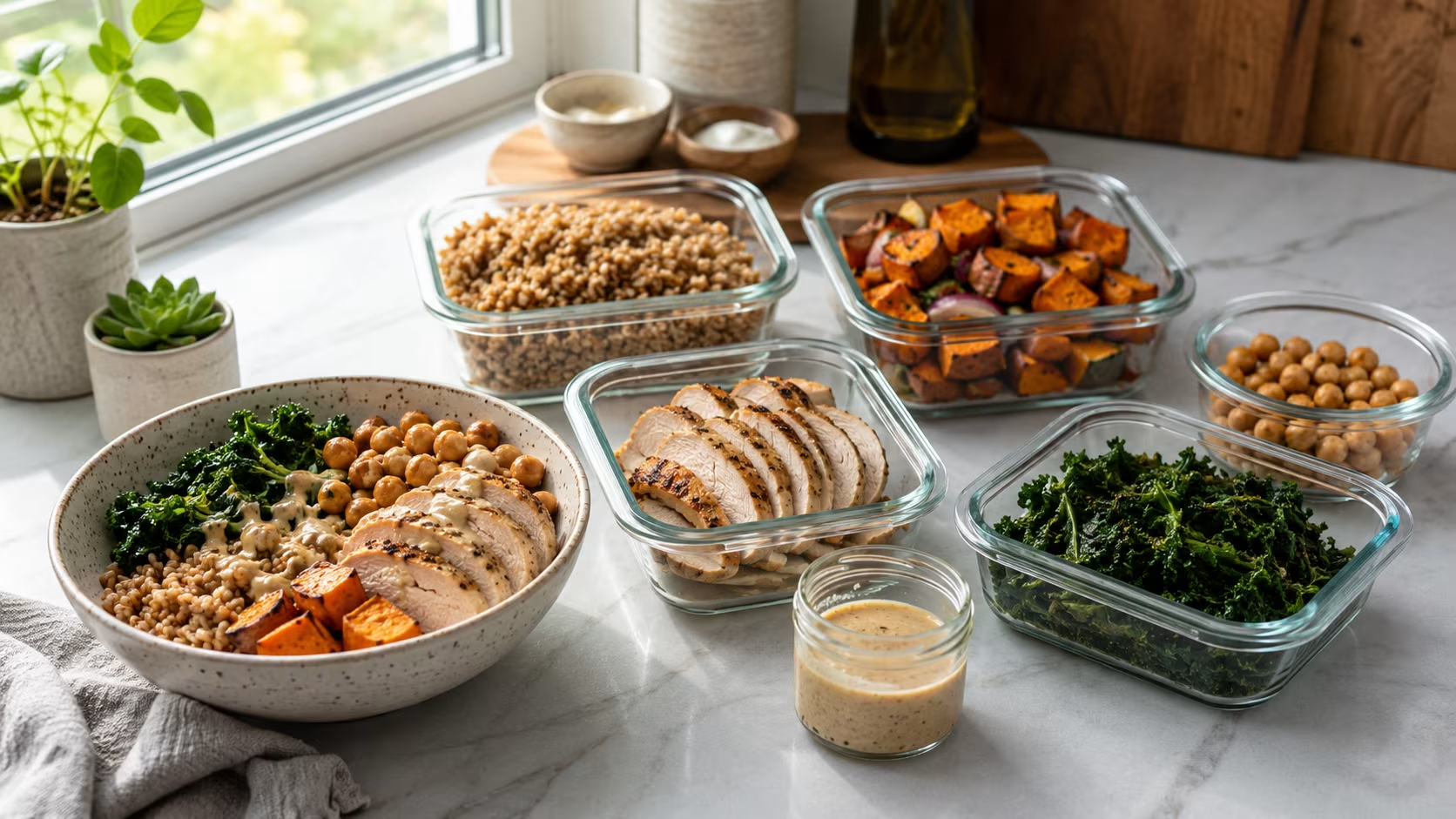
Prep components, not finished meals — exactly the trick that makes meal prep work at any scale, and especially for one. This is the single most important idea for solo cooking, because it directly solves the monotony problem.
Instead of cooking one big finished dish to eat six times, cook a few versatile building blocks — a grain, a roasted vegetable, a protein, a sauce — and recombine them into different meals through the week. The same cooked chicken, roasted vegetables, and grain become a bowl one night, a wrap the next, fried rice after that.
Your brain reads them as different dinners even though the prep was shared, so you escape the "same container every day" trap that makes single-person batch cooking miserable. This component approach is the heart of any good reset routine, just scaled down.
Lean on components that keep well so a single person can stretch them across the week without spoilage: cooked grains and beans (5+ days), roasted vegetables (5-6 days), hard-boiled eggs, and proteins, while keeping delicate items like dressed salads for the first day or two. And embrace the freezer for portioning: when you do cook a full dish, portion the extra into single servings and freeze them, building up a personal stash of "ready meals" so some nights you just reheat rather than cook. A few frozen single portions plus a few fresh-assembled component meals gives you variety and minimal nightly effort.
What's the smartest way to scale recipes down?
Don't rigidly divide everything by four — instead, cook full batches of things that keep or freeze well, and only truly scale down the things that don't. Trying to make a quarter-recipe of everything is fiddly and often impossible (a quarter of an egg?), so be strategic about what to batch and what to minimize.
For dishes that keep or freeze well — soups, stews, chili, braises, cooked grains, beans, sauces — just make the full recipe and portion the rest into the fridge and freezer. These improve or hold up over days, so a single batch becomes several effortless future meals. This is where cooking for one is genuinely efficient: one pot of chili is a week of lunches and a few frozen dinners.
For dishes that don't keep — anything fried, delicate, or best fresh — cook genuinely single portions, which is easy with the right approach (a single piece of fish, eggs to order, a quick stir-fry). And get comfortable with recipes that naturally suit one, like a single grain bowl, an omelet, or a piece of protein with a quick vegetable.
A useful mental split: batch-cook the keepers, fresh-cook the perishables, and let the freezer hold the surplus. That way you cook in efficient batches without being trapped eating the same thing daily.
What does a week of meal prep for one actually look like?
Here's a concrete, low-waste week from one modest prep session plus minimal nightly assembly. Say on the weekend you cook: a pot of grains, a tray of roasted vegetables, a batch of shredded chicken (or roasted chickpeas), and a simple sauce, and you keep eggs, greens, and pantry staples on hand.
Monday is a grain bowl with chicken, vegetables, and sauce. Tuesday the chicken and vegetables go into a wrap or quesadilla.
Wednesday is "cook fresh" — an omelet or fried rice using the leftover grains and a couple of eggs, ready in ten minutes. Thursday, a frozen single portion of a soup or chili you made a previous week, just reheated.
Friday is a clear-the-fridge plate of whatever components remain, plus a fried egg. Across the week you've cooked properly maybe twice, eaten five varied dinners, frozen any surplus, and wasted almost nothing.
This is the whole system in miniature: a little component prep, smart use of the freezer, a couple of genuinely-fresh quick meals, and pantry staples filling the gaps. It scales the efficiency of batch cooking to a single person without the monotony or the waste, and it dovetails with budget cooking, since the cheapest, most prep-friendly staples are also the most economical.
How do you keep it sustainable?
Start small, keep it flexible, and don't aim for Instagram-perfect prep. The single-person systems that last are the loose, forgiving ones, not the rigid weekend-consuming projects.
Begin with just one or two components — cook a pot of grains and roast one tray of vegetables — and notice how much easier two or three weeknight dinners become. Build from there only as the habit takes hold.
Keep a flexible attitude: if a night turns into takeout with friends, the components just slide forward; nothing is locked to a day, so nothing goes to waste. And resist the pressure to prep elaborately — a single person doesn't need ten matching containers and a color-coded plan; a few cooked basics and a stocked pantry are plenty.
The mindset shift that makes it click is seeing cooking for one not as a sad constraint but as the most efficient, autonomous cooking there is: you cook once and eat several times, answer to no one's preferences, and waste nothing if you shop and prep with a little intention. Done right, meal prep for one means eating well all week from one easy session and a smart freezer — no waste, and your Sunday left mostly intact.
Common meal-prep-for-one questions
How do I stop wasting fresh herbs and produce? Freeze what you can't use fresh — chop herbs into ice cube trays with oil, freeze portioned vegetables, and freeze bread. Buy smaller quantities of perishables more often, and plan two or three meals around anything you buy in a larger size so it gets used up.
Isn't cooking for one more expensive per serving? It can be if you waste food or default to takeout, but done well it's very economical — batch-cooking keepers, leaning on cheap pantry staples, and freezing surplus drives the per-meal cost down. The waste, not the cooking, is what makes solo eating expensive.
How long do prepped components last for one person? Cooked grains and beans about five days, roasted vegetables five to six, cooked proteins three to four, dressings a week or more. Anything you won't reach in that window goes straight to the freezer in a single portion.
What if I hate eating leftovers? Then lean on the component approach (which reads as different meals, not leftovers), freeze surplus so it's not "leftovers" by the time you eat it, and mix in genuinely fresh quick-cook nights like eggs or a fast stir-fry. Variety is engineered, not accidental.
Cooking for one only feels hard because the advice is built for four. Right-size your shopping, prep components instead of giant single batches, lean on the freezer, and you'll eat varied, satisfying meals all week — without the waste, and without losing your weekend to it.
What equipment makes cooking for one easier?
You don't need much, but a few things make solo cooking and storage genuinely easier. A set of single-portion storage containers (ideally glass, stackable, microwave- and freezer-safe) is the most useful investment — they let you portion components and leftovers, see what you have, and reheat without dirtying dishes. Right-sized containers are the backbone of waste-free solo eating.
Beyond that, the basics cover it: a good chef's knife, one versatile skillet, a small saucepan, and a sheet pan handle nearly everything a single person cooks, so there's no need for a cupboard full of specialized gear. A few smaller-capacity tools can help — a small pan means you're not heating a giant skillet for one egg — but most standard equipment scales down fine. The freezer, more than any gadget, is the single person's most valuable tool, so containers that freeze and reheat well matter more than any appliance.
Do I need a smaller everything to cook for one? No — standard pots and pans work fine; you just don't fill them. A medium skillet and saucepan handle single portions perfectly well. The one thing genuinely worth right-sizing is your storage containers (single-portion) and your shopping (smaller quantities of perishables), not your cookware.
How do I avoid eating the same thing all week? Prep components, not finished meals, and recombine them into different formats; freeze surplus single portions so they're not "leftovers" by the time you eat them; and keep no-cook options on hand. Variety is engineered through the component approach, not left to chance.
 Save
Save

0 Comments
No comments yet — start the conversation below.