

Small Kitchen Appliances Worth Buying (And Which Ones Aren't)
Most small appliances get used once and exiled to a cupboard. One test — frequency times improvement — sorts the genuinely useful from the single-use clutter.
Counter space is finite, and the small-appliance industry is very good at convincing you that you need a single-purpose gadget for every task. The truth is that only a handful of small kitchen appliances worth buying actually earn their space, while most are used once and exiled to a cupboard.
The test is simple and worth applying before every purchase: how often will you genuinely use it, and how much better is it than the tools you already have? Run every tempting appliance through that filter and the list of what to buy gets short and clear.
Here's which small appliances genuinely earn their counter or cupboard space, which are situational, and which to skip — plus the question to ask before any purchase.
What's the test for whether an appliance is worth it?
Frequency of use multiplied by how much better it is than your existing tools. This single question sorts almost every appliance into "worth it" or "clutter," and applying it before you buy prevents the cupboard graveyard of impulse purchases.
An appliance earns its space if it does a task you do often, meaningfully better or faster than what you already own. A gadget fails the test if it does a rare task (you'll use it twice a year) or a trivial one your knife, pot, or hands already handle fine.
The electric kettle passes (used daily, much faster than a stovetop pot); the electric egg cooker fails (rare-ish task a pot already does). The avocado slicer is the canonical failure — a knife does it, and you don't slice avocados often enough to justify a drawer.
Two corollaries sharpen the test. First, storage cost is real: counter space and cupboard room are limited, so an appliance has to earn not just its price but its footprint.
Second, beware single-use gadgets — anything that does exactly one narrow job is suspect, because versatile tools you already own usually cover it. The appliances worth buying tend to be versatile (do many things) or do a frequent task dramatically better.
Keep this filter in mind and the marketing loses its grip. It's the same buy-fewer-better-things logic behind a smart kitchen gear list, knives, and pans.
Which small appliances genuinely earn their space?
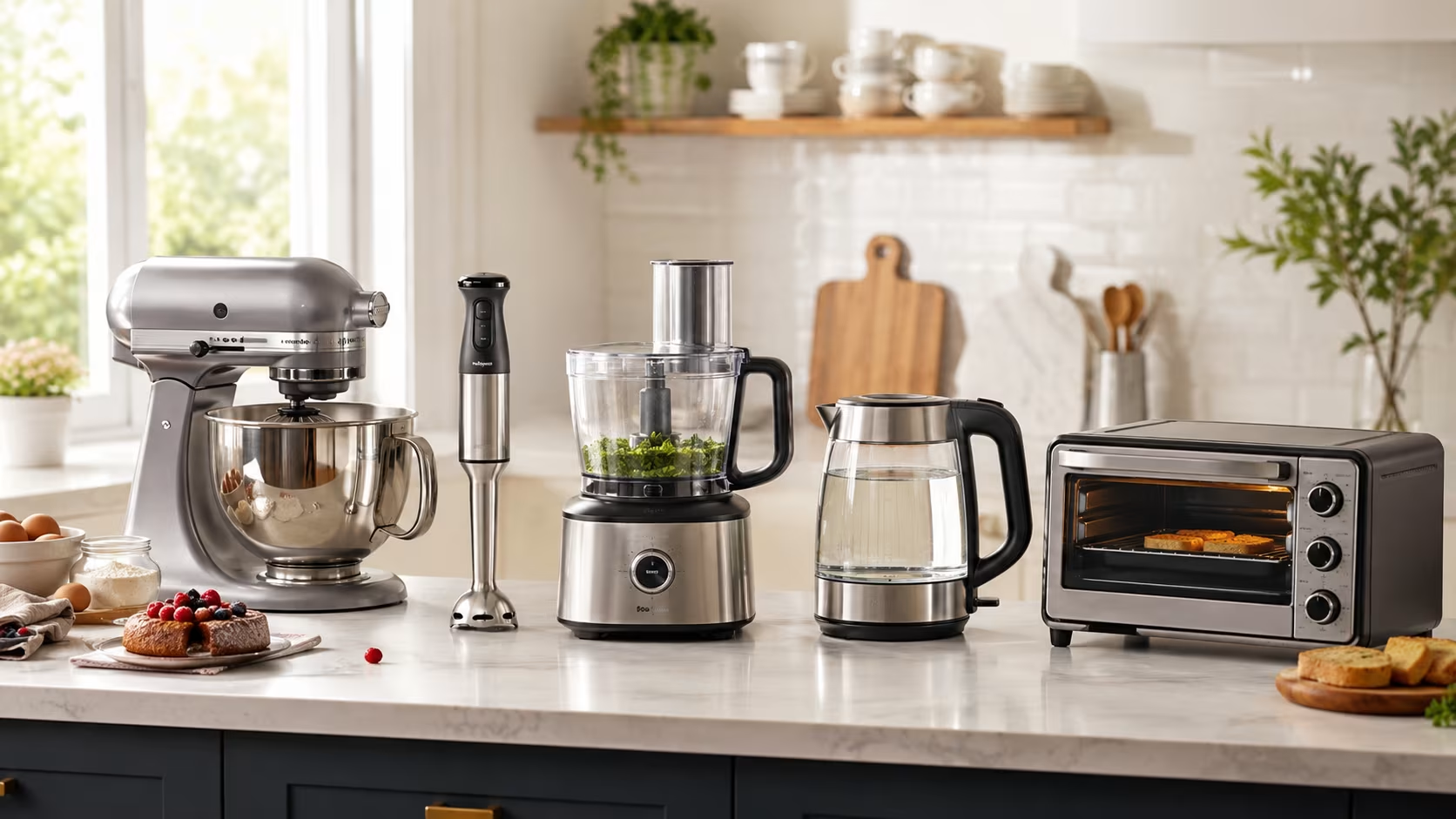
A handful pass the frequency-times-improvement test for most home cooks. These do common tasks meaningfully better or are versatile enough to replace several tools:
A kitchen scale — technically an appliance, the cheapest and most useful. It makes baking accurate and repeatable (baking is a ratio, and volume measures are imprecise), and it's small and cheap. For anyone who bakes at all, it's the highest-value purchase here.
An immersion (stick) blender — versatile, cheap, and space-efficient. It purees soups right in the pot, makes sauces, smoothies, mayonnaise, and whipped cream, and stores in a drawer. It does much of what a full blender does without the footprint, passing the versatility test easily.
An electric kettle — if you drink tea or coffee, it boils water far faster and more efficiently than a stovetop, used daily. High frequency, clear improvement.
A food processor — earns its space if you cook enough to use it for chopping, shredding, doughs, pesto, hummus, and grinding; it does several tasks dramatically faster than by hand. Situational on how much you cook, but high-value for active cooks.
A multi-cooker (electric pressure cooker, e.g. Instant Pot) — versatile, replacing a pressure cooker, slow cooker, and rice cooker in one; it makes fast stock, beans, braises, and rice. Worth it if you'll use those functions, and its versatility (many tools in one) is exactly what justifies the counter space.
An air fryer — a compact convection oven that crisps food fast; genuinely useful and frequently used by those who own it, though it takes real counter space and overlaps with a regular oven. Worth it if you'll use it often and value the speed and crisping.
The pattern: these are versatile or high-frequency tools that meaningfully beat the alternatives. Not everyone needs all of them — the scale and immersion blender are near-universal wins, while the food processor, multi-cooker, and air fryer depend on how and how much you cook.
Which appliances are situational?
Some appliances are genuinely great for the right person and pointless for everyone else — the test depends entirely on your specific cooking and habits. Buying these requires honesty about how you actually cook.
A stand mixer is the classic example: indispensable for someone who bakes bread, cakes, and cookies weekly (it handles kneading, whipping, and creaming effortlessly and lasts decades), and an expensive, heavy counter ornament for someone who bakes twice a year. Same appliance, opposite verdicts, based purely on frequency.
A full blender is worth it if you make smoothies, frozen drinks, or smooth purees often (a high-powered one does things an immersion blender can't), but redundant if an immersion blender covers your needs. A rice cooker is a beloved daily-use appliance for households that eat a lot of rice and a space-waster for those who make it occasionally (a pot does it fine). A slow cooker earns its keep for people who want to set-and-forget weekday dinners, but overlaps heavily with a Dutch oven or multi-cooker. A toaster oven is great for small households and quick tasks (toasting, reheating, small bakes) that don't justify heating the big oven.
The honest approach with situational appliances is to ask how you actually cook, not how you aspire to. The aspirational purchase — the bread machine, the pasta maker, the ice cream maker bought in a burst of enthusiasm — is exactly what ends up in the cupboard.
If you genuinely, regularly do the task, it earns its space; if you're imagining a version of yourself who might, it probably doesn't. Buy situational appliances based on demonstrated habits, not intentions.
Which appliances should you skip?
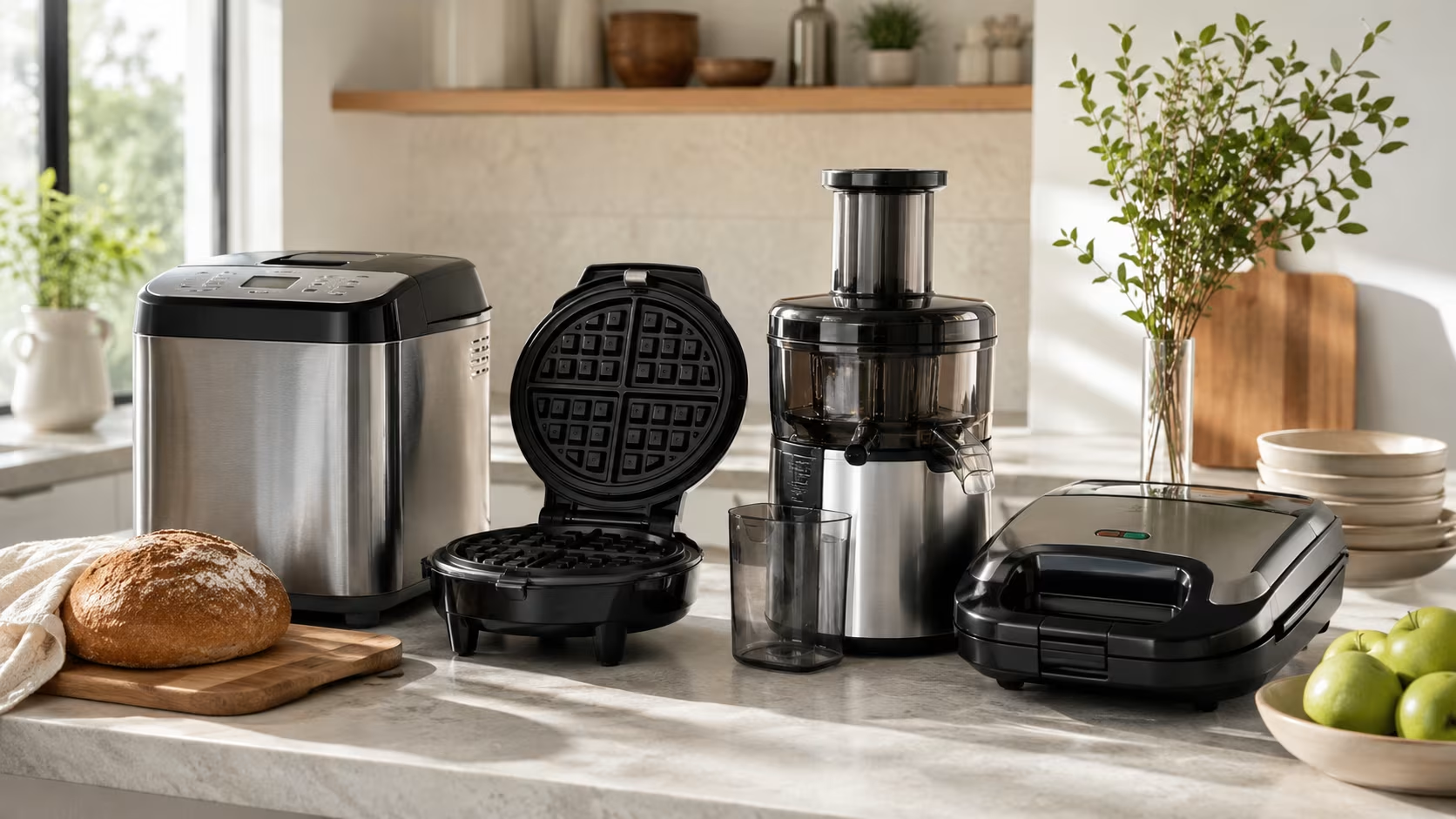
The clear skips are single-use gadgets that do one narrow task your existing tools already handle, and trend appliances bought on impulse. These are where money and counter space go to die.
The single-use offenders: the electric egg cooker (a pot boils eggs), the quesadilla maker (a skillet), the electric kettle's gimmicky cousins, the hot dog cooker, the dedicated grilled-cheese maker, the panini press (a skillet and a weight), the milk frother (optional at best), and countless others. Each does exactly one thing that a pan, pot, or your existing appliances already do — failing the test on both frequency and improvement. The mechanism of regret is reliable: bought for one recipe or a burst of enthusiasm, used once, then stored forever.
Also skip redundant appliances — a second device that overlaps something you already own and use (a stand mixer and a hand mixer and a food processor and a blender, when two would cover everything). And be wary of trend appliances that flood the market with marketing: some (the air fryer, the multi-cooker) genuinely earn their place, but many are fads that don't survive the frequency test. Before buying any trending gadget, apply the filter honestly: how often, and how much better than what I have?
The reframe that prevents most bad purchases: a kitchen isn't improved by having more appliances, but by having the right few you actually use. A cook with a scale, an immersion blender, a kettle, and maybe a food processor or multi-cooker is better equipped than one whose counters are buried under a dozen single-task gadgets gathering dust.
How do you decide what to buy first?
Build up deliberately, starting with the cheap, near-universal wins and adding situational appliances only as your real cooking demonstrates the need. This staged approach mirrors how to buy any kitchen gear — let demonstrated need, not marketing, drive each purchase.
Start with the universal, low-cost wins: a kitchen scale and an immersion blender, plus an electric kettle if you drink tea or coffee. These are cheap, small, and useful for almost everyone, so they're safe first buys. Then add based on how you actually cook: a food processor if you do a lot of chopping/doughs/dips; a multi-cooker if you want fast beans, stock, and braises; an air fryer if you'll use it often for crisping; a stand mixer if you bake frequently. Buy each only when you've hit its absence repeatedly — when you've genuinely wished you had it more than once — which guarantees it'll be used rather than stored.
This way the cost spreads over time, your counters stay clear, and every appliance you own is one you reach for. Resist buying ahead of need or on impulse, and resist the matched-set or "complete kitchen" instinct that the marketing pushes. The goal is a small set of genuinely useful tools, chosen for your cooking, that earn their space — not a countertop museum of good intentions.
Common small appliance questions
What's the single most useful small appliance? For most people, a kitchen scale (cheap, tiny, makes baking accurate) or an immersion blender (versatile, space-efficient, replaces several tools). Both are near-universal wins at low cost and small footprint, making them the safest first purchases.
Is an air fryer worth it, or just a fad? It's genuinely useful — essentially a compact, fast convection oven that crisps food well, and frequently used by owners. The caveats are that it takes real counter space and overlaps with a regular oven, so it's worth it if you'll use it often and value the speed and crisping, less so if your oven already meets your needs.
Do I need a stand mixer? Only if you bake regularly (bread, cakes, cookies) — then it's a beloved, durable workhorse. If you bake occasionally, it's an expensive, heavy counter ornament; a hand mixer or even a bowl and spoon covers light baking. Be honest about how often you'll actually use it.
How do I stop buying gadgets I don't use? Apply the test before every purchase: how often will I use it, and how much better is it than what I already own? If it's a rare or trivial task your knife, pot, or existing appliances handle, skip it. Most single-use gadgets fail this test — that's why they end up in the cupboard.
The small appliances worth buying are the versatile, frequently-used ones — a scale, an immersion blender, a kettle, and, depending on your cooking, a food processor, multi-cooker, or air fryer. Skip the single-use gadgets and impulse trend buys. Run every purchase through frequency times improvement, build up as real need appears, and your kitchen stays functional and clutter-free instead of buried under unused machines.
What does a minimal, well-equipped kitchen actually look like?
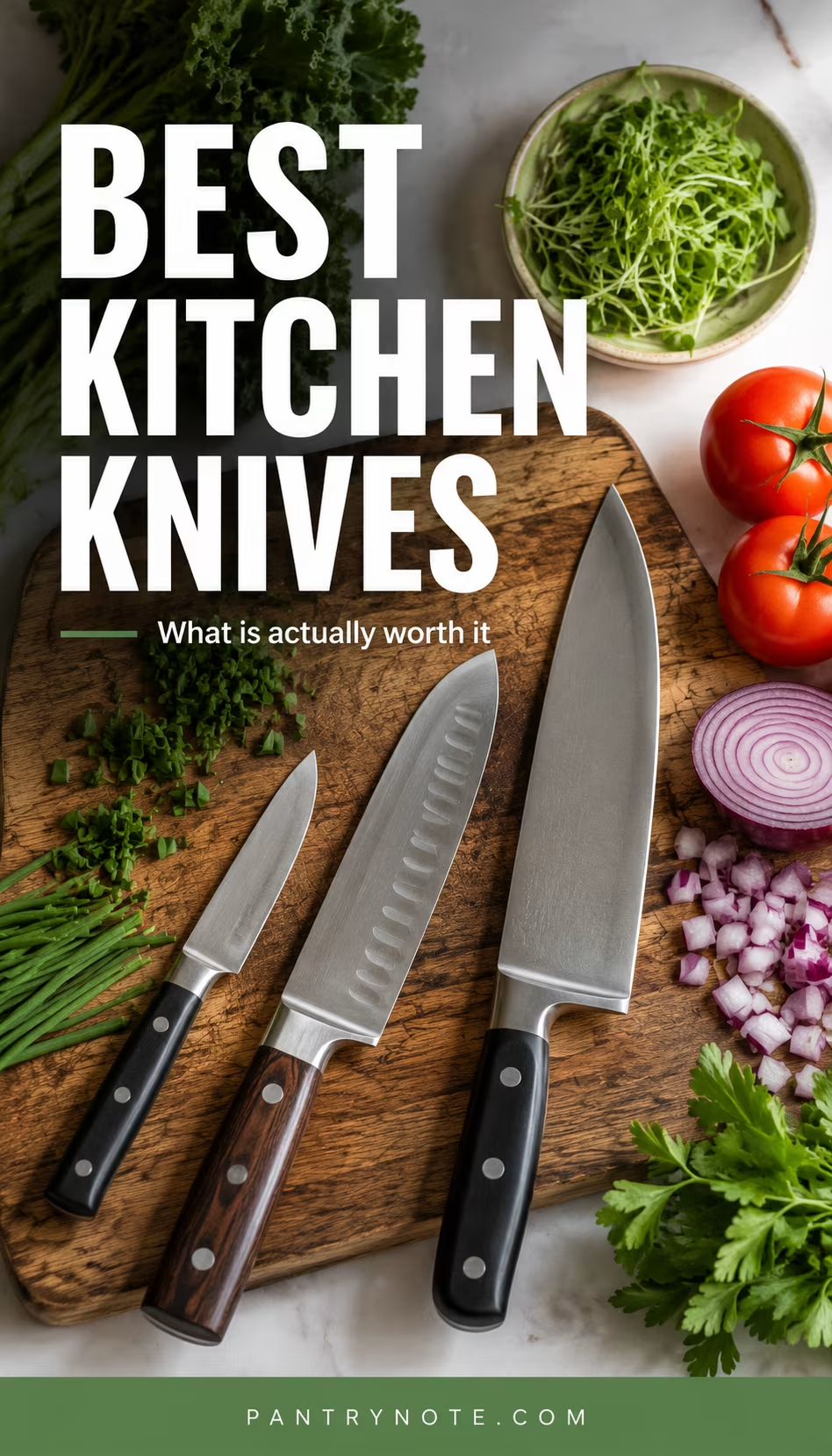
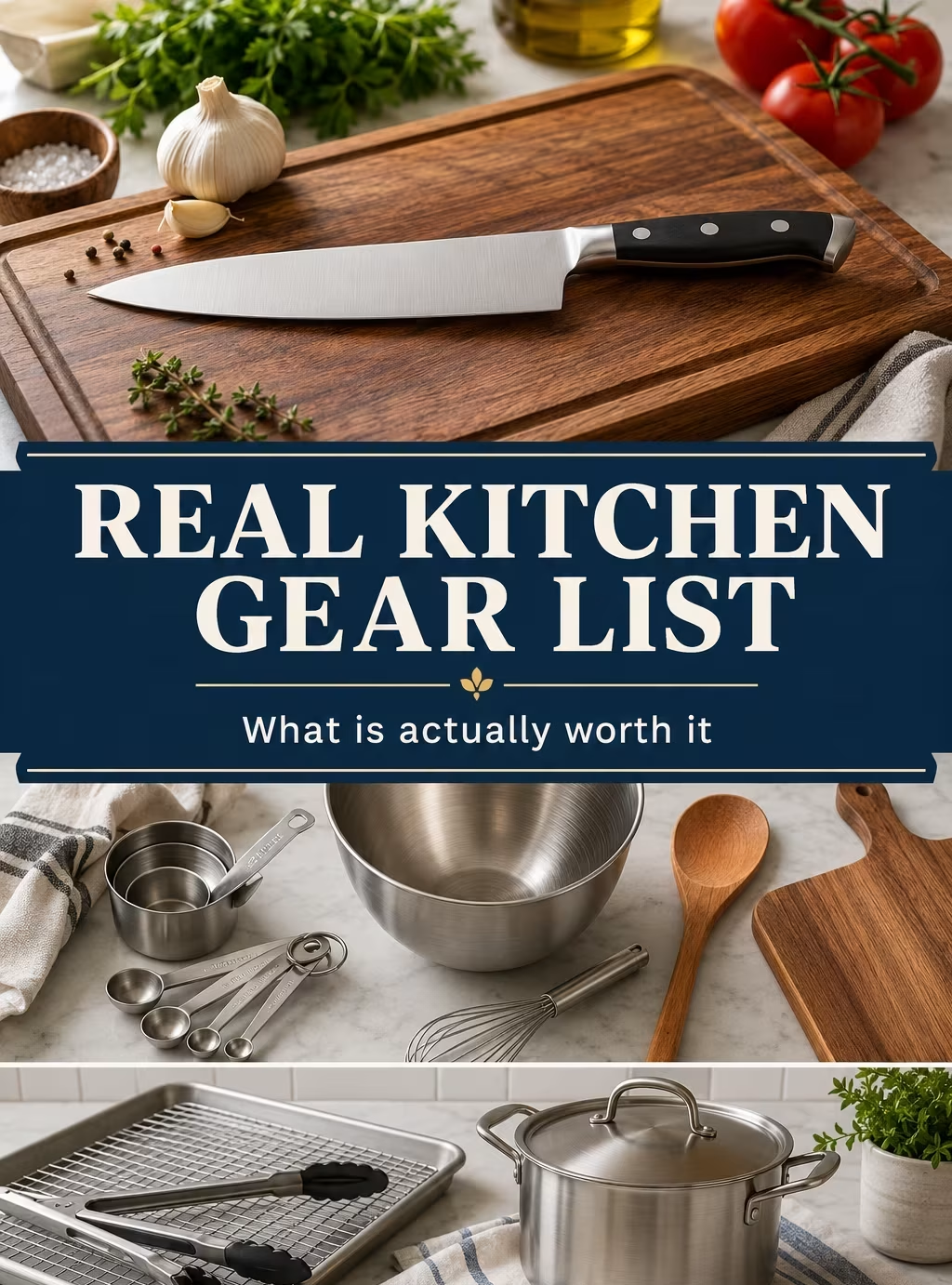
Pulling it together, a kitchen that can cook almost anything needs far less than the marketing suggests — a small set of quality tools, not a counter full of machines. The core: a good chef's knife, a paring knife, and a serrated knife; a 12-inch skillet, a 3-quart saucepan, a 6-quart Dutch oven, and a rimmed sheet pan; a cutting board, mixing bowls, a strainer, and basic utensils; plus the universally useful small appliances — a kitchen scale and an immersion blender, and an electric kettle if you drink tea or coffee.
From there, add only what your demonstrated cooking calls for: a food processor if you do a lot of chopping and doughs, a multi-cooker for fast beans and stock, an air fryer if you'll use it often, a stand mixer if you bake regularly. That's a kitchen that handles essentially any recipe — and notice how short it is. The contrast with a counter buried in single-use gadgets is the whole point: capability comes from a few versatile, quality tools you actually use, not from owning the most machines.
The reframe worth keeping: every appliance you bring in costs not just money but space and attention, so each one should earn its place by being genuinely useful and frequently used. Build deliberately, apply the frequency-times-improvement test, and you end up with a functional, uncluttered kitchen rather than a gadget museum — which makes cooking easier, not harder.
Where should I splurge versus save on appliances? Save on the universal cheap wins (a scale, an immersion blender, a kettle) — they don't need to be expensive. Splurge, if at all, on the versatile workhorses you'll use heavily (a quality food processor, multi-cooker, or stand mixer if your cooking demands them), since durability and performance matter there. Never spend on single-use gadgets at any price — their problem isn't cost, it's that they don't earn their space.
 Save
Save

0 Comments
No comments yet — start the conversation below.