

The Best Kitchen Knives in 2026: What to Buy at Every Budget
Skip the fifteen-piece block. Three knives — a chef's, a paring, and a serrated — cover nearly everything. Here's what makes a good one and how to buy at any budget.
The best kitchen knives in 2026 aren't a fifteen-piece block — they're three knives, bought individually and well, that handle virtually everything a home cook does. The knife industry sells big matching sets because they look impressive and pad the price with pieces you'll never use, but the truth is that a good chef's knife, a paring knife, and a serrated bread knife cover the overwhelming majority of cutting tasks.
Spend your money on those three (or even just a great chef's knife to start) rather than a block full of filler, and keep them sharp, and you'll out-cook anyone with a drawer of dull, matched mediocrity. Here's what actually matters in a knife, the three to buy, and how to choose at every budget.
Why three knives instead of a fifteen-piece set?
Because you'll genuinely use only three or four knives, and a boxed set pads the count with pieces that sit untouched while charging you for the privilege. This is the single most money-saving insight in kitchen knives, and it runs against everything the sets are marketed to suggest.
A typical knife block includes a chef's knife, bread knife, paring knife, utility knife, carving knife, kitchen shears, a honing steel, six steak knives, and the block itself — and most home cooks reach for the chef's knife for 80-90% of tasks, the paring knife and bread knife occasionally, and almost never the rest. The utility knife is an awkward in-between size, the carving knife comes out twice a year, and the steak knives are usually mediocre. You've paid for fifteen pieces to use three.
Buying individually lets you put your money into the few knives that matter, at much higher quality than the same budget spread across a set. A $150 budget buys a genuinely excellent chef's knife plus a decent paring and bread knife if bought separately, or a forgettable fifteen-piece set of soft, poorly-balanced blades if spent on a block.
The knives also matter far more than the storage — store them on a magnetic strip, in a universal block, or in blade guards in a drawer. Start with one great chef's knife, add a paring and bread knife, and skip the set entirely.
This is the same buy-the-few-good-things logic that governs all smart kitchen gear decisions.
What actually makes a good knife?
A few properties genuinely matter — steel hardness, balance, construction, and fit to your hand — while a lot of marketing (number of pieces, fancy handles, brand prestige) doesn't. Knowing what to look for lets you judge a knife regardless of price.
Steel and hardness determine how well a knife holds an edge and how easy it is to sharpen, measured on the Rockwell (HRC) scale. A blade around 58-60 HRC is a sweet spot for home use: hard enough to hold a sharp edge well, but not so hard it's brittle and prone to chipping.
Softer (lower HRC) German-style steels are tougher and very easy to sharpen but dull a bit faster; harder (higher HRC) Japanese-style steels hold a keener edge longer but are more brittle and need more careful sharpening. Neither is "better" — they're different trade-offs.
Balance and weight matter for control and fatigue — a well-balanced knife feels like an extension of your hand, neither blade-heavy nor handle-heavy, and this is deeply personal, which is why holding a knife before buying helps. Construction: a full tang (the blade steel running the full length of the handle) gives better balance and durability, and forged blades are generally sturdier than cheap stamped ones (though good stamped knives exist). And fit to your hand — the grip, weight, and feel — is the most personal and important factor; the best knife on paper is useless if it feels wrong to you.
What doesn't matter much: the number of pieces, ornate handles, and brand prestige beyond a point. A well-made knife with good steel (58-60 HRC), a full tang, decent balance, and a comfortable grip is an excellent knife whether it costs $50 or $200. Above roughly $150-200 for a home chef's knife, you're mostly paying for finish, name, and craftsmanship refinements rather than meaningfully better performance.
What are the three knives to buy?

Three knives cover virtually all home cooking, and they're the only ones most people need:
1. The chef's knife — the single most important, most-used knife in any kitchen, the one to spend the most on.
An 8-inch chef's knife is the versatile standard (10-inch for larger hands/tasks, 6-inch for smaller), and it handles chopping, slicing, dicing, mincing, and breaking down most ingredients. If you buy only one knife, make it a good chef's knife; it does 80-90% of the work.
German-style (heavier, tougher, curved for rocking) and Japanese-style (lighter, harder, keener, often straighter) are both excellent — pick based on feel and cutting style.
2. The paring knife — a small (3-4 inch) knife for detailed, in-hand tasks the big chef's knife is clumsy for: peeling, hulling strawberries, deveining shrimp, trimming, and precise small cuts. It's cheap and worth having, and you don't need an expensive one.
3. The serrated bread knife — a long, serrated blade that saws cleanly through bread (crusty loaves crush under a straight blade) and also slices tomatoes, cakes, and other soft-skinned or delicate items beautifully. The serrations grip and cut without crushing, doing a job no straight knife does well.
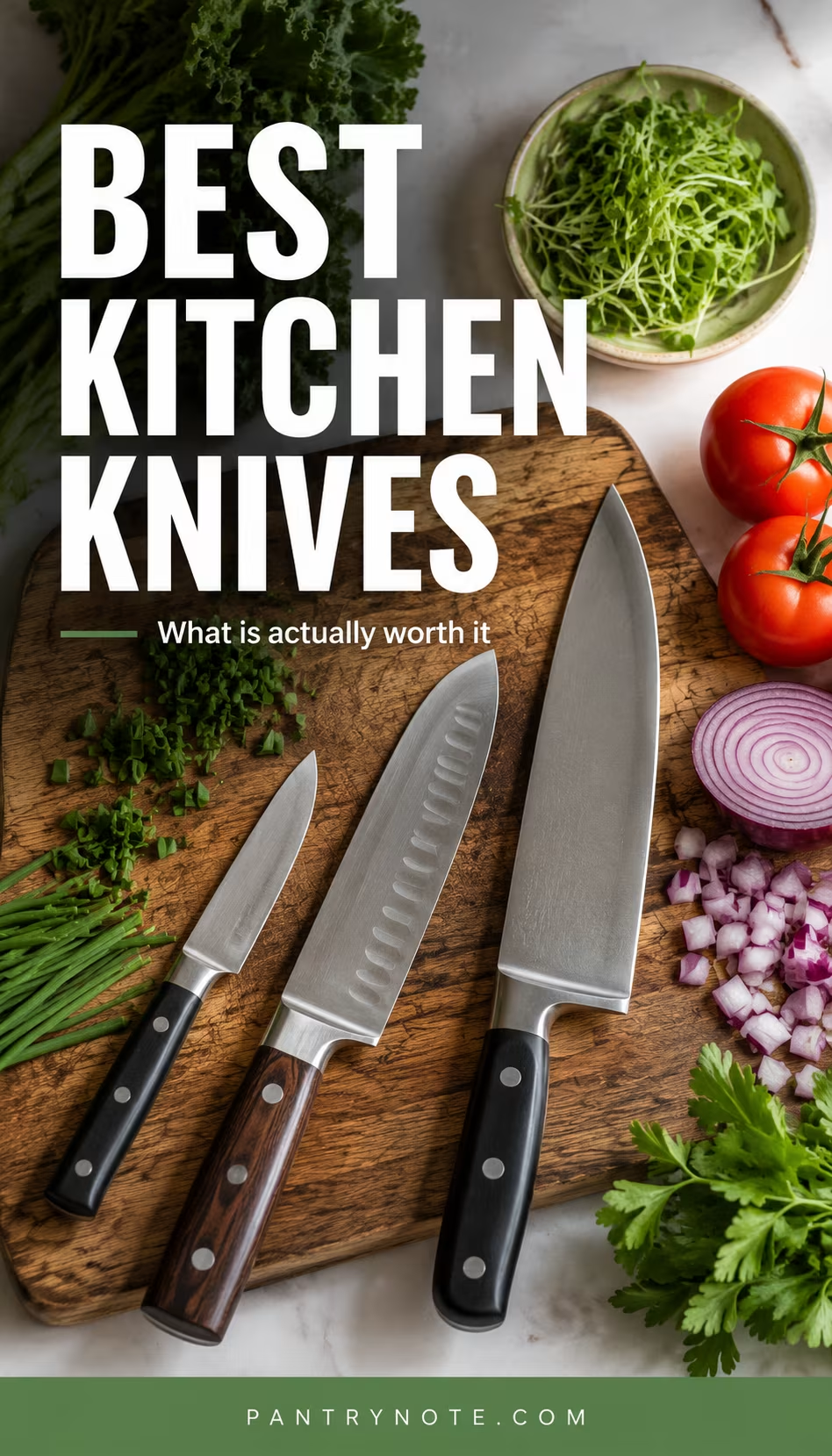
That's it — chef's, paring, serrated. A pair of kitchen shears is a useful fourth tool (for spatchcocking poultry, snipping herbs, opening packages), and some cooks add a santoku (a Japanese all-purpose knife, an alternative to the chef's knife) or a boning/filleting knife for specific needs.
But the core three handle nearly everything, which is why buying them well individually beats any set. The five fundamental knife cuts are all done with the chef's knife.
What should you buy at each budget?

Good knives exist at every price point, and the chef's knife is where to concentrate your budget. Here's a rough framework (prices are general 2026 ballparks and vary):
Budget (around $30-50 for a chef's knife): Excellent value exists here. The famously recommended budget chef's knives (lightweight, stamped, sharp out of the box, comfortable) genuinely outperform far pricier blades and are a favorite of professional kitchens for their value. At this level you get a sharp, functional knife that, kept sharp, cuts beautifully — proof that you don't need to spend a lot.
Mid-range (around $80-150 for a chef's knife): The sweet spot for most home cooks — well-made forged or quality stamped knives from reputable makers, good steel (58-60 HRC), full tang, nice balance, and durability. A knife here, cared for, is a genuine lifetime tool. Most people never need to spend more.
Premium ($200+) High-end German and Japanese knives with superior steel, craftsmanship, edge retention, and finish. These are wonderful and can last generations, but the performance gain over a good mid-range knife is incremental, not transformative — you're buying refinement and craftsmanship, not dramatically better cutting. Worth it for enthusiasts; unnecessary for great everyday results.
The universal advice across budgets spend the most on the chef's knife (your workhorse), economize on the paring and bread knives (they don't need to be expensive), buy individually rather than in a set, and remember that a sharp budget knife beats a dull expensive one every time. Keeping whatever you buy sharp matters more than the price.
How do you keep your knives sharp and lasting?
A great knife neglected becomes a bad knife, while a modest knife maintained stays excellent — so maintenance matters more than the initial purchase. Two distinct tasks keep an edge: honing and sharpening.
Honing (with a honing steel) realigns the microscopic edge that bends out of true with normal use; it doesn't remove metal or create a new edge, and you do it frequently — a few passes before most uses keeps the edge straight and cutting well. Sharpening (with a whetstone or a pull-through sharpener) actually removes a little metal to grind a fresh edge, and you do it occasionally — every month or two with regular use, or whenever honing no longer restores good cutting. A whetstone gives the best results and most control but has a learning curve; a quality pull-through sharpener is easier and fine for most home cooks.
Beyond sharpening: store knives safely (magnetic strip, block, or blade guards — never loose in a drawer where edges chip against other metal), hand-wash and dry them rather than using the dishwasher (whose heat, detergent, and jostling dull and damage edges), use a wood or plastic cutting board (never glass, stone, or ceramic, which destroy edges), and don't use the knife as a pry bar or on bones it's not built for. A sharp, well-stored, hand-washed knife used on a proper board stays excellent for decades. This care is exactly why buying three good knives and maintaining them beats cycling through cheap sets.
Common kitchen knife questions
What's the one knife to buy if I can only get one? A good 8-inch chef's knife — it does 80-90% of all kitchen cutting. Spend the bulk of your budget here, get one that feels right in your hand, and keep it sharp. Everything else is secondary.
German or Japanese chef's knife — which is better? Neither universally; they're different trade-offs. German knives are heavier, tougher, and easier to sharpen with a curved edge good for rocking; Japanese knives are lighter, harder, hold a keener edge longer, but are more brittle. Choose by feel and cutting style — many cooks love both.
Are expensive knives worth it? Up to the mid-range ($80-150), yes — you get real quality and a lifetime tool. Beyond ~$200 you're mostly paying for craftsmanship and finish, not dramatically better cutting. A sharp budget or mid-range knife performs beautifully; spending more is optional refinement, not necessity.
Do I need a knife block or set? No — skip the set and buy three knives individually (chef's, paring, serrated), storing them on a magnetic strip, in a universal block, or in blade guards. Sets pad the price with pieces you won't use; individual quality knives are better value.
The best kitchen knives in 2026 are a great chef's knife, a paring knife, and a serrated bread knife, bought individually, chosen for good steel and a comfortable feel, and kept sharp. Concentrate your budget on the chef's knife, skip the fifteen-piece block, maintain what you buy, and you'll have better knives — and better cooking — than any matched set delivers.
What about a santoku, shears, and specialty knives?
A few knives beyond the core three come up often, and it's worth knowing where they fit. A santoku is a Japanese all-purpose knife — shorter, lighter, with a straighter edge and a flatter belly than a Western chef's knife — and it's essentially an alternative to the chef's knife, not an addition.
If you prefer a lighter knife and an up-and-down chopping motion over rocking, a santoku might be your main knife instead of a chef's knife; many cooks love it. You don't need both.
Kitchen shears are a genuinely useful fourth tool: they spatchcock poultry, snip herbs, trim fat, and open packaging, doing jobs a knife does awkwardly. A sturdy pair earns its place. Specialty knives — a boning/filleting knife (for breaking down whole fish or meat), a carving knife (for roasts), a cleaver (for heavy chopping or, in the Chinese style, as an all-purpose blade) — are worth buying only if you regularly do the specific task. For most home cooks they sit unused, which is exactly why they pad sets uselessly.
The principle holds: build from the core three (chef's or santoku, paring, serrated), add shears, and acquire specialty knives only when your actual cooking repeatedly calls for one. That's how you end up with knives you use rather than a drawer of occasional-use blades.
Is a santoku better than a chef's knife? Neither is better — they're alternatives suited to different preferences. The santoku is lighter, with a straighter edge good for precise downward chopping; the chef's knife is curved for rocking and often more versatile for large tasks. Choose whichever feels better in your hand as your primary knife; you don't need both.
 Save
Save


0 Comments
No comments yet — start the conversation below.