

How to Buy Real Parmesan: Parmigiano-Reggiano vs. Everything Else
'Parmesan' means almost nothing on a label. Real Parmigiano-Reggiano is stamped right into its rind — here's how to spot it and why it's worth the small splurge.
The word "parmesan" on a label means almost nothing, which is exactly why so many people buy disappointing cheese. To buy real parmesan, you need to know that the genuine article is Parmigiano-Reggiano — a specific Protected Designation of Origin (PDO) cheese made in a defined region of Italy under strict rules — and that the green can of "parmesan" and most domestic versions are entirely different, often inferior products.
The good news: the real thing is easy to identify once you know what to look for, because every authentic wheel is literally stamped with proof. Spend a little more on a wedge of real Parmigiano-Reggiano and you get a complex, nutty, savory cheese that transforms pasta, risotto, and soups in a way the shaker-can dust never will.
Here's how to tell the real thing from the impostors, what the alternatives actually are, and how to use and store it so nothing goes to waste.
What makes Parmigiano-Reggiano the "real" parmesan?
It's a legally protected cheese with a controlled origin and method — and that protection is what guarantees the quality. Parmigiano-Reggiano holds PDO (Protected Designation of Origin) status, meaning by law it can only be made in a specific region of Italy (parts of Emilia-Romagna and Lombardy), from specified ingredients, using a traditional method, and aged for a minimum of 12 months (often 24 months or longer for premium wheels). Nothing made outside that region or process can legally be called Parmigiano-Reggiano.
That long aging is what gives it its character: a hard, granular texture with crunchy crystalline bits (those are tyrosine crystals, a sign of proper aging), and a complex flavor that's nutty, savory, salty, and deeply umami. The longer-aged wheels develop more intensity and crumble more readily. It's made from raw cow's milk with just rennet and salt — no additives.
By contrast, the generic term "parmesan" (lowercase, especially outside the EU) is unregulated in much of the world and gets slapped on a wide range of hard cheeses of varying and usually lower quality. So the first thing to understand is that "parmesan" and "Parmigiano-Reggiano" are not synonyms — one is a vague marketing word, the other is a specific, protected, verifiable product. Knowing this distinction is the kind of ingredient literacy that makes a well-stocked pantry genuinely good rather than just full.
How can you tell if it's authentic?
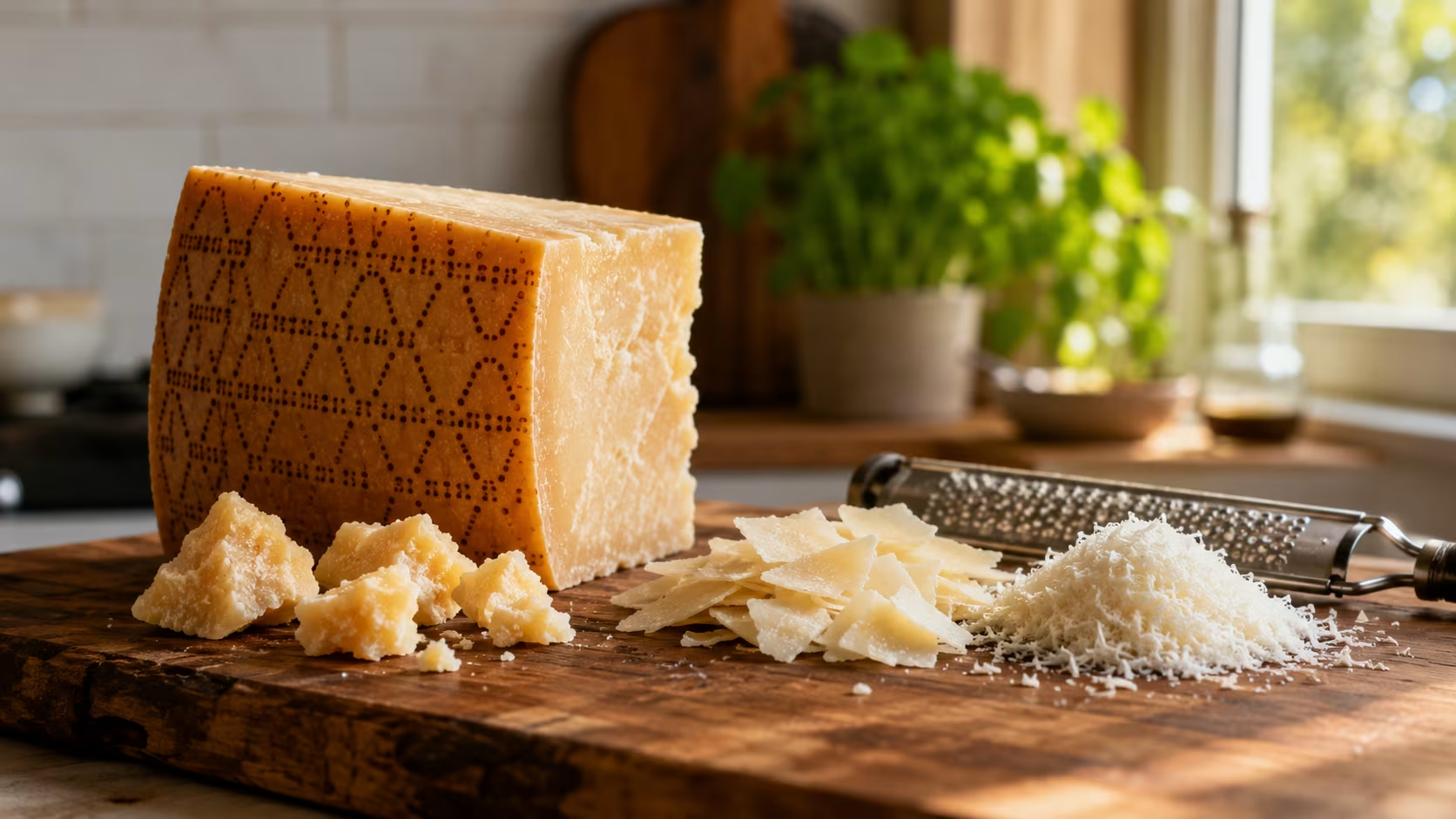
Look at the rind — the real thing is stamped with proof of authenticity that's nearly impossible to fake. This is the single most reliable check, and it's why buying a wedge cut from a whole wheel beats buying anonymous pre-grated cheese.
Every genuine wheel of Parmigiano-Reggiano has the words "PARMIGIANO-REGGIANO" printed in a distinctive pin-dot (stippled) pattern repeated all over the rind, so that any wedge cut from the wheel carries part of that stamp on its rind. After 12 months of aging, every wheel is inspected by the consortium's experts, and approved wheels are branded and carry a unique alphanumeric code on a casein plate. So when you buy a wedge, check the rind for that dotted "PARMIGIANO-REGGIANO" lettering — its presence is your guarantee.
Other authenticity signals: the cheese should list its origin (Italy) and ideally carry the PDO seal, and a genuine wedge has that hard, crystalline, crumbly texture rather than a uniform rubbery one. Buy it as a wedge cut from a wheel rather than pre-grated when you can, both because you can verify the rind and because pre-grated cheese loses flavor fast and sometimes contains added starches or anti-caking agents (and cheaper blends). If the label just says "parmesan" with no origin, no PDO, and no rind stamp, it's not the real thing — which may be fine for your budget, but know what you're getting.
What are the alternatives, and are they worth it?
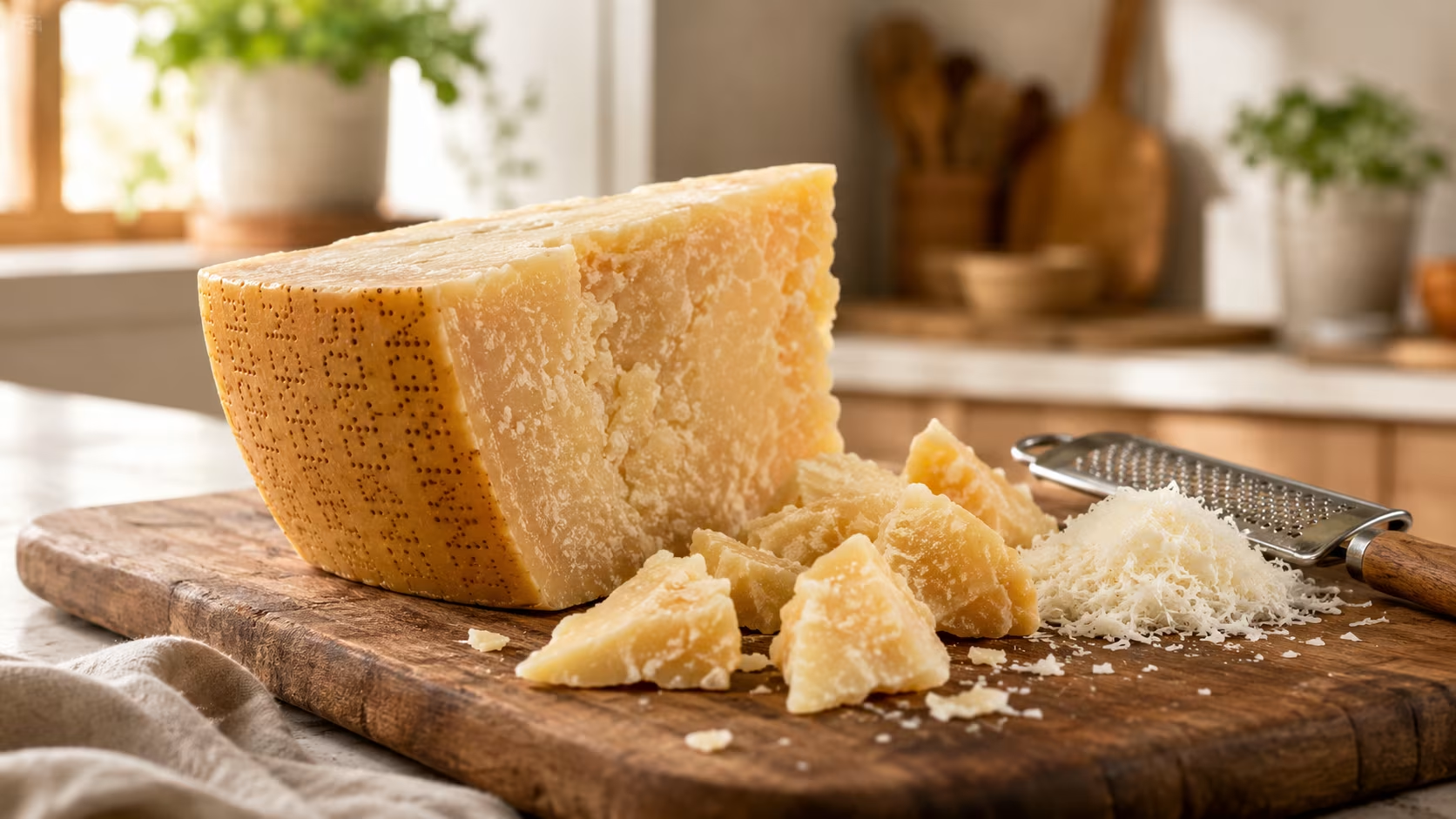
Several cheeses sit in the "hard Italian grating cheese" space, and it helps to know what each one actually is so you can choose deliberately.
Grana Padano is the closest and most legitimate alternative — also an Italian PDO hard grating cheese from northern Italy, but with looser rules and a shorter minimum aging of 9 months. It's milder, slightly sweeter, a bit less complex, and usually noticeably cheaper than Parmigiano-Reggiano.
For everyday cooking — melting into a sauce, stirring into risotto — Grana Padano is an excellent, more affordable choice, and many Italian home cooks use it routinely. It has its own diamond-pattern rind stamp.
Domestic "parmesan" (American, etc.) varies enormously. Some artisan domestic versions are genuinely good; the mass-market and pre-grated kinds are often bland, salty, and one-dimensional.
The green shaker can is the bottom of the range — heavily processed, often with added cellulose to prevent caking, and a far cry in flavor from real cheese. It's convenient and shelf-stable but bears little resemblance to a wedge of real Parmigiano.
So is the real thing worth it? For finishing — grated raw over pasta, shaved into a salad, where the flavor is front and center — yes, the genuine Parmigiano-Reggiano is worth the premium; nothing else has that depth.
For melting into a cooked sauce where it's one of many flavors, Grana Padano or a good domestic version is a reasonable, cheaper choice. The shaker can is best reserved for when you genuinely don't care.
A practical strategy: keep a wedge of real Parmigiano for finishing and a cheaper grating cheese for everyday cooking.
Is Parmigiano-Reggiano vegetarian, and what about diet concerns?
A point many people don't realize authentic Parmigiano-Reggiano is not vegetarian. By its PDO rules it's made with animal rennet (specifically calf rennet), so strict vegetarians who avoid animal rennet can't eat the genuine article. If you're vegetarian, look for hard Italian-style cheeses explicitly labeled "vegetarian" or "made with microbial/vegetable rennet" — several producers make vegetarian hard grating cheeses (often labeled as "Italian hard cheese" rather than Parmigiano-Reggiano, since they can't use the protected name while deviating from the rules).
On other concerns Parmigiano-Reggiano is naturally very low in lactose because the long aging breaks most of it down, so many lactose-sensitive people tolerate it well. It's also naturally gluten-free (just milk, rennet, salt), though pre-grated blends should be checked for added starches. And because it's aged and made from raw milk, it's generally considered safe in pregnancy as a hard cheese, but anyone with specific concerns should confirm with their own guidance.
The takeaway real Parmigiano is a clean, simple, three-ingredient cheese, but the animal rennet is a genuine consideration for vegetarians, and the vegetarian alternatives are easy to find if you look for the rennet labeling.
How do you store it and use the rind?
Stored right, a wedge of Parmigiano lasts a long time and almost nothing goes to waste — including the rind, which is a secret flavor weapon.
Store the wedge wrapped in parchment or wax paper, then loosely in foil or a partially open bag, in the fridge. The goal is to let it breathe a little while not drying out — wrapping it airtight in plastic long-term can make it sweat and develop off-flavors, while leaving it exposed dries it to a rock.
Properly stored, a hard aged cheese like this keeps for many weeks, even months. If a little surface mold appears on the rind or cut face of this hard cheese, you can cut it away and use the rest (unlike soft cheeses).
Grate it fresh as you need it rather than all at once, since freshly grated tastes far better and pre-grated dries out.
Don't throw away the rind. The hard rind of Parmigiano-Reggiano is edible flavor gold: drop it into soups, stocks, white bean and tomato skillets, risottos, or tomato sauce as it simmers, and it slowly releases deep savory, umami flavor into the liquid (fish it out before serving, or eat the softened bit). Save your rinds in the freezer for exactly this. It's the same waste-nothing ethos behind making stock from scratch — the part most people bin is actually a free flavor booster.
Common parmesan questions
Is Grana Padano "fake" parmesan? No — it's a legitimate, protected Italian PDO cheese in its own right, just a different (and more affordable) one with shorter aging and a milder flavor. It's a fine everyday substitute; it simply isn't Parmigiano-Reggiano and can't be called that.
Why is the green-can parmesan so cheap? Because it's a heavily processed, often cellulose-cut product made for shelf stability and convenience, not a wedge of aged cheese. It's a different category of product, which is why it costs (and tastes) a fraction as much.
Can I freeze Parmigiano? You can freeze grated Parmigiano for cooking (it's fine melted into sauces), though freezing slightly affects the texture of a wedge for eating raw. Freezing the rinds for soups and stocks is an unqualified good idea.
What's the white crunchy stuff in aged parmesan? Those are tyrosine crystals — clusters of an amino acid that form as the cheese ages and proteins break down. They're a hallmark of a properly aged, high-quality wheel, not a defect, and they give that satisfying crystalline crunch.
Once you know to check the rind for that stippled "PARMIGIANO-REGGIANO" stamp, buying real parmesan is simple — and the difference between the genuine, complex, crystalline original and the anonymous "parmesan" dust is one of the easiest, most noticeable upgrades you can make to everyday cooking.
How do you use and grate it best?
A few habits get the most from a wedge of real Parmigiano. Grate it fresh, as you need it — freshly grated has far more aroma and flavor than pre-grated that's been sitting and drying out, and it melts more smoothly. Use a microplane for a fine, fluffy snow that melts instantly into sauces, or a coarser grater or vegetable peeler for shards over salads and finished dishes.
Add it off or near the end of the heat. Parmigiano is best stirred into a sauce off the direct heat or finished over a dish, because high, prolonged heat can make it clump, turn stringy, or go grainy. For pasta, toss the grated cheese with a little starchy pasta water off the heat so it melts into a creamy coating rather than seizing — the same emulsion trick behind a good aglio e olio. And finish risottos, soups, and roasted vegetables with a grating at the table, where its flavor is freshest.
Best uses grated over pasta and risotto, shaved into salads (a Caesar is built on it), melted into sauces and gratins, stirred into polenta, or simply eaten in chunks with a drizzle of aged balsamic and a glass of wine. And always save the rinds for soups and stocks. A single wedge, used this way, stretches a long way and elevates a remarkable range of everyday dishes.
Bottom line check the rind for the stippled "PARMIGIANO-REGGIANO" stamp, buy a wedge rather than a tub of pre-grated dust, grate it fresh and add it off the heat, and save the rinds — and you'll get everything this remarkable PDO cheese has to offer, at far better value than the convenience versions.
What's the casein plate on the rind? It's a small oval label embedded in each genuine wheel's rind during production, carrying a unique alphanumeric code and the consortium's mark. Combined with the stippled "PARMIGIANO-REGGIANO" lettering all over the rind, it's the traceable proof of authenticity — every wheel is registered and inspected before it earns those marks.
Is more aging always better? Not always — it's a matter of preference. Younger wheels (12–18 months) are milder, smoother, and good for everyday grating; older wheels (24–36 months) are more intense, complex, crumbly, and crystalline, prized for eating in chunks and for special dishes. Try a couple of ages side by side to find your preference; the longer-aged are pricier but more concentrated.
Bottom line: real parmesan means Parmigiano-Reggiano, identifiable by the stippled name stamped right into its rind and aged at least 12 months. Buy a wedge over pre-grated, grate it fresh, add it off the heat, save the rinds for soups, and keep a cheaper grating cheese for everyday melting — and you'll taste exactly why the genuine article is worth seeking out.
Sources and verification
Check current details with these primary or subject-authority sources before acting on the information.
 Save
Save


0 Comments
No comments yet — start the conversation below.