

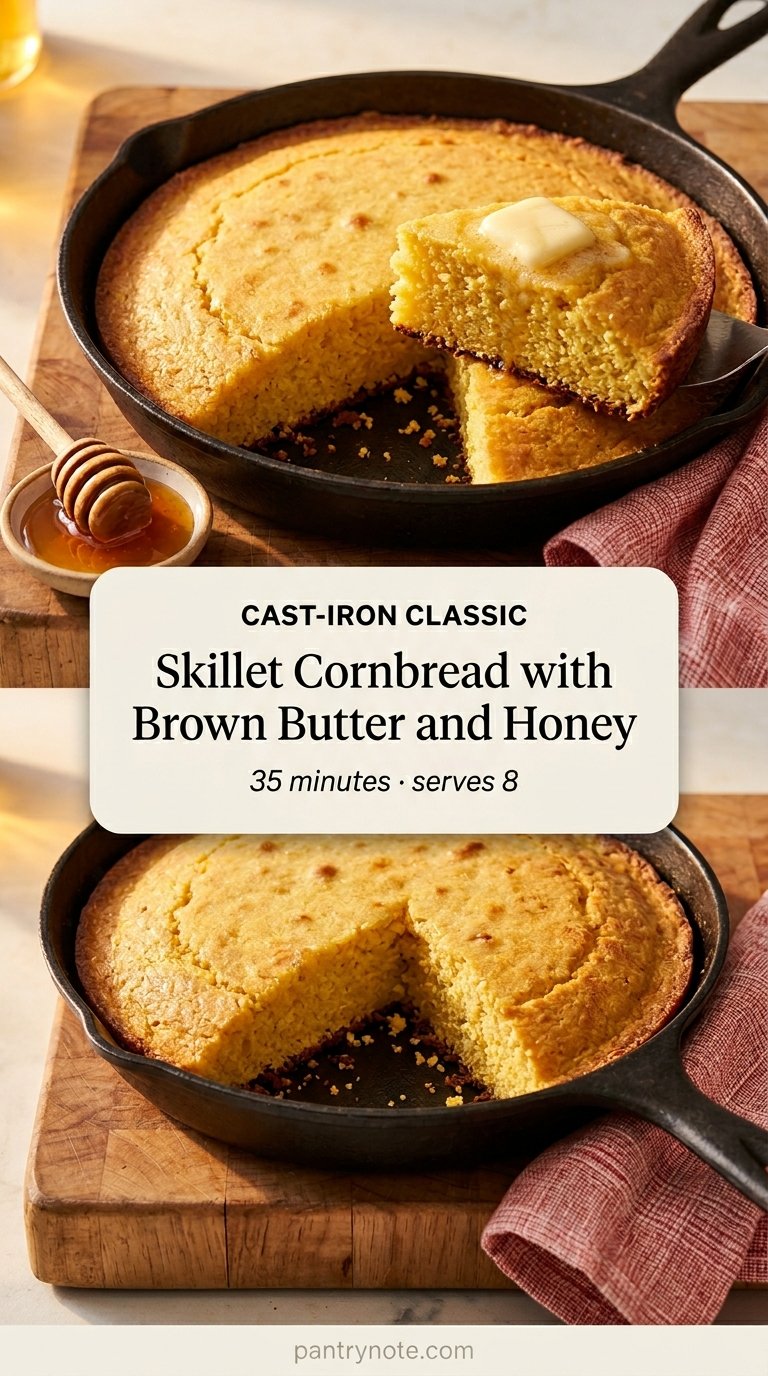
Skillet Cornbread with Brown Butter and Honey
The difference between mediocre cornbread and transcendent cornbread usually comes down to two things: a very hot cast-iron skillet and the fat you use. This version browns the butter before adding it to the batter, which adds a nutty depth that plays beautifully against the sweet corn and honey.
Southern cornbread and Northern cornbread are essentially different foods that happen to share a name. Southern cornbread is savory, minimal on sugar, and has a crunchy, almost fried bottom crust from a screaming-hot cast-iron pan.
Northern cornbread is sweeter, cakier, and often baked in a square pan lined with parchment. I grew up eating the Northern kind and I spent years making it before I understood what I was missing.
What converted me was a cast-iron skillet. Not a special pan, just a well-seasoned 10-inch Lodge that I'd had for years and mostly used for searing steaks.
The day I preheated it in a 425°F oven, poured in a knob of butter to sizzle and brown, then immediately poured my cornbread batter over the foaming fat: the resulting bread was a revelation. The bottom crust had a shattering crispness from being essentially fried against the hot iron.
The interior was tender and moist. And the brown butter in the batter had transformed something I'd made dozens of times into something I wanted to eat immediately and repeatedly.
The honey in this recipe is a small addition with a large effect. It adds just enough sweetness to round the savory notes and a floral quality that lingers after the heat of the cornmeal has had its say.
Why this works
Cast iron has one of the highest heat retention capacities of any common cookware material. When you preheat a cast-iron skillet for 10–15 minutes in a hot oven, the entire mass of iron reaches a uniform, very high temperature.
When cold batter hits this surface, the temperature differential is enormous: the bottom of the batter essentially hits a surface that's at 400°F+ and immediately begins to fry and steam simultaneously. This creates the crackling bottom crust that defines proper skillet cornbread and cannot be achieved in a room-temperature pan.
The butter sizzling in the pan when you pour the batter does two things: it lubricates the surface so the bread releases cleanly, and it begins to brown on contact with the hot iron, adding its Maillard-reaction flavor to the bottom crust directly. The butter you've already browned and added to the batter contributes another layer of the same nutty notes throughout the interior.
Cornmeal is not wheat flour; it doesn't contain gluten proteins, so there's no gluten development to manage. What you're developing in cornbread is a tender crumb from the suspension of coarse cornmeal particles in a matrix of egg proteins and the flour you add for structure.
The ratio of cornmeal to flour controls texture: more cornmeal = grittier and more corn-forward; more flour = softer and cakier. This recipe leans toward the cornmeal side.
Buttermilk is the traditional liquid for cornbread. The acidity in buttermilk does two things: it activates the baking soda (an acid-base reaction that produces carbon dioxide for leavening), and it tenderizes the gluten in the small amount of flour, contributing to a more tender crumb. If you don't have buttermilk, the standard substitution is 1 cup milk with 1 tablespoon vinegar or lemon juice, left for 5 minutes to curdle.
Ingredient notes
Cornmeal
Stone-ground cornmeal is worth seeking out: it has more complex flavor and a coarser texture than the roller-milled commercial cornmeal in the yellow paper bag. Bob's Red Mill medium-grind is widely available and excellent.
The color matters slightly: yellow cornmeal has a slightly earthier flavor; white cornmeal is milder and sweeter. Either works here.
Butter
Unsalted. You'll be browning it, so use good butter with lower water content for cleaner browning.
Both the browned butter in the batter and the butter in the hot pan are important. Don't skip either.
Honey
Use a honey with character: wildflower, buckwheat, or clover. Buckwheat honey has a distinctive malty, almost molasses-like quality that works particularly well in cornbread. A light clover honey is milder and lets the corn flavor come forward more.
Buttermilk
Full-fat buttermilk, if you can find it. Low-fat buttermilk will work but the crumb will be slightly less tender. Kefir is an excellent substitute; it has a similar acidity and fat content.
Eggs
Two large eggs. They provide structure (proteins setting in the oven heat), moisture, and richness. Room temperature eggs incorporate more smoothly into batter.
How to make it
Start by browning the butter. In a small saucepan over medium heat, melt four tablespoons of butter and cook, swirling, until the milk solids turn amber and it smells like hazelnuts.
Watch carefully: it goes from perfect to burnt quickly. Pour into a bowl and let it cool slightly.
In another small pan (or the same one, wiped clean), melt one more tablespoon of butter and set it aside for the pan.
In a large bowl, whisk together the dry ingredients: cornmeal, all-purpose flour, baking powder, baking soda, and salt. In another bowl, whisk together the buttermilk, eggs, honey, and the cooled brown butter.
Pour the wet into the dry and stir with a spatula until just combined. A few lumps are fine; overmixing leads to a denser, tougher crumb.
Place the cast-iron skillet in the oven at 425°F for 10 minutes (or 15 if your oven runs cool). Pull it out carefully using heavy oven mitts.
Add the remaining tablespoon of butter to the hot pan and swirl. It should melt and sizzle immediately and vigorously.
Pour the batter over it. It may sizzle at the edges: this is the bottom crust forming in real time.
Slide it into the oven. Bake 20–22 minutes until a toothpick in the center comes out clean and the top is golden brown. The edges will have pulled away from the pan slightly.
Let it cool in the pan for 5 minutes, then invert onto a wire rack or serve directly from the pan at the table.
Tips and variations
Add jalapeños
Finely diced fresh jalapeños (2–3, seeded for less heat) folded into the batter add heat and a green freshness. This version is excellent with chili.
Add cheese
A cup of sharp cheddar, grated and folded in, makes a rich, savory cornbread that needs no butter to serve.
Make muffins
Divide the batter between a greased 12-cup muffin tin. Bake at 400°F for 14–16 minutes. You won't get the same crackling base, but the portioning is convenient.
Serve with
Chile, pulled pork, soup, or just a cold glass of milk and too much honey. Leftovers crumbled over a bowl of soup or chili are excellent.
Make it vegan
Substitute plant-based butter, oat milk plus vinegar for the buttermilk, and flax eggs (1 tbsp ground flax + 3 tbsp water per egg, let sit 5 minutes). The result is good but slightly denser.
Frequently Asked
Can I make this without a cast-iron skillet?
Why does my cornbread come out dry?
Can I make this ahead?
What can I add to the batter?
 Save
Save
0 Comments
No comments yet — start the conversation below.