

How to Make Real French Croissants at Home: A Two-Day Method That Actually Works
A croissant is a temperature problem, not a recipe. Keep the butter cold and distinct from the dough, and dozens of thin layers steam apart into real, shattering flake.
A real croissant is not a recipe so much as a temperature-management problem. To make real French croissants at home, you're keeping a block of butter cold and solid while you roll it inside a dough into dozens of paper-thin alternating layers, and the entire success of the project rides on the butter never melting into the dough.
Get that right and the trapped layers of butter steam apart in the oven into the shattering, honeycombed, impossibly flaky interior that defines the pastry. Get it wrong and you get a dense, greasy bread roll.
The good news: every step has a clear reason, and once you understand why butter temperature governs everything, the process becomes methodical rather than mysterious.
This is a two- to three-day project, and that's a feature, not a flaw. Spreading the work across days with long cold rests is what makes it achievable in a home kitchen: it keeps the butter cold, relaxes the dough, and lets you bake fresh croissants for breakfast without a 4 a.m. start. Here's the full method and the science that makes it work.
What makes a croissant flaky? (Lamination, explained)
Flakiness comes from lamination, the technique of folding a solid block of butter into dough repeatedly to create many thin, alternating layers of dough and butter. A finished croissant dough has dozens of these layers, often 50 or more, stacked like a deck of cards.
The magic happens in the oven through steam. Butter is roughly 15–20% water.
When the laminated dough hits the heat, each thin sheet of butter melts and its water flashes to steam, pushing the dough layers apart and puffing them up. Simultaneously, the butter fries the dough layers from within, crisping them.
The result is hundreds of distinct, crackly leaves of pastry with hollow air pockets between: the honeycomb crumb you can see when you tear a good croissant open.
This is why the butter must stay in discrete, intact layers and never blend into the dough. If the butter is too warm, it softens and merges with the dough, and instead of separate sheets you get one homogeneous mass.
That bakes into something closer to dense brioche than croissant: bready, tight, and greasy, with no flake. Every rule that follows exists to protect those layers: to keep the butter cold, solid, and separate from the dough until the oven turns it to steam.
The same principle, applied differently, gives a good pie crust its flakiness; croissants just push it to an extreme.
Why does this take two or three days?
The timeline isn't fussiness; it's temperature control and gluten management spread out so a home kitchen can keep up. Professional bakeries have proofers, sheeters, and cold rooms; home bakers have a fridge and patience, and the multi-day method substitutes one for the others.
A typical schedule looks like this. Day one (evening): make the basic yeasted dough (the détrempe) and let it rise briefly, then refrigerate it overnight. The long cold rest lets the gluten relax (so the dough rolls out without fighting back) and develops flavor through slow fermentation. Day two: prepare the butter block, lock it into the chilled dough, and perform the folds with cold rests between each, then refrigerate the laminated dough overnight. Day three (morning): shape, proof, and bake.
Each overnight rest in the fridge does double duty: it keeps the butter firmly cold so it survives the next round of rolling, and it relaxes the gluten that tightens up every time you roll the dough. Skip these rests and two things go wrong: the butter warms and starts to merge, and the over-worked gluten snaps back and tears, breaking the layers you've built.
The cold rests are the method. As King Arthur Baking and other reliable sources lay out, you start the dough two nights before you want to eat, and the schedule is what makes warm croissants at breakfast realistic instead of punishing.
How do you prepare and lock in the butter?

The butter block (the beurrage) is the heart of lamination, and preparing it correctly sets up everything after. You pound and roll cold butter into a flat, even square (often by beating it between sheets of parchment), so it's pliable enough to bend without cracking but still cold and solid, not soft or greasy.
The critical concept is that the dough and the butter must be the same temperature and consistency when you lock them together. If the butter is much colder and harder than the dough, it shatters into shards as you roll, puncturing the layers.
If it's warmer and softer, it squishes out and merges into the dough. Both ruin the lamination.
The target for both is cold but flexible: around refrigerator temperature, where the butter bends like cool clay.
To lock it in, roll the chilled dough into a rectangle, set the butter block in the center, and fold the dough over it to fully enclose the butter, sealing the edges so no butter is exposed: the "envelope" or "letter" fold. The butter is now a sealed slab inside a dough packet, ready to be rolled and folded. From here, every roll thins both the dough and the butter together, multiplying the layers.
What are the folds, and how do you keep the butter cold?
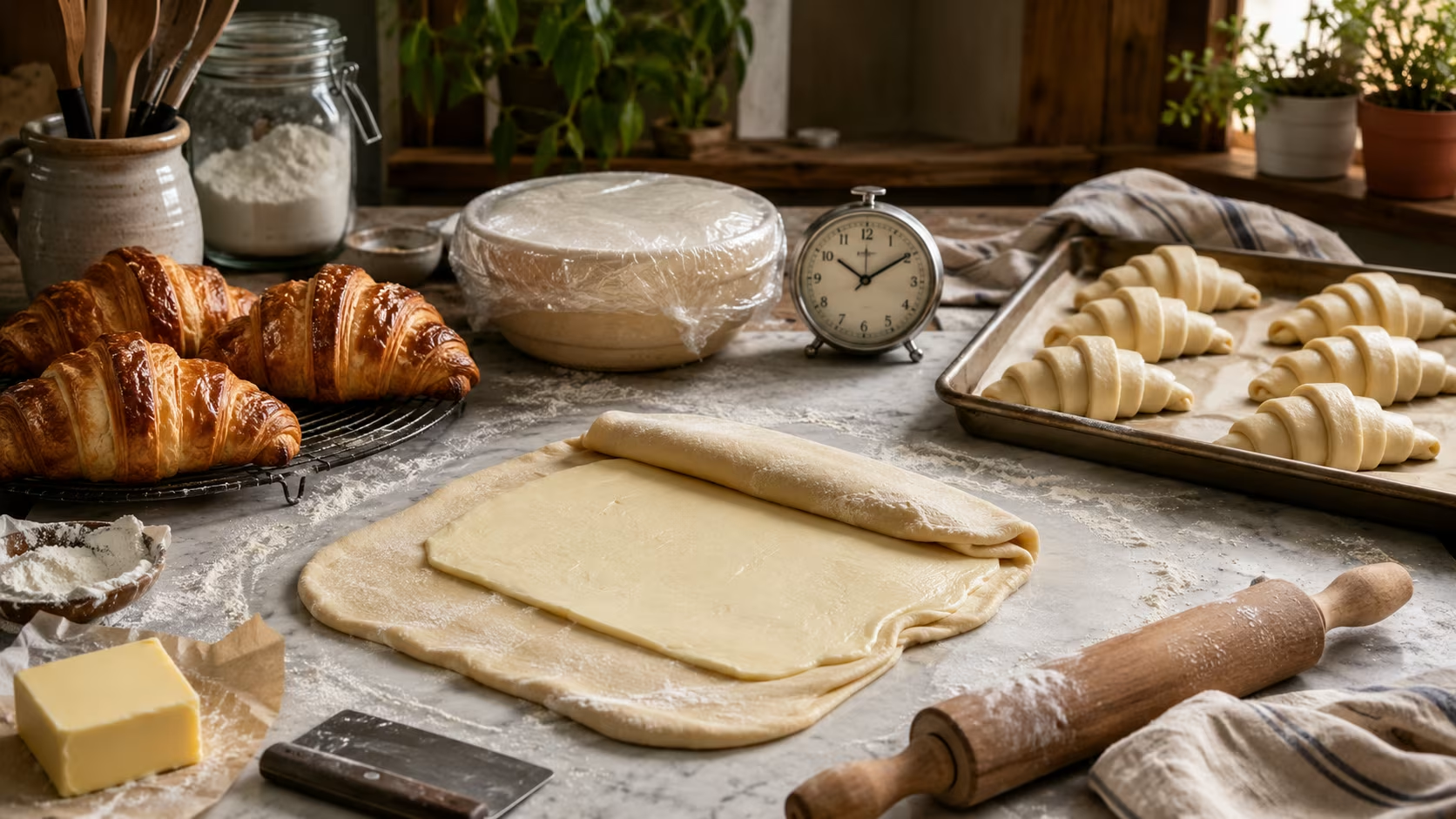
With the butter locked in, you laminate by rolling the packet into a long rectangle and folding it back on itself, then resting it cold, then repeating. Each fold multiplies the layer count. A common approach is three "letter" folds (folding the rectangle in thirds, like a business letter), which builds the dozens of layers a croissant needs: three folds of thirds yields 27 butter layers, and most recipes land somewhere in that range.
Between every fold, the dough goes back in the fridge for 30 to 60 minutes. This rest is non-negotiable for two reasons. First, rolling generates friction and warms the butter toward its melting point; the chill resets it to solid before the next roll.
Second, rolling stretches and tightens the gluten, and the rest lets it relax so the next roll doesn't tear the layers or spring back. Try to rush through all the folds without resting and the butter softens, oozes, and merges: the classic home failure.
A few working habits keep the butter cold throughout. Work quickly and decisively, in a cool kitchen if possible; heat is the enemy at every stage.
Flour your surface lightly and roll with even pressure so the butter spreads uniformly rather than bunching. If at any point you see butter starting to break through the dough or feel it going soft and greasy, stop immediately and refrigerate everything for 20–30 minutes before continuing.
There's no penalty for an extra chill; there's a heavy penalty for pushing through with warm butter. The patience this demands is the same discipline that long-fermented breads like sourdough teach: the dough sets the pace, not you.
How do you shape and proof croissants?
After the final fold and an overnight rest, roll the laminated dough into a large, thin sheet, thinner than feels reasonable, often around an eighth of an inch, because thin dough means more, finer layers in the baked pastry. Cut it into long triangles, then roll each from the wide base to the tip, stretching slightly as you go, to form the classic crescent. Place them on lined sheet pans with room to expand.
Now proof them (the final rise), and this is where temperature betrays many home bakers. Croissants must proof in a warm but not hot spot, ideally around 75–78°F (24–25°C). That window matters because butter melts in the upper 80s to low 90s°F.
Proof croissants somewhere too warm, on top of a running oven, in a sunny window, in a turned-on oven, and the butter in the layers melts and leaks out before baking, pooling on the pan and collapsing the lamination you worked two days to build. You'll see it: greasy puddles forming under the pastries as they sit.
Properly proofed croissants roughly double in size, look visibly puffy and jiggly, and you can sometimes see the layers separating at the cut ends. This typically takes one and a half to two and a half hours at the right temperature.
Under-proof and they bake up dense and tight; over-proof and they go slack and may collapse. When they wobble like a water balloon if you gently shake the pan, they're ready.
Brush them gently with egg wash, gently, so you don't deflate them or glue the layers shut at the edges.
How do you bake them, and what goes wrong?
Bake hot. Croissants need a high oven, around 400–425°F (200–220°C), to flash the butter's water to steam quickly and drive the rise before the structure sets. A hot oven is what produces the dramatic puff and the deeply browned, crisp exterior; a cool oven lets the butter melt and seep out before it can steam the layers apart, giving you flat, pale, greasy results.
Bake until deeply golden brown all over, usually 15 to 20 minutes, rotating the pan partway for even color. Don't pull them early: pale croissants are underbaked, doughy in the center, and lack the caramelized flavor of a fully browned crust.
They should feel light and sound hollow, and the layers should be visibly crisp and flaking. Let them cool at least 15 minutes before eating, so the interior finishes setting.
The common failures all trace back to butter temperature and proofing, which is why those steps got the most attention above. Butter leaking and pooling means it got too warm during lamination or proofing.
A dense, bready crumb means the butter merged into the dough or the croissants were under-proofed. No flaky layers means the lamination broke down somewhere.
None of these are random; each points to a specific moment the butter got too warm or the dough got too tired. Master that single variable, keeping butter cold and distinct until the oven, and the rest of the method clicks into place.
What else can you make from croissant dough?
Once you can laminate, the same dough opens up a whole pastry case, which is a strong argument for not being intimidated by the two-day process: you're learning one technique that yields many things. The shaping changes; the laminated dough doesn't.
Pain au chocolat is the easiest variation: instead of cutting triangles, cut the rolled dough into rectangles, lay a baton or two of dark chocolate across one end, and roll into a log. Proof and bake exactly as you would croissants. Almond croissants are the classic use for day-old croissants: split them, soak lightly in sugar syrup, fill and top with frangipane (almond cream), and re-bake until golden. Ham and cheese croissants take the same crescent shape with a savory filling tucked in before rolling.
You can also shape the dough into twists, knots, or a laminated loaf, or press it into muffin tins for cruffins. The dough itself is identical; only the cut and fill differ, so a single laborious lamination session can yield a varied tray (some plain croissants, some chocolate, some savory) for not much more effort than one. That efficiency is the real reward for mastering the technique: the hard part is the lamination, and once it's done, the dough is generous.
Your first batch won't look like a Paris bakery's, but it'll have real layers and real flake, and the second batch will be markedly better. Once lamination makes sense, the gentler world of enriched doughs like beginner brioche feels almost relaxing by comparison.
Common croissant questions
Why did butter leak out while baking? The butter got too warm, during lamination or, most often, proofing. Proof at 75 to 78F, not on a warm oven, and chill the dough any time it softens. Leaked butter means the layers melted and merged.
My croissants are dense and bready. What went wrong? Either the butter merged into the dough because it warmed during folding, or they were under-proofed. They should nearly double and jiggle before baking; cold, distinct butter layers are what create flake.
Can I make the dough in one day? You can, but the overnight rests keep the butter cold and the gluten relaxed in a home kitchen. Rushing usually means warm, merging butter. The two-day method is far more forgiving for beginners.
Can I freeze croissants? Yes: freeze them shaped and unproofed, then thaw and proof before baking, or freeze baked ones and refresh in a hot oven. Freezing raw shaped croissants gives the freshest result.
 Save
Save



0 Comments
No comments yet — start the conversation below.