

How to Salt Food Properly: A Field Guide That Goes Beyond "Salt to Taste"
Most cooking failures aren't about temperature, technique, or ingredients. They're about salt. Specifically: not enough salt, the wrong kind of salt, or salt added at the wrong time.
Most cooking failures aren't about temperature, technique, or ingredients. They're about salt. Specifically: not enough salt, the wrong kind of salt, or salt added at the wrong time.
The best home cooks understand salt deeply. They know that salting raw chicken 24 hours before cooking does something different from salting at the end.
They know why kosher salt, table salt, sea salt aren't interchangeable. They know that pasta water should taste like the sea, that sweet desserts need a pinch of salt to taste like themselves.
This is a 2026 field guide to salt: when, how much, what type, and why it matters.
Why Salt Matters
Salt does five fundamentally different things in cooking:
1. Suppresses Bitterness
Salt blocks the perception of bitter flavors. A grapefruit becomes sweeter; coffee tastes less bitter; the bitter edges of vegetables soften. This is why you salt eggplant before cooking, why a pinch of salt is added to most coffee, why salted caramel tastes more like caramel than unsalted caramel.
2. Amplifies Other Flavors
Salt enhances the flavors that are already present. A tomato properly salted tastes more like a tomato.
Beef seasoned with salt tastes more beefy. This isn't because salt itself adds flavor; it's because salt amplifies the existing flavors by interacting with sodium-sensitive taste receptors.
3. Changes Texture (Through Osmosis)
Salt draws moisture out of cells (when applied to surfaces) or causes cells to absorb moisture (when in a brine). This:
Tightens proteins (good for steak; bad for delicate fish).
Releases water from vegetables (good for cucumber salad; bad for tomatoes you're saving for sauce).
Creates brine effect that keeps meat moist during cooking.
Triggers fermentation in the right concentration (sauerkraut, miso, etc.).
4. Manages Hydration in Bread, Doughs
Salt regulates yeast activity in bread doughs (slowing fermentation), strengthens gluten, and balances flavor. Too little salt, bread is bland. Too much, yeast struggles.
5. Acts as Preservation
Historical food preservation (cured meats, salted fish, fermented vegetables) relies on salt's antimicrobial effect. Modern home cooking uses this less but it's still relevant for cured-fish preparations, pickling.
The Three Categories of Salt
Table Salt (Iodized)
Fine-grained, refined sodium chloride with iodine added. Highly concentrated by weight (small grains pack tightly).
Pros
Cheap.
Iodine prevents iodine deficiency.
Dissolves fast.
Cons
The most-concentrated of common salts.
Can over-salt easily.
Anti-caking agents affect texture in some applications.
When to use
Baking (where exact measurements matter).
When recipes specify table salt.
When you need controlled, predictable salting.
Kosher Salt
Larger flake-sized crystals; less dense than table salt. The difference is structural: kosher salt's larger crystals dissolve more slowly, are easier to control by feel.
Pros
Easier to pinch, control.
Coats food more evenly.
Most-recommended salt for general cooking.
Cons
Two main brands (Diamond Crystal, Morton's) have different densities. A teaspoon of Diamond Crystal contains less salt than a teaspoon of Morton's. This is the source of countless recipe confusion.
When to use
General savory cooking.
Seasoning meat, vegetables.
The default kitchen salt.
Crucial distinction
Diamond Crystal kosher salt: less dense; what most professional kitchens use.
Morton kosher salt: denser; ~2× as salty by volume as Diamond Crystal.
When recipes call for kosher salt, Diamond Crystal is usually the assumed default in modern cooking. If you have Morton's, use about half the volume.
Sea Salt, Specialty Salts
A broad category: flaky Maldon salt, Himalayan pink salt, French fleur de sel, Hawaiian black lava salt, smoked salts, etc.
Pros
Distinctive textures, flavors.
Some have minerals beyond pure NaCl.
Visual, textural appeal in finishing.
Cons
Expensive (especially flaky finishing salts).
Variable density makes them poor for measurement.
Mostly hype with marginal flavor differences (most cooks couldn't blind-distinguish).
When to use
Finishing salt sprinkled on cooked food right before serving.
Caviar-style applications where the texture matters.
Specific recipes that call for specific types.
Don't use specialty salts for
Bulk cooking salt.
Salting pasta water.
Salting meat in advance.
When to Salt: The Five Stages
Stage 1: Pre-Cooking (Hours to Days Ahead)
Dry brining, pre-salting
Salting meat or vegetables hours/days before cooking.
For meat
Dry brine 2-24 hours before cooking. Salt draws moisture out, then re-absorbs it (a slow brine effect).
Result: more flavorful, better-textured meat.
Specific approach: salt evenly with kosher salt; refrigerate uncovered (or loosely covered) for 2-24 hours.
For vegetables
Salt eggplant, cucumber, zucchini 30-60 min before to draw out water.
Then squeeze gently to remove excess water.
Result: less watery final dish.
Stage 2: Cooking Water
Pasta water
Should taste like the sea but not aggressively salty. About 1-2 tablespoons kosher salt per 4 quarts water.
Boiled vegetables
Salt the water generously. The water should taste seasoned. The vegetables absorb some.
Stocks, broths
Salt during cooking but conservatively: they reduce, concentrate; over-salting at the start guarantees over-salting at the end.
Stage 3: During Cooking
Stir frying, sautéing
Salt vegetables as they soften. Salt added too early on raw vegetables causes water to sweat out before browning. Salt added too late doesn't dissolve fully.
Soups, stews
Salt in stages. Salt at start of cooking (for proteins/aromatics); taste, adjust at end.
Sauces
Salt as you build. Each layer of flavor should be properly salted before adding the next.
Stage 4: Just Before Serving
Final taste check
Taste before serving. Adjust salt, acid (lemon, vinegar) as needed.
A dish that tastes flat usually needs:
More salt.
More acid.
Sometimes both.
Stage 5: Finishing (Right Before Eating)
Flaky finishing salt for visual, textural impact:
Maldon on roasted vegetables.
Fleur de sel on dessert (caramels, chocolate).
Smoked salt on grilled meats.
Specialty salts for specific cultural traditions.
Finishing salt should be obvious: small visible flakes that crunch under teeth, provide a salt 'note' before dissolving.
How Much Salt: The Math
General Rules
For meat, poultry
1.25-1.5% of meat weight in salt for dry brining (e.g., 12g salt per 1kg chicken).
This equals about 1 teaspoon Diamond Crystal kosher salt per pound (450g) of meat.
For pasta water
1-2% of water weight in salt (10-20g salt per liter).
That's 1 to 2 tablespoons kosher salt per 4 quarts.
For vegetables
About 1% of vegetable weight in salt.
For bread doughs
1.8-2.2% of flour weight in salt.
Specific Quantities
Steak
1 teaspoon kosher salt per 1.5-pound steak.
Apply 30-60 minutes before cooking (light), or 2-24 hours before (deep dry brine).
Whole chicken
2 teaspoons kosher salt rubbed under skin, on cavity.
Refrigerate uncovered 4-24 hours.
Roast (large)
0.5 teaspoon kosher salt per pound.
Apply 12-48 hours before cooking.
Vegetables (roasted)
1/2 teaspoon kosher salt per pound.
Apply during the toss with oil, before roasting.
Soup (per 4 cups / 1 liter)
Start with 1/4 teaspoon kosher salt.
Adjust at end.
Sauce (per cup / 250 ml)
Start with 1/4-1/2 teaspoon kosher salt.
Adjust at end.
Salt, Flavor Pairings
Salt, Sweet (Crucial)
Sweet desserts taste flat without salt. A pinch of salt in:
Caramel transforms the flavor.
Chocolate intensifies cacao notes.
Brownies reduces cloying sweetness.
Custards balances richness.
General rule
Any sweet dish benefits from at least 1/4 teaspoon kosher salt per cup of sugar.
Salt, Acid
Salt, lemon juice/vinegar are the foundational flavor multipliers. Most undersalted dishes also under-acidic. The two work together to bring food to life.
Salt, Fat
Fat carries salt's perception. Salty butter is more obviously salty than salty water at the same concentration. This is why butter, cheese, and oil feel salty.
Salt, Bitterness
Salt suppresses bitterness. This is why:
Salting eggplant before cooking.
Pinch of salt in coffee (some cultures).
Salt in dark chocolate intensifies cacao but reduces bitter edge.
Salt, Herbs, Spices
Fresh herbs, dried spices are 'flavor wood'; salt is the fire. Without salt, even great herbs taste muted. With proper salting, herbs shine.
Common Mistakes
Mistake 1: Adding Salt at the End Only
Most home cooks salt food on the plate. The result: surface salt that doesn't penetrate; bland interior. Salt as you cook.
Mistake 2: Using the Wrong Salt for the Recipe
A recipe calling for 'salt to taste' specified by a chef using Diamond Crystal kosher salt, interpreted by a home cook with table salt produces dramatically different results.
Solution
Use the salt the recipe specifies. If unspecified, default to Diamond Crystal kosher salt for general cooking.
Mistake 3: Not Salting Pasta Water Enough
Most home cooks under-salt pasta water (a single pinch). Pasta water should taste like the sea: about 1.5-2% salt.
Mistake 4: Salting Eggplant Skip
Eggplant skipped of pre-salting absorbs more oil, becomes mushy. Salt 30-60 min before cooking; pat dry.
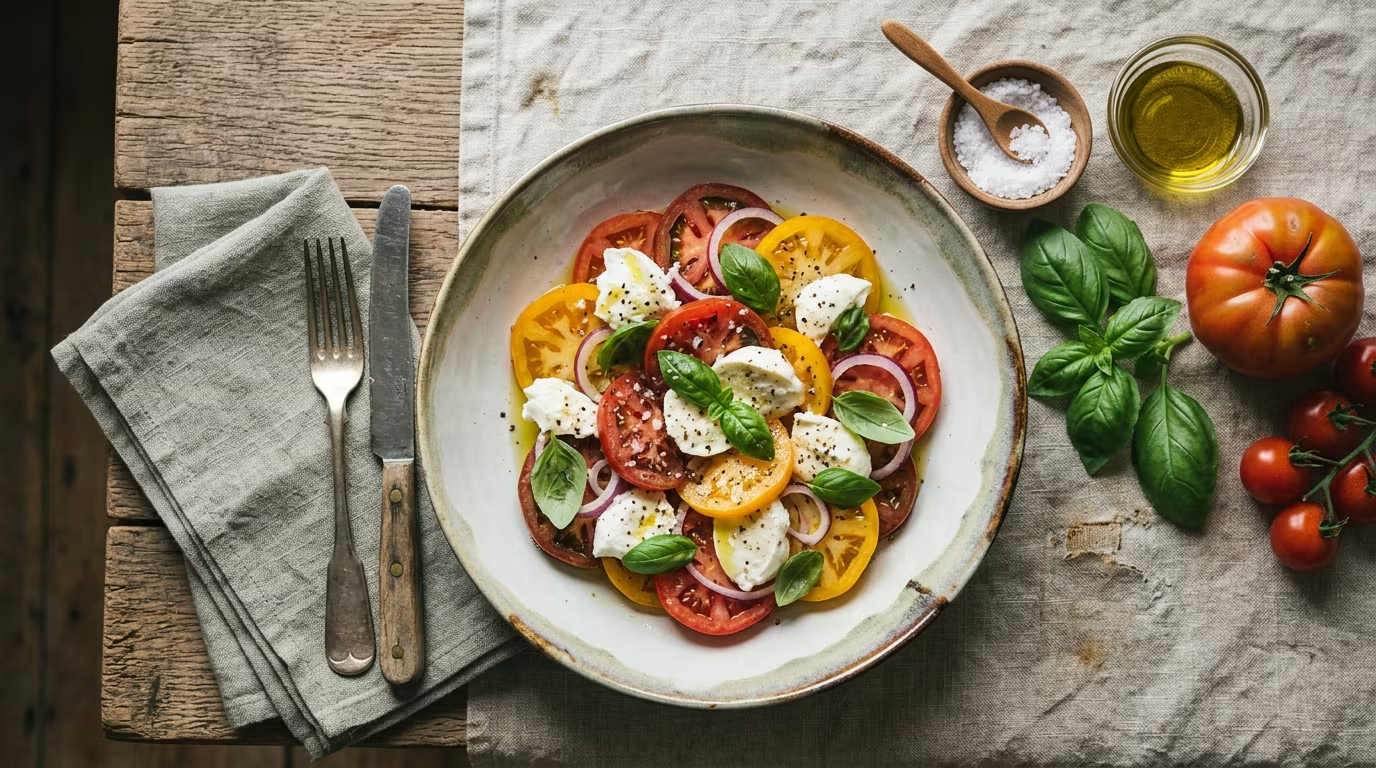
Mistake 5: Salting Tomato Salads at the Wrong Time
Salt tomato slices 5-10 min before serving. Too early, they release water, the salad pools. Too late, the salt sits on top.
Mistake 6: Not Tasting While Cooking
The single most-common mistake. Taste the food repeatedly during cooking. Adjust salt, acid in real time.
Mistake 7: Over-Salting, Trying to Fix
It's easier to add salt than remove it. Always start with less than you think; add more.
If over-salted, the only fixes:
Add starch (rice, pasta, potatoes) which absorbs salt.
Add liquid to dilute.
Add acid which somewhat masks saltiness.
Serve with very-bland accompaniment.
Mistake 8: Salting Cold Food, Expecting It to Penetrate
Salt penetrates better when food is at room temperature or warmer. Cold meat, salt, immediate cooking = surface salt only.
Mistake 9: Confusing Saltiness With Sodium
MSG, soy sauce, and fermented foods contribute saltiness without table salt. They can replace some salt, add complexity.
Specific Techniques
Dry Brining Steak
Pat steak completely dry with paper towels.
Sprinkle 1 teaspoon Diamond Crystal kosher salt evenly on both sides.
Place on a rack over a plate.
Refrigerate uncovered 1-24 hours (longer = deeper brine).
Pat dry again before cooking.
Cook to desired doneness.
Result: deeper-flavored, juicier steak than salting just before cooking.
Wet Brining Chicken
Make brine: 4 cups water, 1/4 cup kosher salt, 2 tablespoons sugar.
Submerge chicken (whole or pieces) in brine.
Refrigerate 4-12 hours.
Drain, pat dry.
Cook.
Result: chicken stays juicy through cooking; flavor penetrates.
Salting Vegetables for Stir-Fry
Cut vegetables.
Heat wok very hot; add oil.
Add vegetables; stir frequently.
Salt at the moment of slight wilting (90 seconds in for greens; 60-90 seconds for crisp vegetables).
Salting too early sweats out water, steams. Too late, salt doesn't dissolve.
Salting Tomato Salad
Slice tomatoes.
Arrange on plate.
Salt 5-10 minutes before serving.
Drizzle with olive oil, add herbs.
The salt draws out a small amount of liquid that becomes part of the sauce.
Salting Sweet Foods
Cake batter: 1/4 teaspoon per cup of flour.
Cookie dough: 1/2 teaspoon per batch.
Caramel: 1/4 teaspoon per cup of sugar.
Chocolate frosting: 1/4 teaspoon per cup.
The salt isn't perceived as salty; it makes sweetness less cloying, more complex.
Specific Cuisine Salt Approaches
Italian Cooking
Pasta water: generously salted.
Tomato sauce: salted as it cooks down.
Cheese (Pecorino, Parmesan): salty enough to balance pasta.
Cured meats (prosciutto, salami): salt is the preservation, flavoring.
French Cooking
Pre-salting meat (especially poultry): standard practice.
Sauces salted in stages.
Finishing salt (fleur de sel): elegant touch.
Japanese Cooking
Salt (shio): simple seasoning for fish, vegetables.
Soy sauce: umami-salt combination.
Pickled vegetables (tsukemono): salt-fermented.
Saltness more restrained than Western cooking generally.
Chinese Cooking
Soy sauce, fermented sauces: primary salt source.
Salt added during stir-fry at specific moments.
Dry-aging meats with salt, spices.
Mexican Cooking
Beans, soups salted at end.
Salt with lime as flavor multiplier.
Tajín (chili-lime salt): specific flavor blend.
Sea salt rim on margaritas: actual flavor element, not just decoration.
Indian Cooking
Salt added throughout cooking: sprinkled at multiple stages.
Salt, spices layered carefully.
Yogurt-based dishes salted moderately.
Specific salt-spice combinations (chaat masala, etc.).
Salt, Health
The Sodium Reality
Recommended daily sodium: 2,300mg (US guidelines); some recommend 1,500mg for hypertension.
Most Americans eat 3,400mg/day: too much.
The biggest culprit: processed food, not home cooking.
Home cooking with conscious salting generally produces less sodium than restaurant or processed equivalents.
When to Reduce Salt
Hypertension diagnosis.
Heart disease.
Kidney disease.
Specific medical conditions.
Replace salt with:
Acid (lemon, vinegar) for brightness.
Fresh herbs.
Spices.
Umami sources (mushrooms, tomatoes, aged cheese).
Salt Sensitivity Range
Not everyone perceives salt the same:
About 25% of people are salt-sensitive (their blood pressure responds dramatically to sodium).
About 25% are salt-resistant (their blood pressure is largely unaffected by sodium intake).
About 50% are intermediate.
If hypertensive, it's worth reducing sodium to see If you're salt-sensitive.
The Bottom Line
Salt is the difference between bland home cooking, food that makes people want seconds. The mastery isn't difficult; it's habit.
The single best advice taste your food while cooking. Repeatedly. The home cook who tastes 4-6 times during a dish, adjusts salt accordingly produces dramatically better results than the one who follows recipes blindly.
The second-best switch to Diamond Crystal kosher salt for general cooking. Most modern recipes assume this salt; the consistency, control are real improvements over table salt or Morton's.
What experienced cooks know trust your palate. The 'right' amount of salt is the amount that makes a specific dish taste alive. There's no abstract correct answer; it depends on the ingredients, your tongue, the diners, and the context. Experienced cooks salt by feel. The way to develop that feel is to taste constantly, adjust deliberately. Within 6 months of conscious salting practice, you'll cook noticeably better food.
 Save
Save
0 Comments
No comments yet — start the conversation below.