

Cacio e Pepe in 15 Minutes: The Three-Ingredient Roman Pasta That Actually Works
Cacio e Pepe in 15 Minutes: The Three-Ingredient Roman Pasta That Actually Works Cacio e pepe — Roman dialect for "cheese and pepper" — is the simplest legendary pasta dish in the world.
Cacio e Pepe in 15 Minutes: The Three-Ingredient Roman Pasta That Actually Works
Cacio e pepe (Roman dialect for "cheese and pepper") is the simplest legendary pasta dish in the world. Three ingredients (pecorino, black pepper, pasta water) plus the pasta itself produce something that fancy restaurants charge $28 for.
The catch: it's notoriously easy to mess up. The cheese clumps; the sauce breaks; what should be silky becomes grainy.
The technique below is the version that works consistently. Once you understand the emulsion mechanics, you can make this in 15 minutes from start to finish, every time.
The Equipment
You need:
Pasta pot (3-4 liter / quart capacity) for boiling pasta.
Wide skillet or frying pan (10-12 inch): wider surface area helps emulsification.
Microplane or fine grater for cheese, since coarse grating doesn't melt as smoothly.
Mortar, pestle OR side of chef's knife for cracking peppercorns.
Tongs or pasta server for transferring pasta.
The Technique: Why It Works
The magic of cacio e pepe is the emulsion of melted cheese fat, starchy water, ground pepper. When done right, this becomes a silky cream coating each strand of pasta. When done wrong, the cheese seizes into stringy clumps.
The science: pecorino has solid fat, protein. When heated suddenly, the proteins coagulate (creating clumps); the fat separates (creating a greasy mess). The emulsion only forms when:
The cheese is finely grated so it melts uniformly.
Starchy pasta water provides the emulsifier (the starch acts as a liaison between fat, water).
The temperature is moderate (not hot enough to seize the proteins).
The mixing is vigorous (creates emulsion).
If any of these fails, the dish fails. Get all four right, it works every time.
Common Mistakes, How to Avoid Them
Mistake 1: Cheese Clumps Into Strings
Cause: added cheese while pan was too hot. The proteins coagulated.
Fix: start over with a cooler pan.
Move the pan completely OFF the heat before adding cheese. Add only 1/3 of cheese first; emulsify before adding more.
Mistake 2: Sauce Is Watery, Won't Coat
Cause: pasta water wasn't starchy enough, OR you used too much water relative to cheese.
Fix: add more cheese in small amounts. Toss vigorously.
Add another 1-2 tablespoons of fresh starchy water at a time. The emulsion needs both.
Mistake 3: Sauce Is Pasty, Heavy
Cause: not enough pasta water; too much cheese.
Fix: add small splashes of warm pasta water (or hot tap water if pasta water is gone) until silky.
Mistake 4: Pepper Tastes Flat
Cause: used pre-ground pepper, OR didn't toast.
Fix: crack fresh peppercorns, toast them in the dry skillet before adding pasta water.
Mistake 5: Cheese Tastes Bland
Cause: wrong cheese (Parmesan instead of Pecorino), OR using pre-grated cheese with anti-caking agents.
Fix: buy a wedge of Pecorino Romano DOP. Grate it freshly. The sharper tang, higher fat are essential.
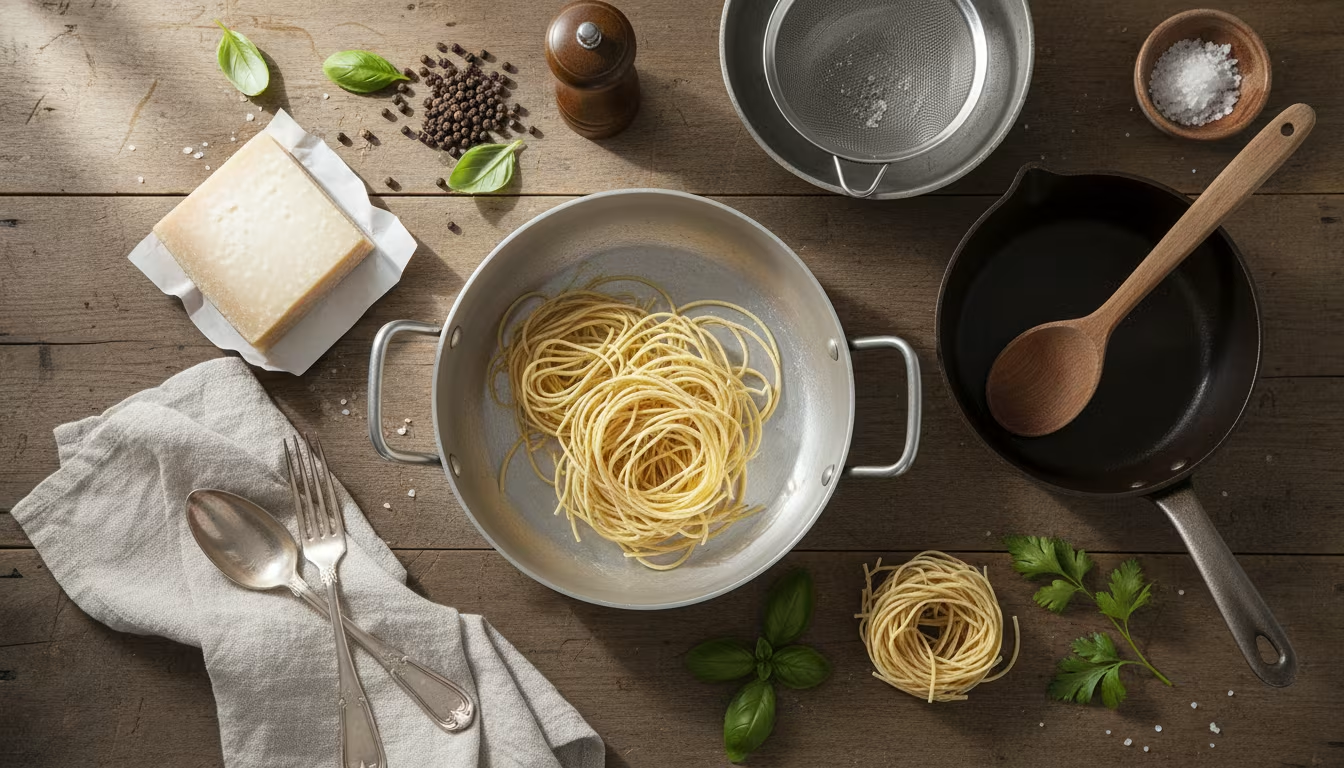
Tonnarelli vs. Spaghetti vs. Other Shapes
Tonnarelli is the authentic Roman shape: square-cut spaghetti made with eggs. Slightly thicker, more rustic than spaghetti.
Holds the sauce beautifully. Available at specialty Italian markets.
Spaghetti is the universal substitute; it works perfectly. Most home cooks make cacio e pepe with spaghetti.
Bucatini: hollow tube spaghetti. Some Romans love this shape; others find it too dense. Try once.
Rigatoni or penne work, but the sauce-to-pasta ratio is different. Less classic.
Avoid: angel hair (too thin; sauce overpowers), broken lasagna sheets (too wide), fresh egg pasta (different flavor profile).
What to Drink With It
Wine pairings:
Frascati Superiore: Lazio's regional white. The traditional Roman pairing.
Vermentino: Sardinian white; light, mineral.
Lambrusco (lightly sparkling red): surprising, but it works.
Beer pairings:
Pilsner or light lager: refreshing contrast.
Italian Birra Moretti for atmospheric.
Cocktails:
Negroni: bitter complement to creamy pasta.
Aperol Spritz: refreshing aperitivo style.
What to Serve It With
Cacio e pepe is rich; serve light alongside.
Antipasto course:
Carciofi alla Romana (Roman braised artichokes) when in season.
Bruschetta with tomato, basil.
Marinated olives, crusty bread.
Insalata mista (mixed green salad).
Secondo (if making a longer meal):
Saltimbocca alla Romana (veal cutlets with prosciutto, sage).
Roman-style chicken (cacciatore-light).
Grilled lamb chops.
Dessert:
Tiramisu for traditional.
Panna cotta for lighter.
Fresh fruit, biscotti for simplest.
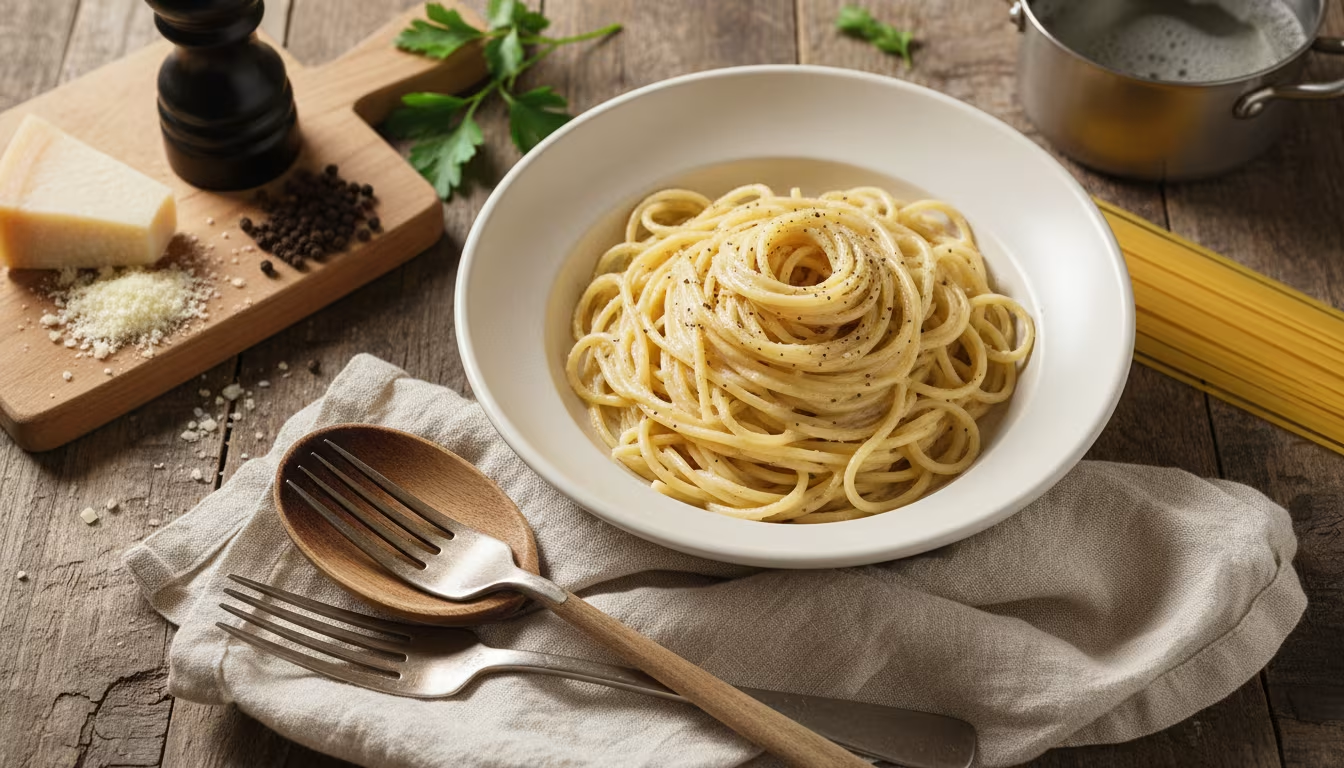
Variations, Closely-Related Dishes
Pasta alla Gricia
Add guanciale (cured pork jowl, diced, crisped) to the pepper-toasting step. The result is gricia: cacio e pepe, guanciale. The carbonara without egg.
Pasta all'Amatriciana
Gricia, tomatoes (San Marzano, peeled). The red Roman classic.
Pasta alla Carbonara
Gricia, 2 egg yolks (whisked with pecorino, added off-heat). The famous egg-rich version.
The four Roman pastas (cacio e pepe → gricia → amatriciana → carbonara) build on each other. Master cacio e pepe first; the rest follow.
Make-Ahead Notes
Cacio e pepe doesn't make ahead well. The sauce thickens, breaks within 5-10 minutes of plating. Best served immediately.
If you must reheat:
Add 1-2 tablespoons of warm water.
Toss vigorously to restore emulsion.
Eat quickly.
Specific Roman Notes
Where to Eat the Original
If you're ever in Rome, the cacio e pepe at these institutions defines the standard:
Felice a Testaccio: the iconic Roman spot. Tableside cheese-grating ceremony.
Roscioli: modernized but excellent.
Pipero: upscale modernist.
Da Cesare al Casaletto: working-class authentic.
Ingredient Sourcing
For home cooks outside Italy:
Pecorino Romano DOP at Italian specialty stores. Don't buy supermarket 'pecorino' (often inferior).
Whole peppercorns at any spice section.
Tonnarelli at Italian markets; specialty pasta shops.
Cost Calculation (US 2026)
Pecorino Romano DOP: $4-6 per ounce; you need 4 oz = ~$20.
Pasta: $1-2 per package.
Peppercorns: pennies per serving.
Total per serving: ~$10-12 for a dish that's $24-30 at restaurants.
Why This Dish Is Worth Mastering
Cacio e pepe is one of the most-elemental dishes in Italian cooking. Three ingredients, technique = restaurant quality at home. Once you understand the emulsion principle, you've mastered a foundational technique that applies to:
Carbonara (same emulsion, egg).
Risotto mantecato (the finishing emulsion of butter, cheese).
Pasta alla Norcina (sausage, cream emulsion).
Many sauce-to-pasta integrations.
The 15-minute weeknight version above produces something genuinely better than most restaurant cacio e pepe. Get the technique right; everything else follows.
Final Notes
One last thing: go slowly. Cacio e pepe rewards patience.
The first time you try, the cheese might clump. The second time, the sauce might be watery.
The third time, it works perfectly. After that, it works every time.
Don't watch YouTube videos that show you adding cheese to a screaming-hot pan. Don't trust recipes that skip the toasted-pepper step. Don't try to substitute Parmesan because pecorino seems sharp.
The technique above is the actual Roman method, simplified for home cooks. Three ingredients.
Fifteen minutes. Once you've made this, you've made one of the world's great pasta dishes, without leaving your kitchen.
 Save
Save
0 Comments
No comments yet — start the conversation below.