

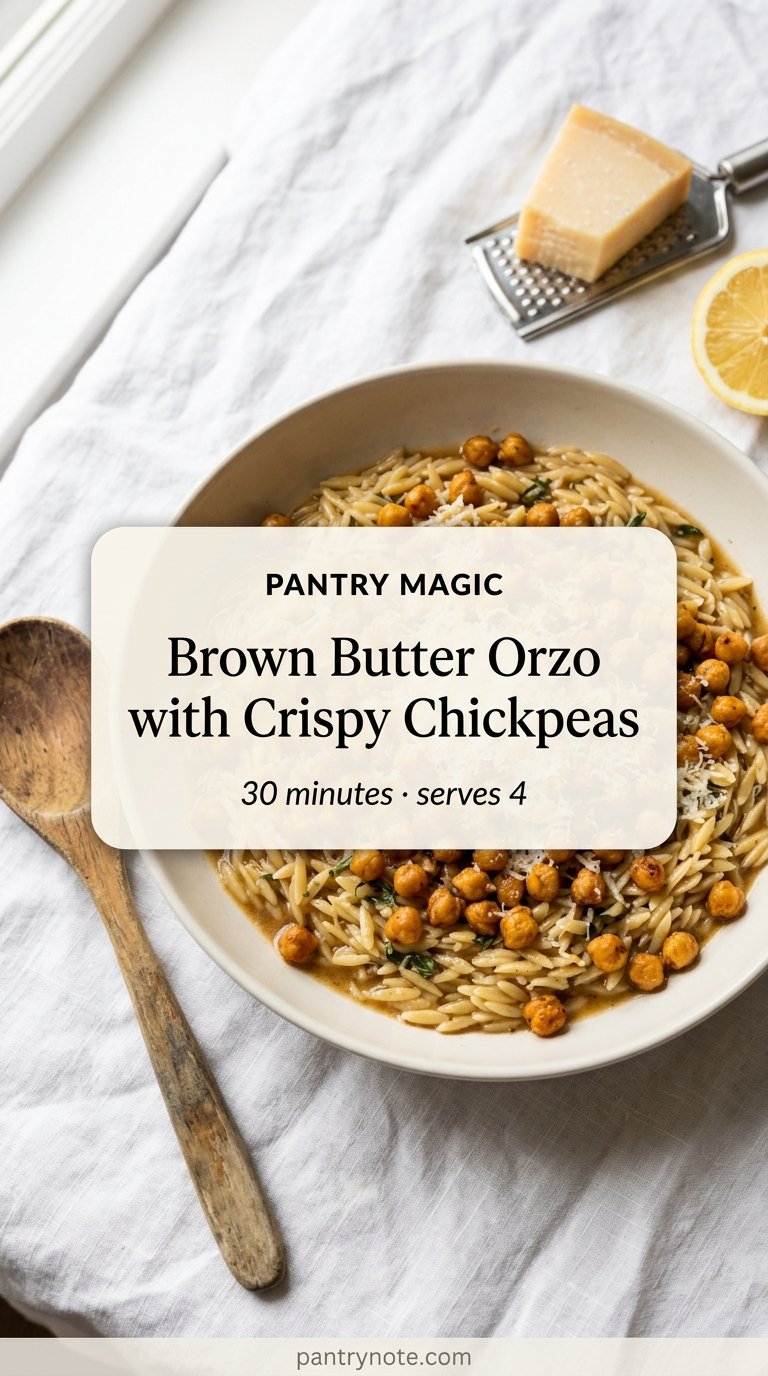
Brown Butter Orzo with Crispy Chickpeas
This is the kind of dish that makes you feel like a genius even on a Tuesday. Brown butter adds a nutty depth that transforms a box of orzo into something worth writing home about, and the chickpeas — roasted until they shatter — do the heavy lifting that croutons wish they could.
There is a particular kind of weeknight desperation that leads to the best meals. You've looked in the fridge twice, found nothing inspiring, and now you're staring at the pantry shelf. This is exactly when orzo and a can of chickpeas become your closest friends.
Brown butter orzo with crispy chickpeas started as an accident: a bag of orzo that needed using up, some chickpeas I'd been meaning to roast, and a pan I'd already heated. Twenty minutes later I had something I actually wanted to eat again the following week. The combination of the nutty, toasted pasta against the crunchy, paprika-dusted chickpeas and a shower of lemon zest is one of those things that's greater than the sum of its parts.
This is my go-to when I want something vegetarian but substantial, when I have roughly half an hour, and when I don't want to do a mountain of dishes. It fits into a week of cooking without apology: it works alongside a simple green salad on a Tuesday, holds up next to roast chicken on a weekend when you're feeding extra people, and reheats beautifully in the time it takes to make coffee the next morning.
Why this works
Brownning the butter first, before you toast the orzo, is the move that separates this from a forgettable side dish. When butter heats past the point where the water evaporates and the milk solids begin to color, you get the Maillard reaction running in the fat itself.
Those darkening milk proteins produce hundreds of flavor compounds simultaneously: nutty, caramel, almost biscuity notes that plain melted butter simply doesn't have. The difference in a shallow pan takes about three minutes, and you can hear it: the foam subsides, the sputtering quiets, and there's a faint whisper of something toasty.
Toasting the orzo directly in that brown butter takes it a step further. Orzo is essentially a tiny, flat pasta, and its surface area responds well to dry heat.
As the raw orzo makes contact with the butter in the hot pan, the exterior starch layers begin to dextrinize, converting starches to shorter-chain sugars that brown more readily. The result is a nuttier, more complex flavor throughout the pasta, not just in the sauce.
This is the same principle behind toasting rice before adding liquid for a risotto, or blooming dry pasta in oil before simmering in tomato sauce.
For the chickpeas, the key is moisture removal. Canned chickpeas are waterlogged, and if you throw them into a 400°F oven wet, they steam before they roast.
Drying them thoroughly on a towel (really pressing out that moisture) means the surface can quickly dehydrate in the oven heat and begin to crisp. A light coat of olive oil and enough room on the pan (crowding = steaming) and they come out crackly enough to eat like popcorn.
The paprika adds its own Maillard moment: paprika browning at high heat turns slightly smoky, reminiscent of pimentón de la Vera, even if you're using regular supermarket sweet paprika.
Ingredient notes
Orzo
Standard dry orzo from any supermarket works fine here. De Cecco and Barilla are both reliable.
What you want to avoid is the quick-cooking variety, which has been pre-gelatinized and won't toast properly: the starch surface is already compromised. If you can find fregola, the Sardinian toasted pasta, it does something even more wonderful here since it comes pre-toasted, but standard orzo is the pantry-friendly workhorse.
Butter
Use unsalted, and use good butter. Not fancy imported butter necessarily, but not the lowest-cost store-brand with high water content, which will spatter aggressively and take longer to brown because of all that extra moisture.
Plugrá or Land O'Lakes unsalted are both solid choices. The higher fat content means faster, cleaner browning.
Chickpeas
One 15-ounce can, drained and dried. Goya and Bush's are both consistent.
The quality marker here is firmness. Mushy chickpeas that have been overcooked in the can won't crisp the same way.
If the chickpeas feel very soft even before cooking, they'll collapse in the oven rather than crack. A quick taste before roasting tells you what you're working with.
Paprika
Sweet Spanish paprika is the default. Smoked paprika adds a campfire note that's excellent here, and I often use half and half. Avoid the ancient paprika that's been in the cabinet since 2019; paprika loses its volatile aromatic compounds over time and becomes dusty and flat.
Lemon
Fresh only. The zest contains the essential oils that do the heavy lifting aromatically, and bottled lemon juice is too harsh for finishing a dish like this. One lemon provides both the zest and the juice you need.
Parmesan
A proper wedge of Parmigiano-Reggiano, grated on a microplane. Pre-grated cheese in the green can has cellulose added to prevent clumping, which means it doesn't melt the same way and can make the dish slightly gritty.
How to make it
Get the chickpeas started first. Drain your can, then spread them on a clean kitchen towel and fold it over, pressing firmly.
You want them as dry as possible, so leave them there while you prep everything else. Preheat the oven to 425°F.
Toss the dried chickpeas with olive oil, paprika, salt, and a pinch of cayenne if you like heat. Spread them on a sheet pan in a single layer (actually a single layer, not piled on each other).
Slide them into the oven and forget them for 20 minutes. At 20 minutes, check: you want them golden and making a sound when you shake the pan.
Some batches need 25 minutes depending on how moist they were to start.
Meanwhile, heat your butter in a wide skillet over medium heat. The moment it melts, start watching.
First it'll foam heavily: that's the water burning off. Then the foam subsides and you'll see the milk solids starting to color at the bottom of the pan.
Swirl it. When it smells like hazelnuts and the solids are a deep amber (not dark brown; there's a window), add the dry orzo immediately.
Stir to coat.
Pour in hot stock (chicken or vegetable, just over two cups for a cup of orzo) and let it come to a simmer. Cook, stirring occasionally so it doesn't stick, until the orzo has absorbed nearly all the liquid and looks creamy and just barely al dente.
This takes about 10 minutes. Pull it off the heat, add lemon zest, lemon juice, and Parmesan, and stir.
The residual heat melts the cheese into something silky.
Top with the chickpeas the moment they come out of the oven: they lose their crunch fast, so assemble and serve immediately.
Tips and variations
Make it vegan
Swap the butter for a good olive oil (skip the browning step; just warm the oil) and use a sharp nutritional yeast in place of the Parmesan. A squeeze of lemon does a lot of work to compensate for the missing dairy richness.
Add greens
A few handfuls of baby arugula stirred in right before serving wilts just slightly against the hot pasta and adds a peppery bite. Alternatively, stir in frozen peas during the last two minutes of cooking.
Make-ahead
The orzo reheats well with a splash of water or stock in a covered skillet over low heat. Reheat the chickpeas separately in a dry skillet or back in the oven for 5 minutes; they go completely soft if stored with the pasta.
Scale for a crowd
Double everything except the pan: use a Dutch oven for the orzo portion and two sheet pans for the chickpeas. Cooking the orzo in a too-thin pan risks uneven browning of the butter.
Add protein
Shrimp sautéed in garlic butter and laid on top, or leftover rotisserie chicken shredded and stirred in during the last minute of cooking, both work beautifully.
Herb variations
Fresh parsley is classic. Mint works surprisingly well in summer. A few fresh thyme leaves added with the stock are lovely in winter.
Frequently Asked
Can I use a different pasta shape?
How do I store leftovers?
Can I make this ahead for a dinner party?
My chickpeas aren't getting crispy — what's going wrong?
 Save
Save
0 Comments
No comments yet — start the conversation below.