

Miso Glazed Eggplant with Scallion Rice
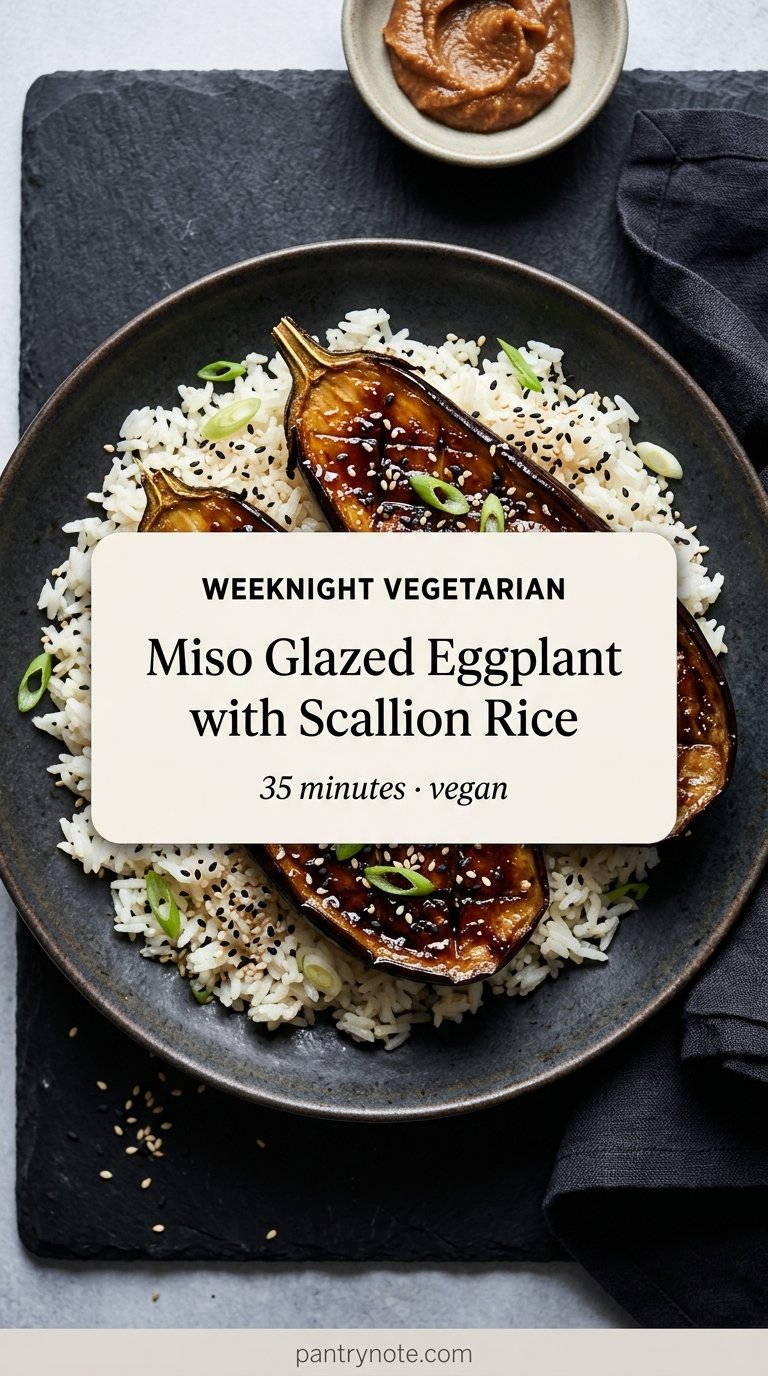
Nasu dengaku — miso-broiled eggplant — is the kind of dish that makes vegetarian food feel genuinely exciting rather than compromised. The miso glaze caramelizes under the broiler into something dark, slightly sweet, and deeply savory, while the eggplant flesh underneath becomes almost custardy.
There are a handful of dishes that I think of as cornerstones: recipes that I return to so reliably that I've long since stopped measuring the glaze ingredients and just go by sight and memory. Miso-glazed eggplant is one of them. It's a Japanese preparation called nasu dengaku, and it's been part of Buddhist shojin ryori cuisine for centuries, the perfect example of a single ingredient elevated through technique and fermented ingredients to something that needs nothing else.
The technique is disarmingly simple: halve small-to-medium eggplants, score the flesh to help it cook evenly and absorb the glaze, brush on the miso mixture, and broil. The result, in about 15 minutes, is a deeply caramelized, lacquered surface with flesh underneath that's soft to the point of being almost custard-like. Served over scallion rice that's been finished with sesame oil and a splash of rice vinegar, this is a complete dinner that happens to be vegan, deeply satisfying, and on the table in under 40 minutes.
This is what I make when I want something that feels restorative but not light. The miso provides the kind of dense umami that usually only comes from long-cooked meat dishes; it's one of the most efficient flavor-builders in any pantry.
Why this works
Eggplant has a spongy, porous flesh structure filled with air pockets, the same structural reason eggplant absorbs extraordinary amounts of oil when sautéed without salting. When scored and exposed to heat, those air pockets collapse and the flesh becomes dense and custardy as the cell walls break down and moisture redistributes. This is the textural transformation that makes eggplant genuinely satisfying rather than merely filling.
The scoring of the flesh serves two purposes. First, it increases surface area, allowing the miso glaze to penetrate further than it would on a smooth surface. Second, it helps the interior cook more evenly: the cuts act as channels that allow heat to reach the center more quickly, reducing the risk of a charred exterior and raw interior.
Miso's flavor contribution comes from its glutamates, the same amino acids (specifically glutamic acid) that make Parmesan, anchovies, and soy sauce so compelling. Fermented ingredients are often described as adding umami, but what they're specifically adding is free glutamic acid, which binds to umami receptors (specifically the T1R1/T1R3 receptor complex) on the tongue.
White miso (shiro miso) has a lighter, sweeter flavor from shorter fermentation; red miso (aka miso) has a more intense, saltier character from longer aging. The traditional dengaku glaze often uses a mixture.
The mirin and sugar in the glaze caramelize under the broiler through simple sugar chemistry: at high temperatures, sugars undergo the Maillard reaction with the amino acids in the miso, producing those dark brown, complex flavor compounds that give the glaze its lacquered, almost candy-like appearance.
Ingredient notes
Eggplant
Japanese eggplants (slender, about 6 inches long) are ideal: their thin skin and tender flesh respond well to broiling without becoming bitter or waterlogged. Chinese eggplants are similar and interchangeable.
Standard Italian globe eggplant works too; halve them lengthwise and expect a longer cook time. Globe eggplant has thicker flesh that can benefit from a light salting (30 minutes with salt, then rinse and pat dry) to draw out some moisture.
Miso
White miso (shiro) for a milder, sweeter glaze that's more approachable. Red miso (aka) for intensity and depth.
Awase miso (a blend) for balance. All three are excellent here.
Miso keeps for months in the fridge, so buy a full container; you'll use it in salad dressings, soups, marinades, and butter sauces once you start.
Mirin
Real mirin (hon mirin) is a sweet rice wine that's different from rice vinegar; it's slightly thick and has a genuine sweetness from alcohol and sugar. Don't substitute rice vinegar here. Aji-mirin is the common supermarket version and is acceptable but sweeter and less complex than the real thing.
Sesame oil
Toasted sesame oil, added after cooking, not before. It loses its distinctive nutty aroma at high temperatures, so it belongs in the finished rice or as a finisher, never in the glaze going under the broiler.
Scallions
Both the white and green parts, used differently. Whites go into the rice with a little butter for mild allium flavor; greens are sliced and scattered fresh over the top for color and bite.
How to make it
Start the rice first, using your preferred method. While it cooks, prep the eggplant and glaze.
For the glaze, whisk together white miso, mirin, sugar, and a tiny splash of sake (or dry sherry if that's what you have). It should look like a smooth paste, somewhat thick. If it's too thick to spread, add a teaspoon of water.
Halve your eggplants lengthwise. Score the cut faces in a crosshatch pattern, cutting about halfway through the flesh; don't pierce through the skin. Brush lightly with neutral oil (not sesame) and place cut-side up on a foil-lined sheet pan.
Broil on high for about 8–10 minutes: you want the flesh starting to soften and the edges beginning to color. Pull the pan out, brush the glaze generously over the scored surfaces, and return to the broiler for another 4–5 minutes.
Watch carefully: the glaze goes from perfect to burnt in about 90 seconds under a hot broiler. You want dark caramelization, not black.
For the rice: while still hot from the cooker, fold in the sliced scallion whites with a small pat of butter, a drizzle of toasted sesame oil, and a splash of rice vinegar. The vinegar barely registers individually but brightens the overall flavor.
Serve the eggplant over the rice, scatter the scallion greens, and add a sprinkle of sesame seeds if you have them.
Tips and variations
Add protein
Crispy tofu works naturally here: press and cube firm tofu, toss with cornstarch and a little oil, and bake at 425°F while the eggplant broils. Or a soft-boiled egg, halved.
Glaze variations
A teaspoon of gochujang stirred into the miso glaze adds heat and a slightly fermented complexity. A pinch of five-spice powder moves it in a Chinese direction.
Make-ahead glaze
The miso glaze keeps in the fridge for 2 weeks. Make a double batch and use it on salmon, tofu, chicken, or roasted carrots.
Storage
Leftover eggplant keeps in the fridge for 3 days. Reheat in a 375°F oven for 8–10 minutes or briefly in a hot pan. Don't microwave, since the texture becomes rubbery.
Add a sauce
A spoonful of chili crisp over the top makes this considerably more exciting for people who want heat.
Frequently Asked
Is this recipe gluten-free?
Can I make this without a broiler?
How do I know when the eggplant is done?
My eggplant is bitter. Is there a fix?
 Save
Save

0 Comments
No comments yet — start the conversation below.