

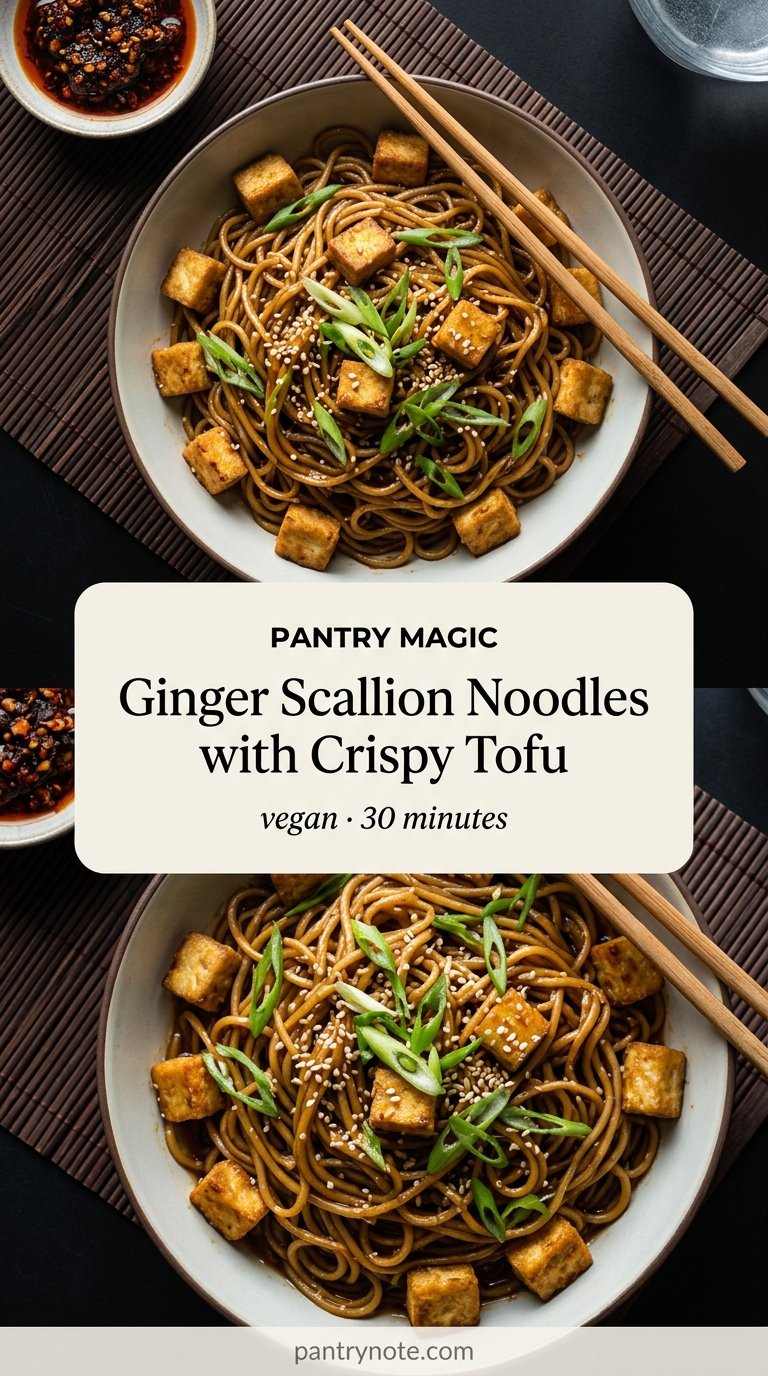
Quick Ginger Scallion Noodles with Crispy Tofu
These noodles exist at the intersection of Chinese scallion oil noodles and the kind of improvised weeknight Asian-American cooking that doesn't pretend to be authentic but is completely delicious on its own terms. The ginger-scallion sauce is the most versatile thing in this recipe — make extra and use it on everything.
There is a particular type of weeknight cooking that I think of as pantry fluency: the ability to look at dried noodles, a knob of ginger, some scallions, a block of tofu, and soy sauce and produce something that feels complete and nourishing rather than improvised and apologetic. These noodles are that dish.
The ginger-scallion sauce is borrowed loosely from the Chinese concept of cong you mian (scallion oil noodles from Shanghai), in which the fundamental technique is making a scallion-infused oil by heating scallions slowly in a neutral oil until they're dark and jammy and their flavor has transferred entirely into the fat. The scallions are then discarded or eaten alongside. What's left is one of the most flavorful oils you can make in ten minutes.
This version keeps the scallions in, partly for texture, partly because discarding them seems like a waste, and adds fresh ginger, which is bloomed in the oil for the last minute of cooking to release its volatile aromatic compounds. The sauce is finished with soy sauce, sesame oil, and a small amount of rice vinegar.
The tofu is pressed firm, cut into cubes, and cooked in a screaming-hot pan with very little oil until the exteriors are crackling and golden. It is one of the most satisfying cooking transformations to witness: the waterlogged white block going into the pan and coming out browned, chewy, almost meaty.
Why this works
Scallion oil is the flavor backbone. When you heat neutral oil to around 280–300°F (just before the smoking point) and add sliced scallions, the volatile aromatic compounds (primarily organosulfur compounds and terpenes) dissolve into the fat rapidly.
This is the same principle behind Chinese red chili oil or Western herb-infused oils: fat is an excellent solvent for fat-soluble aromatic compounds. The scallions are essentially being used as a flavoring agent for the cooking medium.
Fresh ginger, added near the end of the oil heating, goes through a similar process. Gingerol, the primary pungent compound in fresh ginger, is fat-soluble and transfers efficiently into warm oil. Additionally, some gingerol converts to shogaol (which is more pungent) and zingerone (which is warmer and sweeter) at cooking temperatures, shifting the flavor from fresh-sharp to more complex and rounded.
For the tofu: pressing removes water from the block's internal pore structure. Extra-firm tofu still contains significant moisture, and that moisture needs to leave before browning can happen.
Pressing for 20–30 minutes removes enough that the exterior surfaces can dehydrate quickly in the hot pan and begin to brown through the Maillard reaction. The thin coating of cornstarch that some recipes add (I use it here) adds an extra layer of structure that crisps particularly well and produces an exterior closer to fried tofu than plain pan-fried.
Rice noodles, soba, and dried spaghetti all work for this recipe; which noodle you choose changes the texture and eating experience more than the flavor. Rice noodles are slippery and delicate; soba is nutty and slightly chewy; spaghetti is chewier still and soaks up the sauce differently. I specify fresh Chinese wheat noodles when available because their slightly alkaline, springy texture is closest to what this sauce was designed for.
Ingredient notes
Tofu
Extra-firm, pressed for at least 20 minutes under a heavy pan. Do not use silken or soft tofu; it will crumble rather than crisp.
Nasoya and House Foods both make reliable extra-firm. Press it with a weight (a cutting board with a pan on top) rather than wrapping in towels, which can leave paper fibers.
Scallions
You need a lot: at least 6–8 scallions. Both the white and green parts, though they cook differently. Whites go in first as they need more time; greens go in near the end or are used raw as a fresh garnish.
Fresh ginger
A knob about an inch and a half long, peeled and grated on a microplane or minced very finely. Jarred ginger paste can substitute in a pinch but lacks the full aromatic complexity.
Soy sauce
Regular sodium Kikkoman or Yamasa. Low-sodium is fine but the sauce may need more. Dark soy sauce (a thicker, slightly sweet Chinese variety) can replace half the regular soy for a richer, slightly sweeter flavor.
Noodles
Fresh wheat noodles from an Asian grocery are ideal. Dried ramen, soba, spaghetti, or rice noodles all work; cook per package directions and use immediately.
How to make it
Press the tofu first, a good 20–30 minutes under weight. Pat it very dry with paper towels, then cut into 1-inch cubes. Toss the cubes in a bowl with a tablespoon of cornstarch and a pinch of salt.
Heat a wide skillet or wok over high heat until you see the first wisp of smoke. Add a tablespoon of neutral oil.
Add the tofu in a single layer and don't touch it for 3 full minutes. The first side needs to build a crust.
Flip and cook 2–3 minutes more on the second side. Remove and set aside.
In the same pan, reduce heat to medium. Add 3 tablespoons of neutral oil.
Add the sliced scallion whites and cook, stirring occasionally, for 4–5 minutes until softened and just beginning to turn golden. Add the grated ginger and cook 60 seconds; you'll smell it bloom.
Add the scallion greens and cook 30 more seconds. Turn off the heat.
Add soy sauce, sesame oil, and rice vinegar to the pan; it'll sizzle. Stir.
Toss cooked, drained noodles directly in the pan with the sauce, adding a splash of the noodle cooking water to loosen. Return the crispy tofu. Toss everything together.
Serve immediately, scattered with more sliced scallion greens and a drizzle of chili crisp if you want heat.
Tips and variations
Double the sauce
The ginger-scallion sauce is extraordinary on grilled fish, steamed rice, dumplings, or eggs. Make a double batch and keep it in a jar in the fridge.
Add greens
Blanched baby bok choy, broccolini, or snap peas tossed in at the end add color and vegetables.
Egg version
A soft-fried or soft-boiled egg on top adds richness and protein.
Make it spicy
Gochugaru (Korean red pepper flakes) stirred into the sauce, or chili crisp on top, both work.
Use shrimp
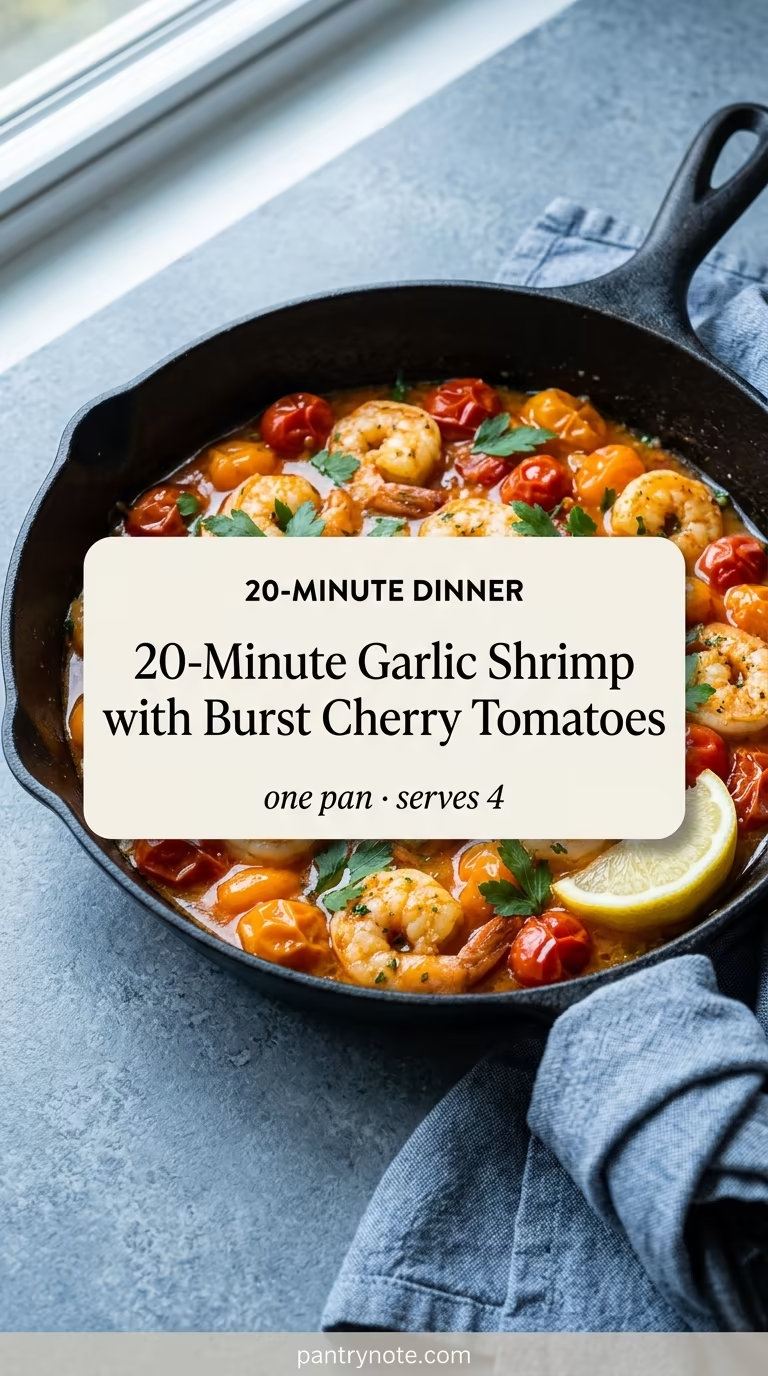
Briefly cook shrimp in the skillet before the scallion oil, then return them at the end instead of tofu.
Frequently Asked
How do I press tofu efficiently?
Can I bake the tofu instead of pan-frying?
What if I don't have fresh ginger?
How do I prevent noodles from sticking together?
 Save
Save
0 Comments
No comments yet — start the conversation below.